Developed by Intelligent Systems for Nintendo.
Role-playing (RPG) / Strategy / Turn-based strategy (TBS) / Fantasy
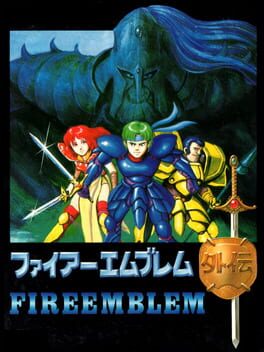
BS Fire Emblem: Archanea Senki-hen is a standalone game released in 4 parts, made in the same engine as Fire Emblem: Mystery of the Emblem, that take place between the prologue and the first chapter of Fire Emblem: Shadow Dragon. The game was only released in Japan and was distributed with the Stellaview peripheral of the Super Famicom. Each part of the game used one map with a time limit, the goal of the game was to collect as many points as possible before the time ran out without your Lord unit being defeated. Most of the games dialogue was voice acted and had some original characters along with characters from the Fire Emblem games Mystery of the Emblem, Shadow Dragon, and The Blade of Light. The game was later included with the remake of Mystery of the Emblem as an extra mode, without the timers or the voice acting, for the Nintendo DS called Fire Emblem: New Mystery of the Emblem. This was also only released in Japan.
Part 1: Fall of the Palace The Dolhr army, led by Earth Dragon Medeus, has invaded the palace of Archanea. You take control of Princess Nyna, and her soldiers, as they try to flee from the palace. Blocking their way are Dolhr soldiers who you must defeat. The lord character of this chapter is Nyna, a bishop. She is accompanied by Boah, a bishop; Tomas, an archer; Midia, a paladin; and Dolph and Macellan, both Armor Knights. Part 2: The Red Dragon Knight Minerva discovers deserters of her Medonian army have been attacking villages near Aurelis. Although Hardin is her enemy, she decides to join forces with him to defeat the deserters. The lord characters of this chapter are Minerva, a dragon knight and Hardin, a cavalier. They are accompanied by Catria and Est, both Pegasus Knights; Wolf, a horseman; Roshea, a cavalier; and Frost, a bishop. Part 3: Thieves' Gang of Justice Many days have passed since the palace of Archanea was invaded. Rickard and Lena, along with Navarre and Castor, sneak into the palace to steal treasures to aid the poor, and perhaps themselves as well. The lord character of this chapter is Rickard. He is accompanied by Lena, a sister; Navarre, a mercenary; Castor, a hunter; Dice, a fighter; and Malice, a mercenary. Part 4: The Beginning Two years have passed since Archanea fell. Nyna is currently under the protection of the Grustian Sable Knights, led by Camus. However she is endlessly pursued by Medeus' forces. Camus decides the best option is to head for Aurelis, in hope that Prince Hardin will offer her protection. The lord characters of this chapter are Nyna, a bishop, and Camus, a paladin. They are accompanied by Reiden and Belf, both cavaliers; and Robert, a horseman.
Role-playing (RPG) / Strategy / Turn-based strategy (TBS) / Action / Fantasy
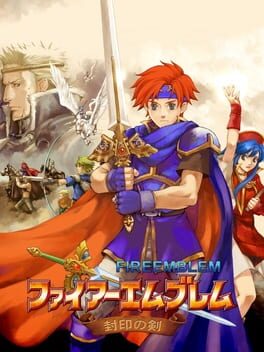
Fire Emblem: The Binding Blade is a Japanese tactical role-playing game developed by Intelligent Systems and published by Nintendo. The game was released on March 29, 2002 in Japan, is the sixth game in the Fire Emblem series, and the first of three games in the series that have appeared on Nintendo's Game Boy Advance handheld. It was the last Fire Emblem game to be released exclusively in Japan until the release of Fire Emblem: New Mystery of the Emblem. The Binding Blade was followed by a prequel, Fire Emblem: The Blazing Blade, set twenty years earlier.

Role-playing (RPG) / Strategy / Turn-based strategy (TBS) / Fantasy / Warfare
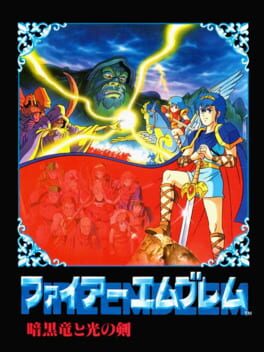
Fire Emblem: The Dark Dragon and Sword of Light is the first game in the Fire Emblem series, developed by Intelligent Systems and published by Nintendo. It was first released on the Famicom (known internationally as the Nintendo Entertainment System) on April 20, 1990. It takes place on the continent of Archanea. It stars Marth, a character who later appeared in Super Smash Bros. Melee. The first time the game was released outside of Japan was in the form of a limited edition port for Nintendo Switch, under the same name, that runs a localization script in the background, but the original version of the game was never released outside of Japan.

Role-playing (RPG) / Strategy / Turn-based strategy (TBS) / Fantasy / Historical
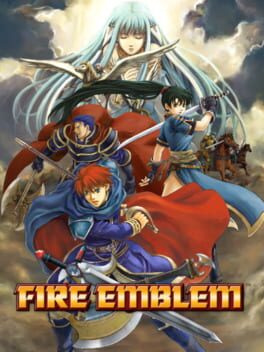
It is the seventh game of the Fire Emblem series, the second game in the series to be released for the Game Boy Advance, and the first to be released in both North America and Europe. It features a prologue storyline designed to introduce newcomers to Fire Emblem gameplay and tactical basics. The overall narrative is a prequel to the events of the previous game, Fire Emblem: The Binding Blade, which is set twenty years later. The game was first released under the localized title "Fire Emblem" in the West, but it was later rebranded as "Fire Emblem: The Blazing Blade" when Fire Emblem Heroes was released.

Role-playing (RPG) / Strategy / Turn-based strategy (TBS) / Fantasy / Warfare
The Continent of Valencia is split into two territories. To the north is the Kingdom of Rigel, home to followers of the Dark God Doma. To the south is the Kingdom of Sofia, where the Earth Goddess Mila is worshipped. When Rigel invades Sofia, two heroes, Arum and Cellica, raise an army to topple Rigel and the Dark God that is backing the conflict.

Role-playing (RPG) / Strategy / Turn-based strategy (TBS) / Fantasy
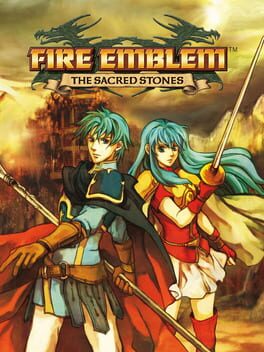
In Fire Emblem: The Sacred Stones, you must help protect the nation of Renais from the invading Grado Empire. Plan your strategy, choose your units, and then lead your soldiers in to battle. The more experience your soldiers gain, the more you can upgrade their abilities. This time, your soldiers can gain experience by fighting new monsters in the Tower of Valni.

Role-playing (RPG) / Strategy / Turn-based strategy (TBS) / Fantasy
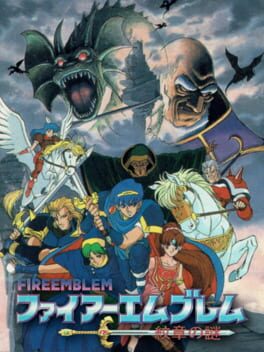
Fire Emblem: Monshou no Nazo (translated as Fire Emblem: Mystery of the Emblem in Fire Emblem: Awakening) is a Japanese tactical role-playing game developed by Intelligent Systems and published by Nintendo. It is the third game in the Fire Emblem series and was released in Japan on January 21, 1994. It was the first Fire Emblem title for the Nintendo Super Famicom and the first twenty-four-megabit cartridge for the system. The game is divided into two distinct parts, or "books". Book One is a remake of the original Fire Emblem: Shadow Dragon and the Blade of Light, and Book Two is a continuation of events, following the same characters.

Role-playing (RPG) / Strategy / Turn-based strategy (TBS) / Fantasy
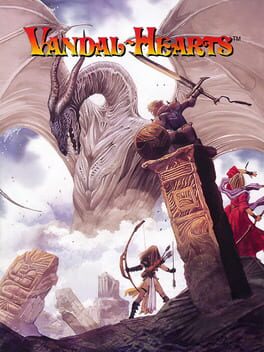
You assume the role of Ash Lambert, a hero torn between saving his country and restoring honor to the disgraced Lambert dynasty. As he struggles with his inner demons and personal problems, he will meet various companions throughout his journey. They will help your character fight to overthrow the oppressive regime and ward off an ancient being that threatens the world. Vandal-Hearts is a 3D turn-based strategy game. Unlike many games of the genre, the various battlefields have sloped surfaces that will either work to your advantage or against you. It will be up to you to accommodate your strategy and amount an appropriate offensive assault against your foes as well as set up defensive measures.

Role-playing (RPG) / Strategy / Turn-based strategy (TBS) / Fantasy
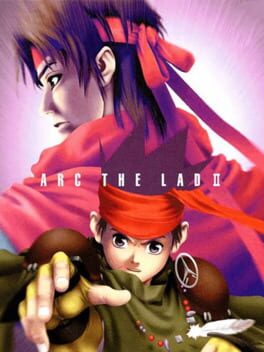
This direct sequel to "Arc the Lad" continues the unfinished story of the first game, but starts from a totally different perspective. You control a bounty-hunter named Elk, who suffers from amnesia. On his quest for his own true identity he discovers the powers hidden within him, and the destiny of his entire tribe. While pursuing his archenemy, Elk meets up with Arc, the hero of the first game, and then both realize they have been looking to destroy the very same evil. The battle system of "Arc the Lad II" is similar to the one used in its predecessor: in battles you can move your characters on the battle field, and your proximity to the enemies plays an important role. You cause and take different amounts of damage depending on your position on the battle field. Unlike the first game, this one is a full-fledged adventure/RPG, without the "strategy" feel of the predecessor. You move through the game world on your own, visiting towns and exploring dungeons.