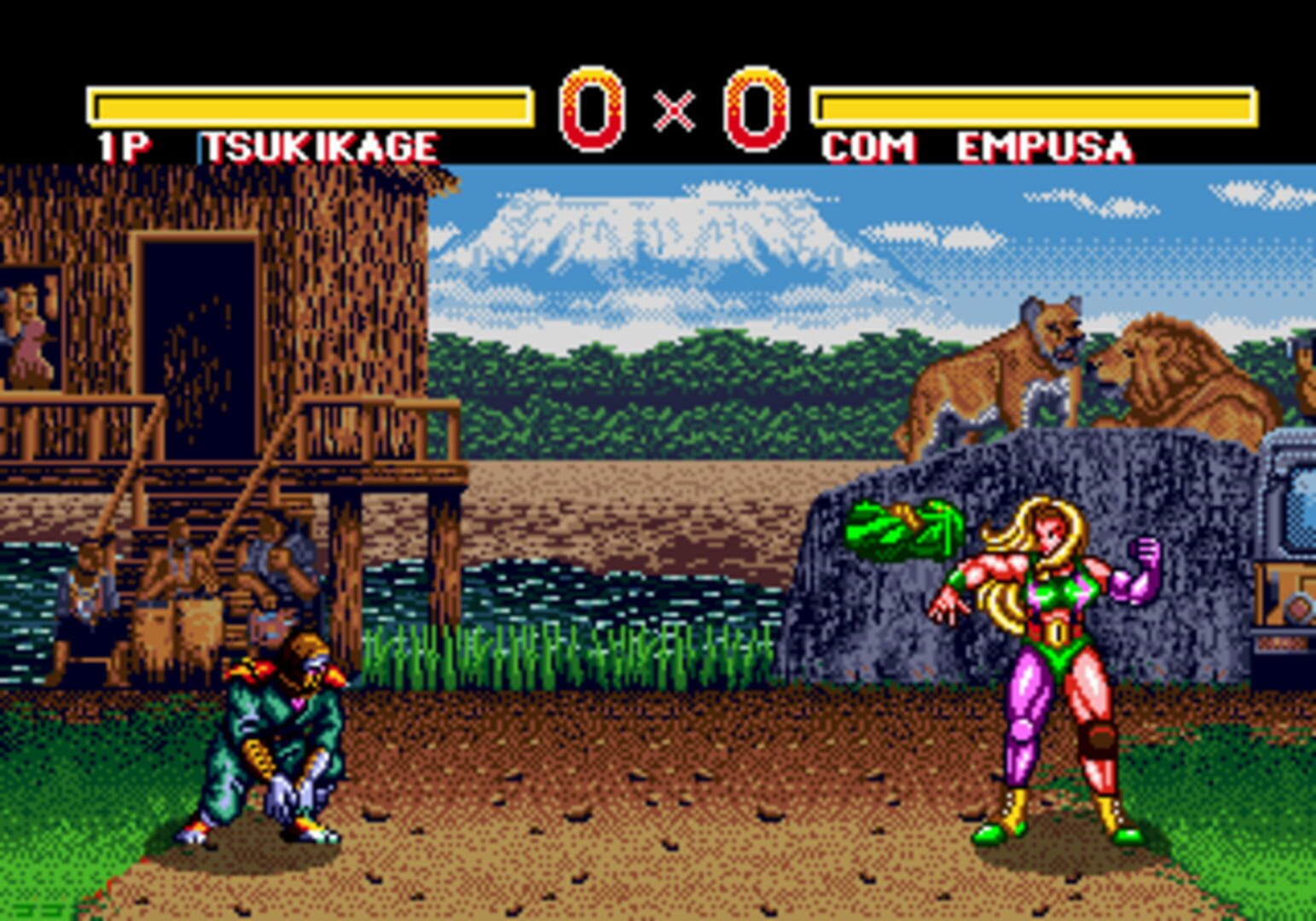
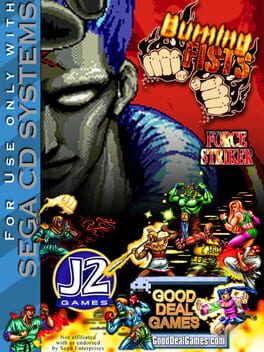
Burning Fist (also known as Force Striker in its early alpha build) is a cancelled fighting game that was in development in 1994 by Sega of Japan for the Mega CD. As we can read at Sega Base, both the Force Striker alpha and the Burning Fists beta were leaked rom a former SoJ employee and sold on eBay some years ago. Burning Fist was never officially released, but in 2006 those alpha / beta builds were re-sold to Good Deal Games.

is a multiplayer fighting game that built on the innovative gameplay introduced by its predecessor, Power Stone. Power Stone 2 allows up to four players to choose from multiple characters and utilize items such as tables, chairs, and rocks in battle. There are four different modes available for the game 1-on-1: Much like the original Power Stone, a two-character storyline game. Arcade: A four-character storyline game, with two characters advancing each round. Original: Multiplayer mode, with free choice of characters and stages. Adventure: An unpredictable storyline game, where players can collect items, cards and money. Power Stone 2 offers five interactive 3-D stages to begin with, plus the two boss stages which players can also access in Original mode. All but the Original mode is played out like a storyline, where two battles are fought on the regular stages, followed by the Pharaoh Walker boss, then another battle, and ending with the Dr. Erode boss stage. Three extra stages may be unlocked for Original mode by meeting certain requirements in Arcade mode, as well as a desert area stage, which is essentially the Pharaoh Walker boss stage, but without the boss. Though each player has their own set of default ground and air attacks, the character can execute more powerful fusion attacks after collecting three Power Stones and transforming. Power Stone 2 does not offer an opportunity to block, although tapping on the control pad just before an enemy attacks will cause you to dodge. Most of the stages are dynamic and will change as the battle progresses. For example, the airplane stage starts out on a warplane. After a set amount of time, the plane will fall apart, forcing all the players to battle while skydiving toward the ground. Shortly after, the players will fall onto a floating platform, where the remainder of the battle will be held. This, in essence, creates three sub-stages within a single one. Each stage is also littered with item boxes, which hold a random item that a player has acquired and unlocked in Adventure mode or created in the Item Shop. They may also contain Power Stones. Items are extremely diverse. Damaging items range from guns, flamethrowers, gigantic hammers, a wide assortment of swords, to bear traps, roller blades, and even a magazine that can be thrown. Non-damaging items include food that will replenish health, shields for defense, elixirs for invisibility, adhesive sprays to slow your opponents, and wings for extra jumps. Cards that can be used to mix items can also be found in Adventure mode. Furthermore, most stages also have their own collection of unique items and fixtures that the player can use. For example, the submarine level comes with turrets, small planes to drop bombs, and icebergs to throw at opponents. Each level is also highly interactive, as players can use many of the stage elements themselves. All players can also gain extra height by jumping off a wall.
Fighting / Sport / Arcade / Action / Horror
Darkstalkers 3 is the second sequel in the Darkstalkers series of fighting games by Capcom, originally released for the arcades in 1997. The game was originally planned to be released as Darkstalkers: Jedah's Damnation in the United States, but this title was only used in the arcade version. New characters added in this version are Donovan, Huitzil (Phobos in Japan), and Pyron, with hidden characters of Dark Talbain and Oboro Bishamon .

Fighting / Arcade / Action / Fantasy
BlazBlue: Calamity Trigger is a fighting game developed by Arc System Works in 2008 and is the first game in the BlazBlue series. The game was originally developed for Japanese arcades and later received console and PC ports. The game is a traditional 2D fighter where two characters participate in a duel. Every character has a weak, medium and strong attack, as well as an "unique" technique, called a Drive attack, which is different for each character. Various combos can be performed by every character through careful input of regular and Drive attacks.

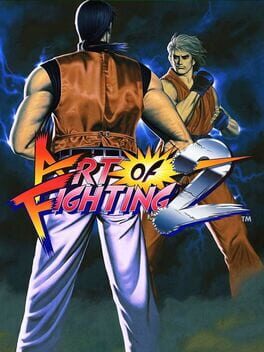
The second installment in the AoF series added the "rage gauge"; similar to the "spirit system" of its predecessor, it limited the use and effectiveness of special attacks. The game's story is set a year after the original. Geese Howard, a rising star in South Town's criminal underworld, calls fighters to the city for a new tournament, "The King of Fighters." Howard was the final boss and series villain of SNK's other fighting game franchise Fatal Fury (though he is a secret boss in this game), whose story took place over a decade after the events of Art of Fighting. Art of Fighting 2 was the only time Yuri Sakazaki was a playable character in the series. It also marked the only time that she donned her trademark outfit, which was made famous in The King of Fighters series. This game also marks the debut of Takuma Sakazaki without his Mr. Karate persona, as well as Eiji Kisaragi, who both appear in the King of Fighters series. Ryuhaku Todo, the first boss in the original AOF, is the only character dropped; all characters are playable from the beginning. The final boss is always Mr. Big, though as mentioned earlier, an extra match will be played against Geese Howard if the player unlocks him through good performance. This game is also notorious for its difficulty, with it being referred in many fighting circles as having some of the toughest opponent AI in a fighting game.

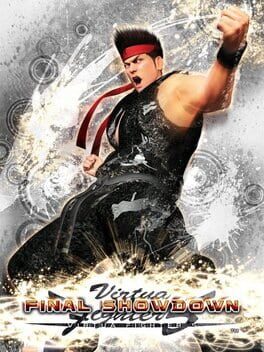
The fifth entry in SEGA's fighting game series. Once again, the real-time level of visual detail and character animation has been upped to the most advanced levels, with next-generation lighting and detail on the fighters and environments. Players will be able to customize their characters by selecting from various patterned costumes and a wide range of attachable items that can be placed onto each fighter's various body parts. Players will not only achieve victory by defeating highly-skilled opponents, but will also compete for prizes and earn in-game money through the match to buy many items at an in-game shop. Virtua Fighter 5: Final Showdown contains a full overhaul of Virtua Fighter 5's mechanics, balance and animations, along with new game modes, new dynamic fighting arenas, a massive collection of customizable character items and new characters.

Super Street Fighter II Turbo, released in Japan as Super Street Fighter II X: Grand Master Challenge, is a competitive fighting game released for the arcades by Capcom in 1994. It is the fifth installment in the Street Fighter II sub-series of Street Fighter games, following Super Street Fighter II: The New Challengers. Like its predecessor, it ran on the CP System II hardware. Super Turbo introduced several new gameplay mechanics not present in previous versions of Street Fighter II, including the addition of Super Combos and air combos. It also introduced the secret character Akuma, who would go on to become a recurring character in later Street Fighter installments and other Capcom fighting games. Super Turbo was originally ported to the 3DO Interactive Multiplayer, followed by the PlayStation and Sega Saturn (under the title of Super Street Fighter II Turbo: The Ultimate Championship) as part of the Street Fighter Collection, and for the Dreamcast in Japan under the title of Super Street Fighter II X for Matching Service. A remake of the game was released for the PlayStation 3 and Xbox 360 titled Super Street Fighter II Turbo HD Remix.

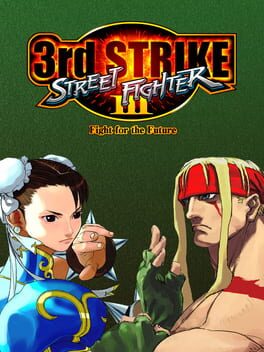
Street Fighter III: 3rd Strike is the second follow-up to Street Fighter III. The game increased the character roster by adding five new characters and also added further refinements to the previous game's play mechanics and rules. All the returning characters from the previous Street Fighter III games were given new stages, endings, and voice actors for certain characters, continuing the overall storyline from where the first two games left off.