
1292 Advanced Programmable Video System / Atari 2600 / VC 4000
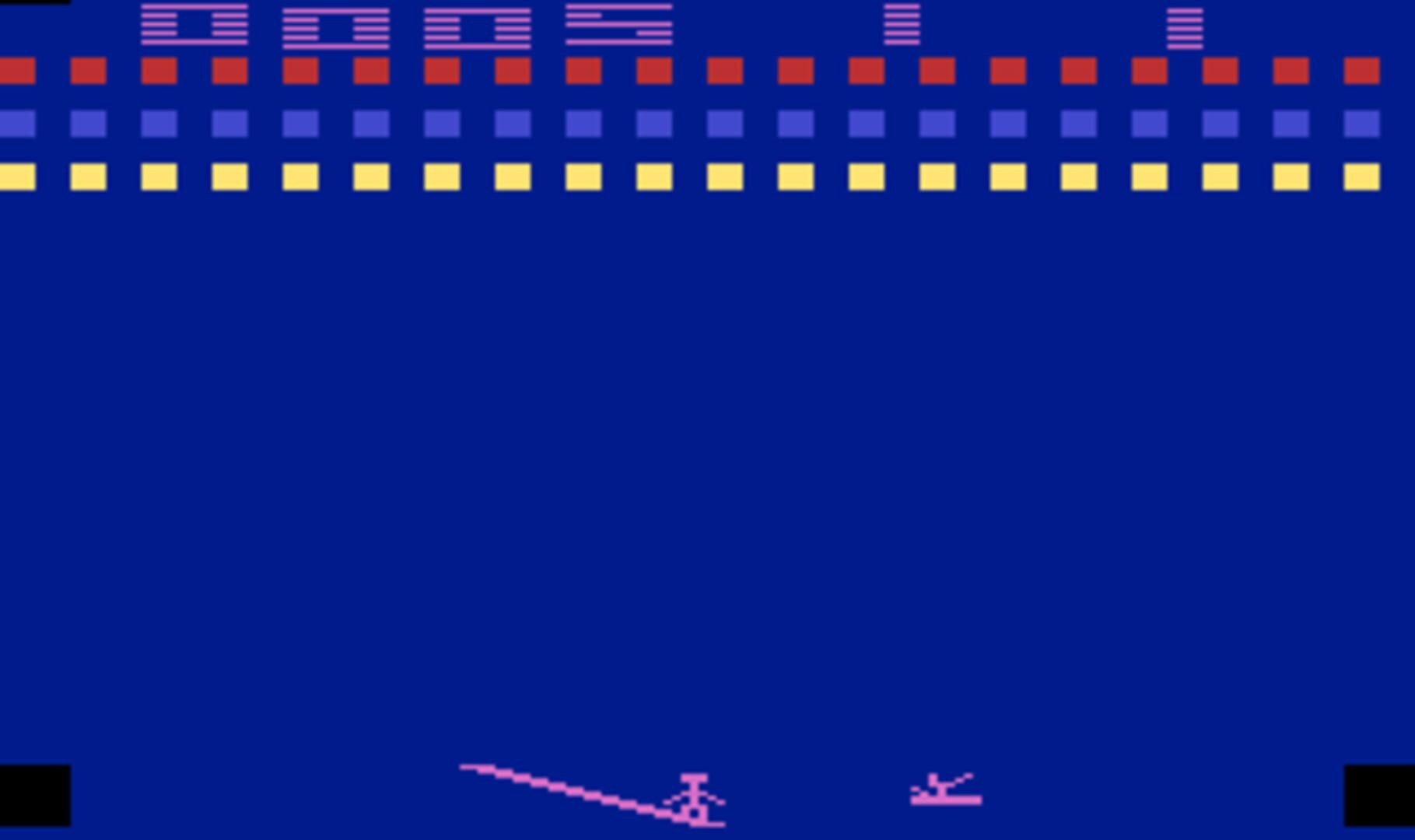
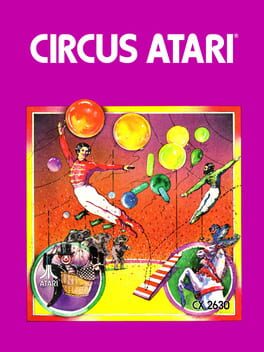
3 rows of triangular balloons move along the top part of the screen, each overlaid with blue, green, and yellow (colors used in the original version), counting from the top row. A clown appears from the edge of the screen where there is a jumping board, and the player must move the seesaw located at the bottom of the screen so that the clown can bounce back off the seesaw once he jumps off from his starting position. If the player successfully gets the clown onto the seesaw, the clown on the other side shoots off into the air towards the 3 rows of balloons on the top of the screen. The clown may not have enough speed to reach the balloons if the first clown does not land squarely on the seesaw. Clowns bounce off of balloons, walls, and jumping boards, but will pass directly through multiple balloons if they are moving quickly enough. They will only bounce off the jumping boards when they are heading downwards, and will pass straight through the boards while moving upwards.
Racing / Simulator / Arcade / Action / Comedy
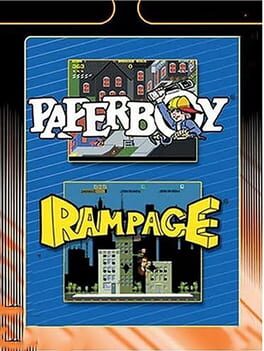
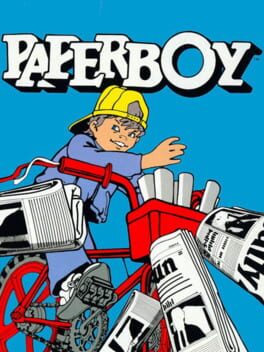
Paperboy is a 1985 arcade game by Atari Games originally developed in 1984 . The players take the role of a paperboy who delivers newspapers along a suburban street on his bicycle. The game was ported to numerous video game consoles and personal computers. Paperboy was innovative for its theme and novel controls. The player controls a paperboy on a bicycle delivering newspapers along a suburban street which is displayed in a cabinet perspective (or oblique projection) view. The player attempts to deliver a week of daily newspapers to subscribing customers, attempts to vandalize non-subscribers' homes and must avoid hazards along the street. Subscribers are lost by missing a delivery or damaging a subscriber's house.

Simulator / Sport / Strategy / Action / Horror
Created specifically for the PSP system, WTF is a crazy collection of fun and addictive mini-games that drive the player to perform sometimes trivial, sometimes mind-bending, but always fun jobs in pursuit of the almighty dollar. The latest in a long line of unique Japanese games that have gained popularity in the United States, WTF delivers gamers compelling, bite-sized morsels of frenzied arcade-style action unlike anything ever seen on the PSP system.

Shooter / Simulator / Arcade / Action / Comedy
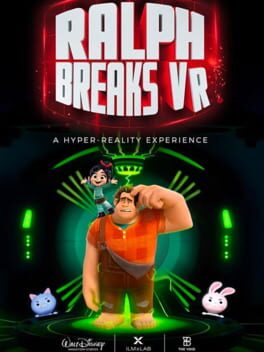
A companion to the films Wreck-It Ralph and its sequel Ralph Breaks the Internet, developed with input by its directors Phil Johnston and Rich Moore. It was a continuation of The Void's collaborations with Disney and ILMxLab now also involving Walt Disney Animation Studios. It consists of a series of minigames set within the sequel's portrayal of the Internet, including a sequence (referencing a children's mobile game seen in the film's trailer) where the players must fight off invading bunnies and kittens using pancakes and milkshakes as ammo. It was written by Ralph Breaks the Internet screenwriter Pamela Ribon in collaboration with Tracy Hickman. Direction was again done as a creative collaboration between The VOID and ILMxLab.

Simulator / Arcade / Action / Comedy
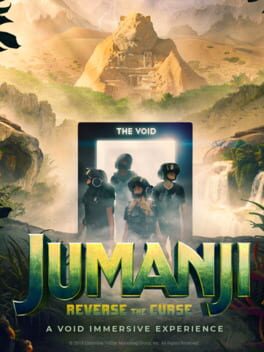
A tie-in to the film "Jumanji: The Next Level". You play as the title characters of the film in an original storyline voiced by Kevin Hart, Dwayne Johnson, Jack Black, and Karen Gillan. The experience was directed by Curtis Hickman and produced by the VOID in collaboration with SONY Pictures, with Tracy Hickman as the writer. As the four main characters, you must save the world of Jumanji from the curse set by Hakaar - a demonic sorcerer. The four playable characters have unique abilities that will allow them to progress through the adventure. Heed the warning of the jungle drums! You and your companions fall into this unique world of adventure, becoming Dr. Bravestone, Ruby Roundhouse, Prof. Oberon or 'Mouse' Finbar. You risk your 'three' lives in a daring quest to return the jewel to the temple from which it was stolen. Feel the cooling mists of waterfalls and the burning heat of desert sands. Each of you have unique abilities – and you must use them together to survive. From 'dance fighting' to navigating dangerous animals, with every step you become the heroes who must 'save Jumanji and call out its name!'


Simulator / Pinball / Arcade / Action / Kids
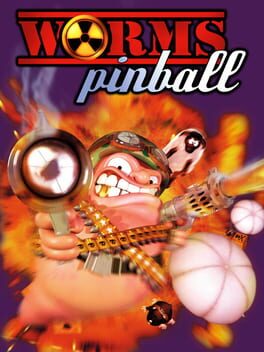
Worms Pinball is a pinball simulation game set within the Worms franchise. The game features a single pinball table themed around two main modes, one inspired by martial arts and the other by a Western setting. Players control a pinball table that incorporates multiple objectives, rule sets, and sub-games presented through a three-dimensional LED display. The table includes transparent ramps, moving mechanical components, user-controlled elements, and magnetic fields. Gameplay mechanics replicate standard pinball techniques such as tilt functions, hit combinations, ball control maneuvers, and recovery actions. The table contains a large number of animated elements and extensive rendered animation sequences used for the LED display. Sound effects and music are integrated to accompany gameplay events. The design emphasizes depth through layered objectives and complex table rules, supporting extended play for both casual and experienced pinball players.

Simulator / Strategy / Arcade / Action / Science fiction
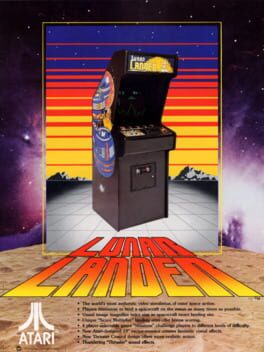
Lunar Lander is an arcade game released by Atari, Inc. in 1979, which uses a vector monitor to display vector graphics. The object is to pilot a lunar landing module to a safe touchdown on the moon.

Shooter / Simulator / Arcade / Action / Warfare
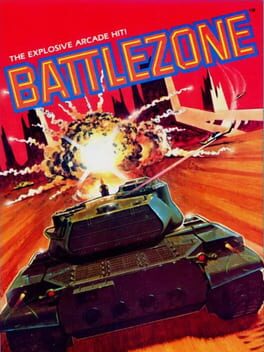
Battlezone is an arcade game from Atari released in November 1980. It displays a wireframe view (using vector graphics rather than raster graphics) on a horizontal black and white (with green and red sectioned color overlay) vector monitor. Due to its novel gameplay and look, this game was very popular for many years. Throughout the 1980s, Battlezone was ported to several home computer systems (usually on the Atarisoft label), including the Apple II, the Commodore 64, the Sinclair ZX Spectrum, and the Atari XEGS. The Atari ST port contains large parts of the original 6502 code which is emulated in real time. An Atari 2600 port was also released, but has colored raster graphics due to limitations and the view is behind the tank rather than inside it.