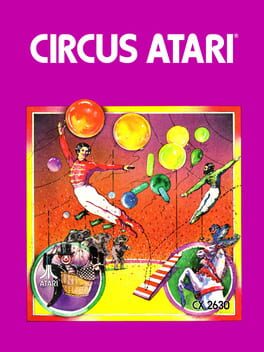
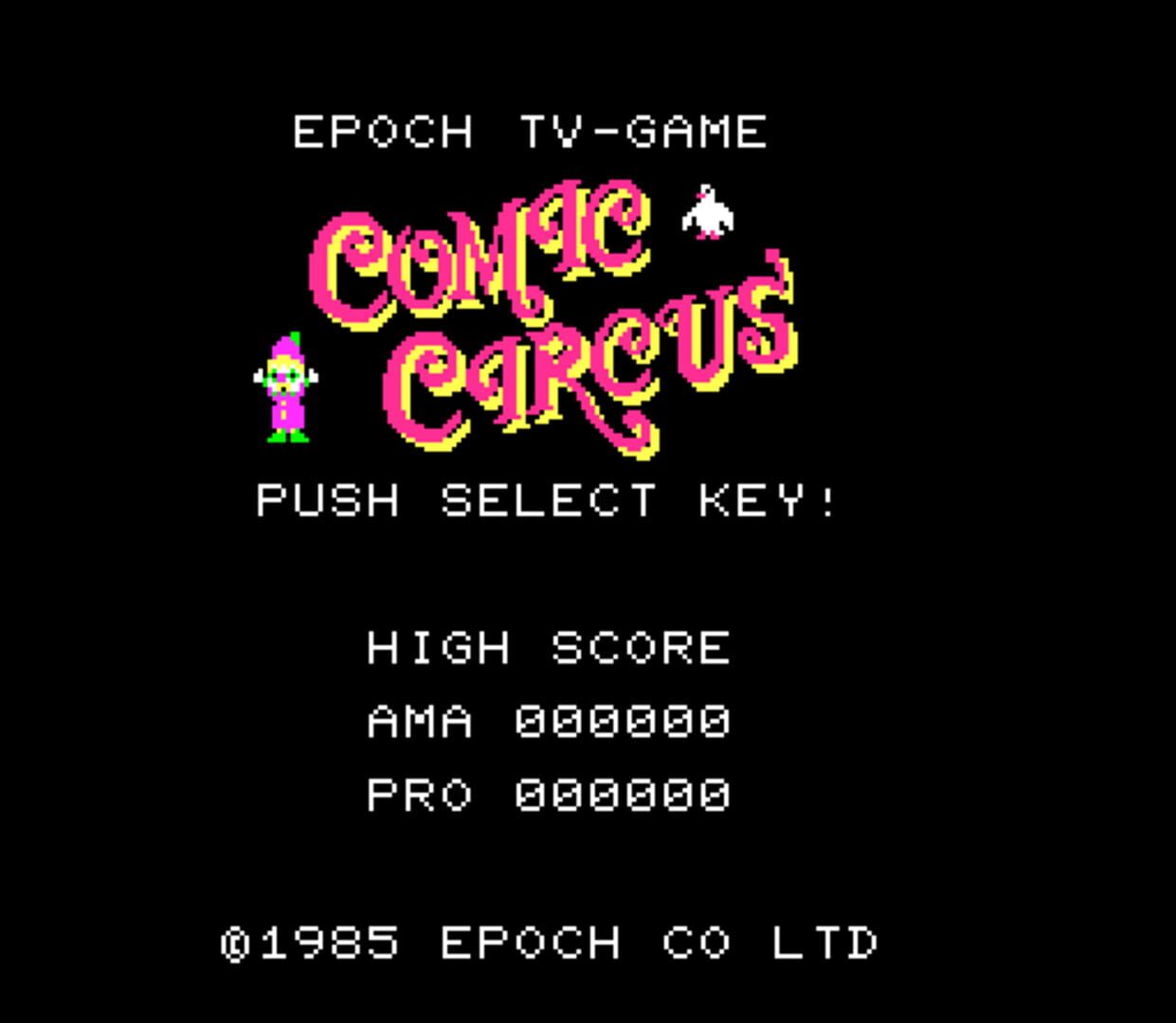
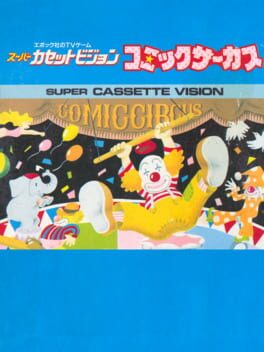
An arcade style game where you play as a bunch of clowns trying to perform a circus act where they use acrobatics to catch doves. The game is divided into three stages. In the first stage you control two clowns using a seesaw to catch doves. In the second stage you control two clowns bouncing the third on a trampoline to catch the doves. In the third stage you control a bouncy pillow trying to help one of your clown friends bounce to catch the doves, near the top of the screen two additional clowns are performing acrobatics and will catch the bouncing clown if he makes it up there, which will help you reach the high perching doves.
You are at the funfair and the goal is to grab doves with two clowns jumping on a seesaw.

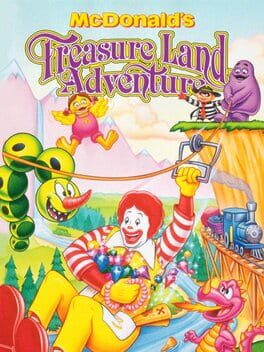
McDonald's Treasure Land Adventure is a side-scrolling adventure starring Ronald McDonald. After finding a piece of a treasure map, the yellow clown travels through four different levels (Forest, Town, Sea and Moon). He's off to find and defeat the baddies who have the other pieces of the map. Ronald can jump, shoot and use his scarf to grab onto hooks to jump to higher levels. Jewels and flowers collected in each level can be used to purchase extra lives and power-ups in shops between levels.

Simulator / Arcade / Action / Comedy
3 rows of triangular balloons move along the top part of the screen, each overlaid with blue, green, and yellow (colors used in the original version), counting from the top row. A clown appears from the edge of the screen where there is a jumping board, and the player must move the seesaw located at the bottom of the screen so that the clown can bounce back off the seesaw once he jumps off from his starting position. If the player successfully gets the clown onto the seesaw, the clown on the other side shoots off into the air towards the 3 rows of balloons on the top of the screen. The clown may not have enough speed to reach the balloons if the first clown does not land squarely on the seesaw. Clowns bounce off of balloons, walls, and jumping boards, but will pass directly through multiple balloons if they are moving quickly enough. They will only bounce off the jumping boards when they are heading downwards, and will pass straight through the boards while moving upwards.

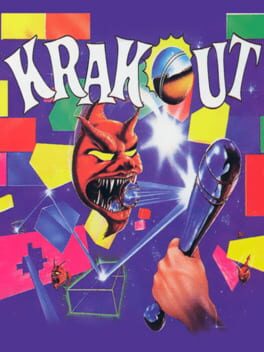
Arkanoid-style Breakout clone, which unlike most other similar games has the bat on the side of the screen (there is a left/right option) instead of at the bottom. There are a number of types of special bricks, but unlike e.g. Arkanoid, they do not fall towards the bat. Instead, when you hit a special brick, it flips to show a letter. E.g. E (Extend bat), C (Catch ball), M (Missile), B (Bomb, explodes when hit by ball, clearing a number of bricks) and X (Extra life). The enemies/obstacles are more varied than in Arkanoid. Some make the bat freeze, some actually chew and eat your ball and spit out the core back at you!

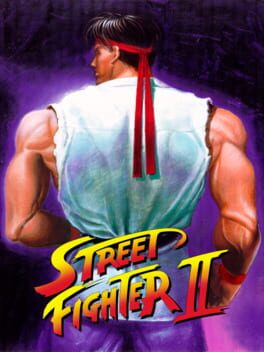
A sequel to Street Fighter, Street Fighter II improved upon the many concepts introduced in the first game, including the use of command-based special moves and a six-button configuration, while offering players a selection of multiple playable characters, each with their own unique fighting style and special moves. Street Fighter II is credited with starting the fighting game boom during the 1990s. Its success led to the production of several updated versions, each offering additional features and characters over previous versions, as well as many home versions. Some home versions of the Street Fighter II games have sold millions of copies, with the SNES port of the first Street Fighter II being Capcom's best-selling consumer game of all time as of 2008. Street Fighter II follows several of the conventions and rules already established by its original 1987 predecessor. The player engages opponents in one-on-one, close-quarters combat in a series of best-of-two-out-of-three matches. The objective of each round is to deplete the opponent's vitality before the timer runs out. If both opponents knock each other out at the same time or the timer runs out with both fighters having an equal amount of vitality left, a "double KO" or "draw game" is declared. Additional rounds will be played until sudden death. In the first Street Fighter II, a match could last up to 10 rounds if there was no clear winner; this was reduced to 4 rounds in the Champion Edition and onward. If there is no clear winner by the end of the final round, then either the computer-controlled opponent will win by default in a single-player match, or both fighters will lose in a 2-player match. After every third match in single-player mode, the player will participate in a "bonus game" for additional points. The bonus games include (in order) a car-breaking event; a barrel-breaking bonus game where the barrels are dropped off from a conveyor belt above the player; and a drum-breaking bonus game where drums are flammable and piled over each other. The bonus games were removed from the arcade version of Super Street Fighter II Turbo. As in the original, the game's controls use an eight-directional joystick and six attack buttons. The player uses the joystick to jump, crouch, move the character towards or away from the opponent, and guard against the opponent's attacks. There are three punch buttons and three kick buttons, each with varying strength and speed (Light, Medium, and Heavy). The player can perform a variety of basic moves in any position, including grabbing/throwing attacks, which were not featured in the original Street Fighter. Like in the original, the player can perform special moves by inputting a combination of directional and button-based commands. Street Fighter II differs from the original in that it features multiple playable characters, each with distinct fighting styles and special moves. Additionally, the player can "cancel" an animation by performing another move, enabling combinations of basic and special moves. Both of these features would be expanded upon in subsequent installments.
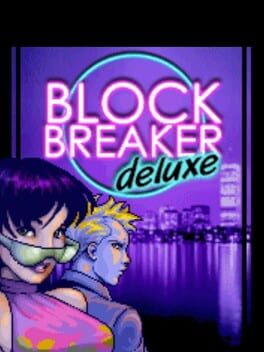
Prepare for the frenzy of the coolest block-breaker game ever. Block Breaker Deluxe is a reinvention of the classic arcade brick-breaker game with a trendy graphical style, fun atmosphere and an exclusive multiplayer mode. Lively characters and amazing graphics provide distinctive settings of the jet-set nightlife, including a cool bar, dance club, casino and more. Special bricks, multiple bonuses, secret weapons, paddle size options and ball-speed variations make this fascinating game even more challenging. The Block Breaker Deluxe rage has arrived.

Arcade / Action / Science fiction
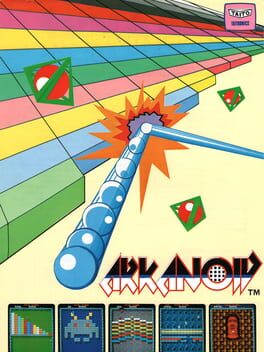
Arkanoid is an arcade game developed by Taito in 1986. It expanded upon Atari's Breakout games of the 1970s by adding power-ups, different types of bricks, and a variety of level layouts. The title refers to a doomed "mothership" from which the player's ship, the Vaus, escapes.

Puzzle / Arcade / Action / Science fiction
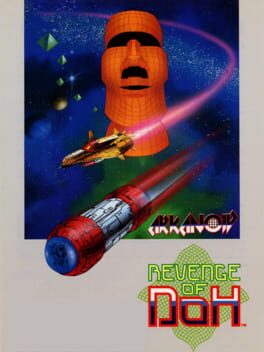
Arkanoid - Revenge of Doh (a.k.a. Arkanoid 2) is an arcade game released by Taito in 1987 as a sequel to Arkanoid. The mysterious enemy known as DOH has returned to seek vengeance on the Vaus space vessel. The player must once again take control of the Vaus (paddle) and overcome many challenges in order to destroy DOH once and for all. Revenge of Doh sees the player battle through 34 rounds, taken from a grand total of 64. NEW FEATURES: Revenge of Doh differs from its predecessor with the introduction of "Warp Gates". Upon completion of a level or when the Break ("B") pill is caught, two gates appear at the bottom of the play area, on either side. The player can choose to go through either one of the gates - the choice will affect which version of the next level is provided. The fire-button is only used when the Laser Cannons ("L") or Catch ("C") pill is caught. The game also features two new features for bricks. Notched silver bricks, like normal silver bricks, take several hits to destroy. However, after a short period of time after destruction, they regenerate at full strength. Fortunately, clearing a level does not require that any notched bricks be destroyed. Also, some bricks move from side to side as long as their left and/or right sides are not obstructed by other bricks. The US version features an entirely different layout for Level 1 that feature an entire line of notched bricks, with all colored bricks above it moving from side to side. The game features a mini-boss in the form of a giant brain, which will help you practice for DOH. Home versions of Revenge of DOH also featured a level editor, where players could create their own levels or edit and replace existing levels, with the exception of two levels: the mini-boss and DOH.

A brick-breaking game with RPG elements. The goal is to find your way back to Earth through the walls of bricks blocking your path.