
Developed by Sega Enterprises, Ltd. for Sega of America.
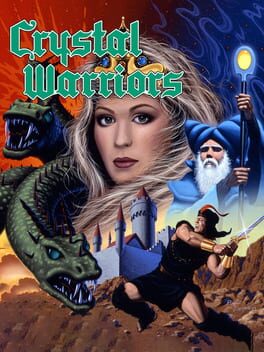
The continent of Tyramus has lived in peace for almost a century, thanks to the four elemental crystals of the kingdom of Arliel. However, peace is threatened by the invading armies of the Jyn Empire, led by Emperor Grym, who wants to use the four crystals to rule over Tyramus. Fortunately, Princess Iris can escape with one of the crystals and now the player has to protect her and the crystal and somehow find a way to drive back the hordes of Jyn. Gameplay in Crystal Warriors is quite similar to Shining Force. The player fights in turn-based battles controlling different characters like fighters, healers, rangers and mages, all with different strengths and skills. Whenever two units engage in battle, they enter a duel mode lasting for up to two turns. In this mode the player can choose between four commands: "battle" (attack), "retreat", "spell" and "monster". While the first three commands are quite self-explanatory, the "monster" command is interesting. Whenever a non-human enemy is defeated, it can be tamed and be used in battles. While most monsters do not have many HP they can serve as good attackers for physically weak characters or take some hits in order to protect his master. In-between battles the player can visit towns to rest, buy weapons and spells or recruit new party members.
Role-playing (RPG) / Strategy / Turn-based strategy (TBS) / Fantasy / Warfare
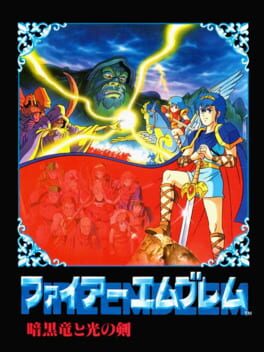
Fire Emblem: The Dark Dragon and Sword of Light is the first game in the Fire Emblem series, developed by Intelligent Systems and published by Nintendo. It was first released on the Famicom (known internationally as the Nintendo Entertainment System) on April 20, 1990. It takes place on the continent of Archanea. It stars Marth, a character who later appeared in Super Smash Bros. Melee. The first time the game was released outside of Japan was in the form of a limited edition port for Nintendo Switch, under the same name, that runs a localization script in the background, but the original version of the game was never released outside of Japan.

Role-playing (RPG) / Strategy / Turn-based strategy (TBS) / Fantasy
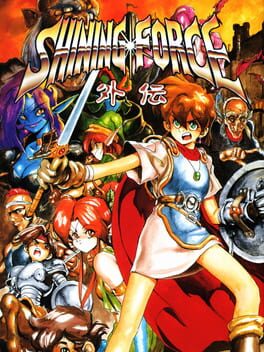
Shining Force Gaiden is a turn-based tactical RPG. Battles take place in square grids, and each unit occupies 1 square. Units can belong to one of two sides: allies (controlled by the player) or enemies (controlled by the computer AI). Each unit can move up to a fixed amount of squares along the battlefield, determined by its Move statistic. Depending on its location relative to enemies and to allies, a unit also has the option to attack, cast a spell, use an item, search (if adjacent to a treasure chest), or stay and do nothing, all of which end the unit's turn. Some commands, such as equipping or dropping items, don't count as actions, and the character's turn is able to continue. The order of the turns is determined by the unit's agility score and a random seed. Units can use offensive actions, such as physical attacks or offensive magic, only on units belonging to the other side and can use supportive actions, such as healing magic, stat-enhancing magic, and items, only on units belonging to the same side. This game (together with Shining Force: The Sword of Hajya) was later given a remake named Shining Force CD, released on the Sega CD. This remake also saw a western release to both North America and Europe and the full english title was "Shining Force Gaiden: Towards the Root of Evil". In 2013 the Game Gear original game got ported to the Nintendo 3DS Virtual Console (Japan only).

Role-playing (RPG) / Strategy / Turn-based strategy (TBS) / Fantasy
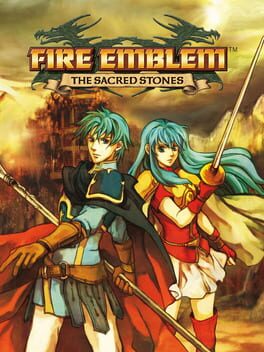
In Fire Emblem: The Sacred Stones, you must help protect the nation of Renais from the invading Grado Empire. Plan your strategy, choose your units, and then lead your soldiers in to battle. The more experience your soldiers gain, the more you can upgrade their abilities. This time, your soldiers can gain experience by fighting new monsters in the Tower of Valni.

Role-playing (RPG) / Strategy / Turn-based strategy (TBS) / Fantasy / Historical
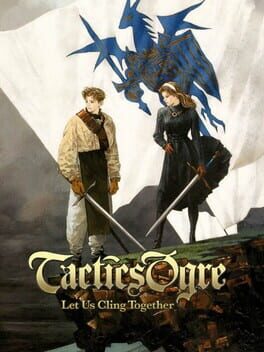
Tactics Ogre is a 3D isometric tactical role-playing game. The player starts out with a band of troops, builds a small army and fights many battles with choices to make in between, that will determine which one of the eight possible endings will be reached in a non-linear storyline. The player has the option to recruit characters, control individual equipment of each character, with over six male character classes, six female character classes, three demi-human classes, and more. It is also possible to train at safe locations to prepare the army before the next battle or storyline advancement.

Role-playing (RPG) / Strategy / Turn-based strategy (TBS) / Fantasy
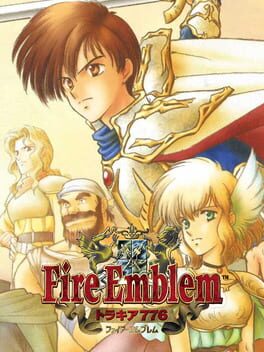
Fire Emblem: Thracia 776 is a Japanese tactical role-playing game developed by Intelligent Systems and published by Nintendo, and the fifth installment in the Fire Emblem series. It is also the third and final Fire Emblem series title to be released on the Super Famicom. Fire Emblem: Thracia 776 takes place between Chapters 5 and 6 of the previous game, Fire Emblem: Seisen no Keifu. Several characters from Fire Emblem: Seisen no Keifu appear, such as Leaf, Fin, and Nanna. It takes place in the Thracian peninsula in southeastern Jugdral.

Role-playing (RPG) / Strategy / Turn-based strategy (TBS) / Fantasy / Historical
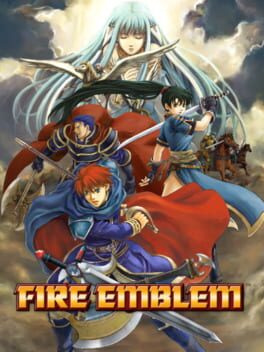
It is the seventh game of the Fire Emblem series, the second game in the series to be released for the Game Boy Advance, and the first to be released in both North America and Europe. It features a prologue storyline designed to introduce newcomers to Fire Emblem gameplay and tactical basics. The overall narrative is a prequel to the events of the previous game, Fire Emblem: The Binding Blade, which is set twenty years later. The game was first released under the localized title "Fire Emblem" in the West, but it was later rebranded as "Fire Emblem: The Blazing Blade" when Fire Emblem Heroes was released.

Role-playing (RPG) / Strategy / Turn-based strategy (TBS) / Fantasy
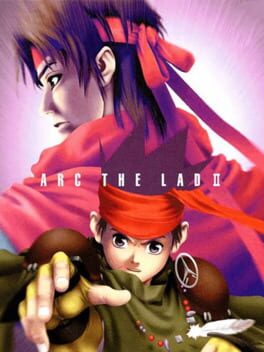
This direct sequel to "Arc the Lad" continues the unfinished story of the first game, but starts from a totally different perspective. You control a bounty-hunter named Elk, who suffers from amnesia. On his quest for his own true identity he discovers the powers hidden within him, and the destiny of his entire tribe. While pursuing his archenemy, Elk meets up with Arc, the hero of the first game, and then both realize they have been looking to destroy the very same evil. The battle system of "Arc the Lad II" is similar to the one used in its predecessor: in battles you can move your characters on the battle field, and your proximity to the enemies plays an important role. You cause and take different amounts of damage depending on your position on the battle field. Unlike the first game, this one is a full-fledged adventure/RPG, without the "strategy" feel of the predecessor. You move through the game world on your own, visiting towns and exploring dungeons.

Role-playing (RPG) / Strategy / Turn-based strategy (TBS) / Fantasy / Romance
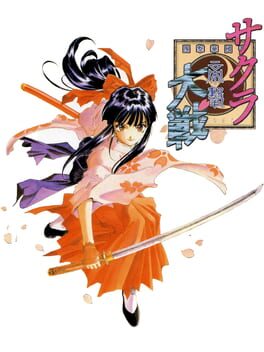
Released in 1996 for the Sega Saturn, Sakura Taisen is the first game in the iconic Japanese game franchise. It combines strategy RPG elements with dating sim-style character interactions to make "A Storm of Romance amid Taishou Cherry Blossoms!"