

Onesong's cube-rolling puzzle game lands.
Featured in
Onesong's cube-rolling puzzle game lands.
Point-and-click / Shooter / Puzzle / Science fiction / Horror
The first entry in the D series and one of the first games the company released, it dealt with taboo content such as violence and cannibalism, featured 3D CGI full-motion video, and used a first-person perspective. It was the first game to star the digital actress Laura.
Puzzle / Simulator / Strategy / Fantasy
The arcade game "Magical Drop" received an updated version named "Magical Drop Plus 1!" that features aesthetic improvements and also introduces a "Solo Play" mode. Magical Drop Plus 1! was released in North America and Europe as "Chain Reaction"; in this version, the puzzle pieces are changed from spherical Drops to various items (such as food or celestial bodies) and the character-unique voice acting is replaced by a single male narrator. All versions of the original arcade game were developed for Data East's "MLC" arcade hardware. The game includes two game modes: the one-player score-based Solo Play (where additional lines of tiles regularly drop from the top of the screen) and two-player competitive Battle Mode (where the second player can be human or CPU opponents). Similar to Tetris Attack, players can make "chain reactions" by quickly creating near-simultaneous matches to either boost their score (in Solo Play) or fill up more of their opponent's playfield (in Battle Mode). Magical Drop was ported to the Super Famicom, which includes a puzzle mode that challenges players to solve preset puzzles given a limited number of possible moves. The game was re-imagined for the Sony PlayStation and Sega Saturn with different, pre-rendered characters. The Sega Saturn port was going to be released in America by Koei, and appeared at E3 1997, however the American release was cancelled. Finally, a port of the game is part of Magical Drop III + Wonderful; this includes the PAL version of III + Wonderful, which retains the Magical Drop Plus 1! name as opposed to using Chain Reaction.
Platform / Puzzle / Strategy / Action
Moai-kun is a puzzle video game developed and published by Konami for the Family Computer in Japan in March 1990. The game derives its themes from Easter Island; the player controls a sentient moai statue that must rescue other moai and escape each stage via a door before the timer expires. Although platforming elements are present, the primary challenge is to find a way to manipulate the objects in each stage to reach the distressed moai and rescue them while still leaving an avenue of escape to the exit door.
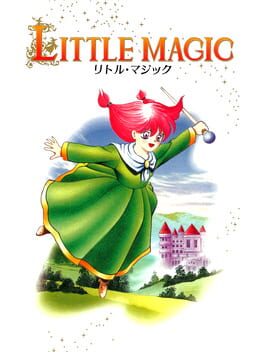
May is an apprentice mage at Magic School and must pass the final exam. A puzzle game seen from a top-down perspective. The goal of each level is to open the exit by pushing a magic stone on a designated spot. May can also push objects one tile ahead without moving herself. This is often used to get the stone over water that she can't cross herself. May's other ability is to create magic bubbles. She can create bubbles in three different sizes. Bubbles will pop after a certain amount of time, depending on their size. If they pop while next to the stone or another bubble, the stone or bubble will be moved one space. Since May can create several bubbles simultaneously, it is possible, and often necessary, to create chain reactions to maneuver the stone into the desired position. As the game progresses, levels become increasingly difficult and new hazards and enemies are introduced. Enemies follow a set movement pattern and can sometimes be stopped, but not destroyed by magic bubbles. Later levels are made more complicated by different types of tiles including: grass that slows down May, ice that May and the magic stone will slip over, spikes that destroy the stone if it is pushed into them, collapsing tiles that can only be walked over once, rune tiles on which May cannot create magic bubbles, teleporters and others.
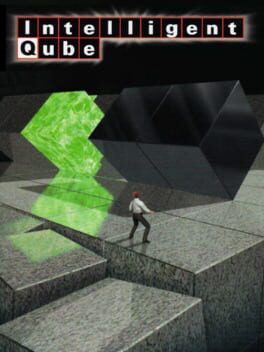
Intelligent Qube is a puzzle game for the PlayStation. In the game, the player controls a character who must run around a platform made of cubes, clearing certain cubes as they approach. Cubes are "cleared" by marking a spot on the stage, waiting for the cube to roll on top of it, and then deactivating the marked spot.
Puzzle / Strategy / Fantasy / Science fiction
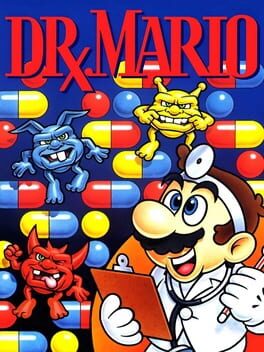
Dr. Mario is a falling block tile-matching video game, in which Mario assumes the role of a doctor, dropping two-colored medical capsules into a medicine bottle representing the playing field. This area is populated by viruses of three colors: red, yellow, and blue. In a manner and style considered similar to Tetris, the player manipulates each capsule as it falls, moving it left or right and rotating it such that it is positioned alongside the viruses and any existing capsules. When four or more capsule halves or viruses of matching color are aligned in vertical or horizontal configurations, they are removed from play. The main objective is to complete levels, which is accomplished by eliminating all viruses from the playing field. A game over occurs if capsules fill up the playing field in a way that obstructs the bottle's narrow neck.
Shooter / Platform / Puzzle / Action / Fantasy
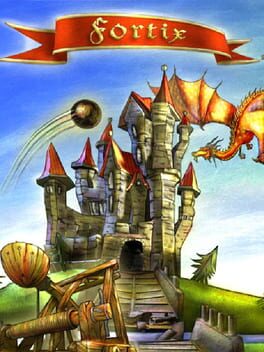
Can you reclaim your ancestors’ land? Evil forces have taken over the once fertile land of Fortiana. You are the only one who can storm the castles and claw it back from the hordes of dragons. Experience a new type of strategy and arcade game. Fence off parts of the battlefield to corner your enemies. Collect catapults and power-ups to besiege the fortresses and take on dragons. But beware! As you progress through the levels it gets harder and harder. The fortresses become much larger and the monsters more vicious. Can you emerge victorious and reclaim the land of your ancestors? You are knight Fortix, the sole hope for the desolate and tortured land of Fortiana to become the fertile land that it was before.