Developed by Bandai.
Role-playing (RPG) / Simulator / Adventure / Fantasy / Science fiction
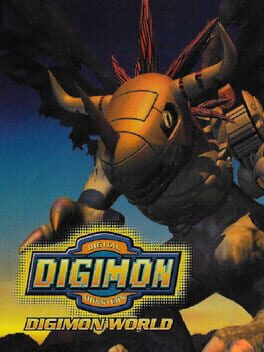
Digimon world is a game that allows a player to raise their own Digimon and teach it to battle.
The plot begins when a small group of children are playing their Digimon Virtual Pet device. The protagonist, a young boy, arrives and excitingly observes a fight between MetalGreymon and MetalMamemon in the Virtual Pet devices. When the boy goes home, he notices light coming from his room. As he gazes into his Digimon Virtual Pet device, a Koromon appears attempting to talk to him. The boy gets sucked into the Digital World, where he is greeted by Jijimon and many other Digimon, including his partner. Once the boy realizes that File City is in danger, he takes it upon himself to recruit Digimon in order to populate the city. As the story progresses, the young boy discovers the evil plot created by Analogman and sets out to save File Island.

Role-playing (RPG) / Adventure / Fantasy / Science fiction
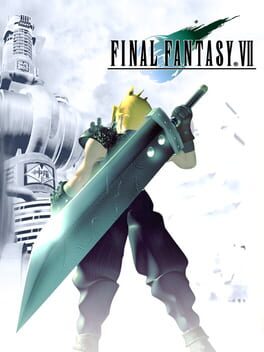
The Western release of Final Fantasy VII (released as Final Fantasy VII International in Japan) included additional elements and alterations, such as streamlining of the menu and Materia system, reducing the health of enemies, new visual cues to help with navigation across the world map, and additional cutscenes relating to Cloud's past.

Shooter / Role-playing (RPG) / Simulator / Action / Science fiction
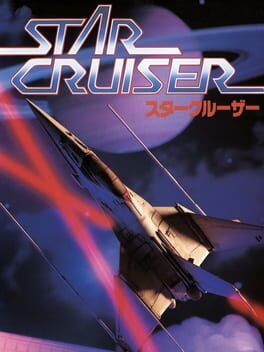
An early first-person role-playing shooter released by Arysis Software for the PC-88 and PC-98 in 1988, and later ported to the Sharp X68000 and Mega Drive/Genesis. Ahead of its time, it had 3D polygon graphics, FPS gameplay, strafing controls, open-world space exploration, and an epic sci-fi space opera plot.

Role-playing (RPG) / Adventure / Card & Board Game / Fantasy / Science fiction
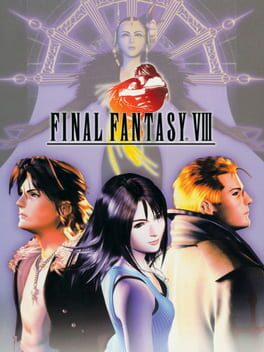
Final Fantasy VIII is the eighth main installment in the Final Fantasy series. The gameplay makes a departure from many series standards. While it still uses the Active Time Battle system, it deviates from the series' traditional means of boosting a character's power via leveling, although levels are not completely abandoned as they were in Final Fantasy II. In addition, it does not have a Magic Point-based system for spell-casting. Instead, magic is collected, drawn, and created from items, and is used to power up the characters via the junction system.

Point-and-click / Puzzle / Role-playing (RPG) / Action / Science fiction
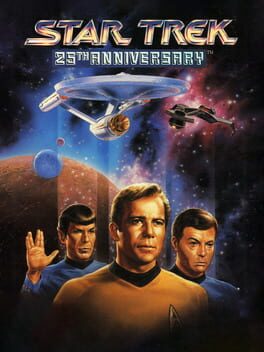
Fasten your seat belts, bring your seat back to an upright position, you are about to pilot a Federation Starship on a wild roller coaster ride through the final frontier. Star Trek: 25th Anniversary is a point-and-click adventure with multiple solutions and moral choices, combined with a first person starship simulator. As Captain Kirk, you'll control phasers, photon torpedoes, shields, and communications during eight separate space and ground missions. Visit different worlds and then join a landing party sent down to map and interact with alien races and artifacts. Piloting the U.S.S. Enterprise is a thrill in itself, but the actual voices of William Shatner, Leonard Nimoy, DeForest Kelley, James Doohan, George Takei, Walter Koenig and Nichelle Nichols will make your adventure truly out of this world.

Shooter / Racing / Role-playing (RPG) / Action / Fantasy
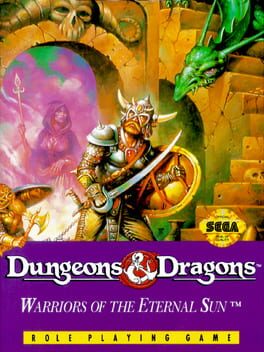
Dungeon & Dragons: Warriors of the Eternal Sun is set in the world of Mystara, a setting of the Dungeons & Dragons game. The characters find themselves in a strange, red-hued world in which the horizon slopes upward in all directions, eventually vanishing into a crimson haze at the limits of sight. Their mission is to find and make allies in this new world or else the kingdom and its culture will perish. The player leads a party of four characters (either the default party or one that the player has created). Characters and races can be chosen from the normal D&D options. The gameworld is viewed from an isometric perspective and the characters can roam around in realtime. Battles are turn based. Like most role-playing games, the gaming experience focuses on exploration, inventory management and character development.

Shooter / Role-playing (RPG) / Simulator / Action / Science fiction
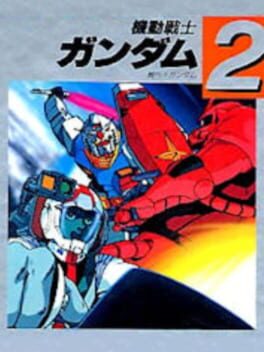
Kidou Senshi Gundam Part 2: Tobe! Gundam (機動戦士ガンダム PART 2 翔べ!ガンダム "Mobile Suit Gundam Part 2: Fly! Gundam") is an adventure/shooter/RPG from 1984, based on the Mobile Suit Gundam anime series. It anticipated several gameplay elements later found in FPS, TPS and action RPG games.

Role-playing (RPG) / Adventure / Action / Fantasy
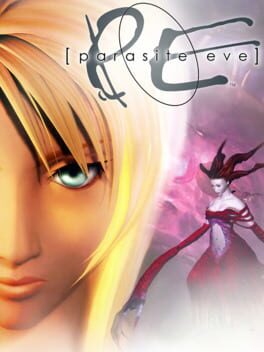
Parasite Eve is a survival horror role-playing video game developed and published by SquareSoft (now Square Enix) for the Sony PlayStation console. The game follows the story of Aya Brea, a rookie NYPD officer who becomes embroiled in a series of bizarre and deadly events related to a genetic mutation known as mitochondria. The game combines elements of horror, science fiction, and RPG gameplay, featuring real-time battles, exploration, puzzle-solving, and character development. The game's plot is inspired by the novel of the same name by Hideaki Sena, and its gameplay mechanics were influenced by the Final Fantasy series. Parasite Eve was critically acclaimed upon its release in 1998, and is widely regarded as a classic of the survival horror genre.

Role-playing (RPG) / Simulator / Turn-based strategy (TBS) / Fantasy / Science fiction
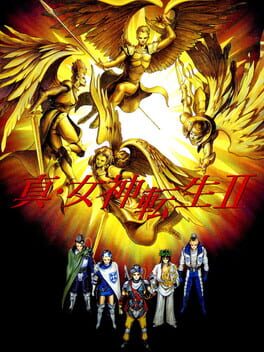
Fifty years have passed since the hero of Shin Megami Tensei followed the neutral path, defeated the leaders of Law and Chaos, and founded a state where followers of both ideologies could live freely. But his reign of freedom doesn't last long. The Messian faith gains power, expanding the Cathedral into a new enclosed environment named Tokyo Millennium. The Gaians rise up, but their rebellion is repressed by the Messians' elite warrior class, the Temple Knights. People flock into the encapsulated city, submitting themselves to the strict hierarchy imposed by the Messian Center, where only the privileged living in the Center district are safe from demonic assaults. A few years later, a retired arena fighter Okamoto rescues a man named Hawk, who was fighting for his life against a demon. He trains him to fight in the arena of the Valhalla district, hoping that he would win the tournament, which will grant them both citizenship in the Center district. When Hawk succeeds, he is brought before a Messian bishop, and learns the shocking truth about his own origins and the role he is supposed to play in the grand scheme of events. A new battle for a better future begins. Shin Megami Tensei II retains all the gameplay features of the previous game. The player is able to summon demons, fuse them to create more powerful ones, make them participate in battles, talk to random enemies and receive information from them, etc. The combat is turn-based, and the player explores the complex, maze-like dungeons from a first-person perspective view. Like in the first game, the Law, Chaos, and Neutral alignments play an important role: during the course of the game, the player will have to make choices that influence the alignment of the protagonist, steering the storyline into different directions. New features include a "magic succession" system, which allows demons to carry over their original magic spells when they are fused into new ones, a few additional spells and abilities, and the possibility to play at the casino and win unique items.