
Arcade / PlayStation 2 / iOS
Developed by CAVE Interactive for AMI.
The fourth game in the Donpachi series.
Centuries have passed since the catastrophic war that almost cost the human race its complete annihilation at the hands of the deranged commander of the DonPachi Corps, a military squad of starfighter pilots known for their combat prowess and emotional detachment (as a result of the inhuman training they are subjected to - the first game being a prime example of it, with the trainee actually slaughtering comrades posing as the enemy); whatever remained of his genocidal army was gathered, transported to the Moon and sealed within a network of caves, left to rot away as the nightmares faded into legend. The human race flourished again, to the point of colonizing the Moon itself, the megacity of Lunapolis being the hub of human activity on lunar soil. However, as time passed, the dormant machines reawakened, rebuilt, evolved: the underground caverns of the planet swarmed with all sorts of advanced warmachines, and automated production facilities, at their core a heavily guarded platform where the ultimate fighting machine of the past, the mechanical bee Hibachi (this time named 緋蜂, lit. "scarlet bee"), was slowly being rebuilt. Still following their original programming, the machines broke the seal, invading the surface and quickly seizing control of the almost defenseless Lunapolis, its streets and facilities now completely overtaken and littered with heavy artillery emplacements. With little time to spare, the DonPachi Corps are reactivated, with enough time to build only two fighters; nevertheless, to each was bestowed the assistance of an Element Doll, highly evolved sentient droids (apparently widespread in human society by then, and treated as little more than slaves) capable of providing tactical data and enhancing the craft's own capabilities. Knowing that the mission is plausibly suicidal, the two attack ships are deployed on the Moon surface, just outside Lunapolis, alone against a ruthless army of machines with a single objective; killing.

Shooter / Arcade / Action / Science fiction
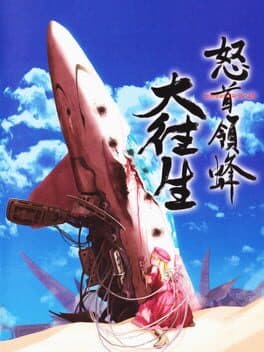
DoDonPachi SaiDaiOuJou is a vertical scrolling shoot 'em up arcade game released by Cave in 2012. It's the sixth chapter in CAVE's DonPachi series. A Japanese region-free release was released on May 30, 2013.

Shooter / Arcade / Horror / Historical
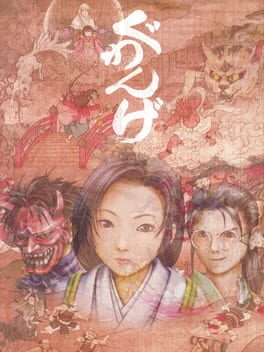
Guwange is 2D vertically scrolling shoot'em up played with a character moving on foot. The game takes place during the Muromachi period in Japan with strong fantasy elements. The shikigami demons possess the people and give them great opportunities, but they die after exactly one year. Three heroes want to get rid of the curse. They must kill the evil deity Guwange, but first they must find five elemental scrolls. The game belongs to the "bullet hell" range of shooters, with lots of bullets on the screen where precise movement and pattern detection is required. The player can choose from three characters, each with a different attack style. They can be moved around the screen and need to shoot enemies and bosses. They have access to basic weapons and special shots, but as the characters move on foot, they cannot shoot enemies on rooftops or freely move around the level when there are structures or obstacles in the way. The player can summon shikigami, increasing firepower. The Xbox 360 version has two additional game modes: Arrange Blue Mode (a more challenging version) and Arrange Xbox 360 mode (small changes in gameplay, for example shikigami is controlled separately with the right analog stick).

Shooter / Puzzle / Indie / Action / Science fiction
In this vertical scrolling spaceship shooter, you control a ship that can change its polarity at will. As blue/white, the ship can easily destroy red/black enemies, and vice versa. Bullets of your polarity can be collected to fuel your energy gauge, but those opposite will kill you. Destroying an enemy ship causes them to fire revenge bullets which can be absorbed and fired back by the player. Different difficulties exist to change exactly how you interact with polarized points, or how they appear. It is the spiritual successor to Radiant Silvergun, featuring similar level and boss design, as well as it's buddhism inspired themes and aesthetics. Both are directed by Hiroshi Iuchi, who also composed Ikaruga's soundtrack.

Shooter / Arcade / Action / Science fiction
DonPachi is a 1995 vertical manic shoot-'em-up originally in arcades and was the first game from the developer Cave. Settings are mainly woodland and enemies are military vehicles and robots, culminating in the final boss, a huge robotic bee. One of three weapon configurations is chosen at start and then leveled up through dropped power-ups. DonPachi was ported to the Sega Saturn and Sony Playstation in 1996.

Shooter / Arcade / Science fiction
Unlike in most other shoot 'em ups, there are no power-ups. All weapons are available from the start. Weapons can 'level up', however, becoming more powerful as the player uses them to score points. There are a selection of 7 weapons that can be used at any given time: The game is designed so that there is almost always a 'right' weapon for any situation. The bosses in the game are designed so that they have multiple 'sections' which, if all destroyed before the 'core' of the boss, will award the players with point bonuses. Being able to apply the right weapons on any different boss is key to obtaining these bonuses. For example, a boss may have two sections located on either side of the screen. You could immediately go up to one and begin shooting it with a vulcan, or you could hover in the centre and hit both at the same time with the side bombs. This would increase your chance of obtaining the bonus before the time limit runs out and the boss self-destructs. The game rewards players for "chaining" enemies of just one of three colors, red, blue, or yellow. Whenever the player kills three enemies that are of the same color, who can obtain a points bonus. This also facilitates faster upgrading of weapons.

Shooter / Arcade / Action / Fantasy
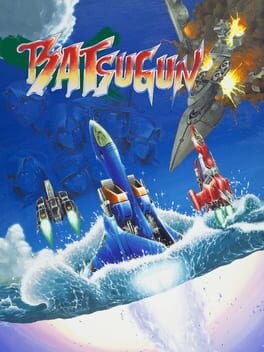
Batsugun is a vertically scrolling shoot 'em up video game created by the now-defunct Japanese game developer Toaplan. The title translates to "exceptional" or "extraordinary". It was the final game created before Toaplan's dissolution, and has been regarded as a key title in the development of the modern manic shooter, with elements of the game such as the size of the player's hitbox, the scale of their firepower, and the complexity of enemy bullet patterns all having an influence on future titles in the sub-genre. Members of the development team also went on to work on other successful manic shooters, most notably lead artist Junya Inoue.

Shooter / Arcade / Science fiction
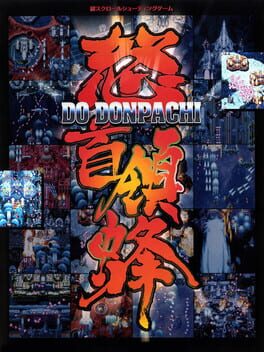
Compared to DonPachi, DoDonPachi is generally known for introducing new gameplay elements while improving or changing existing ones. The overall background of the game, unlike following sequels, remains more or less centered around a supposed invasion by a mysterious race of mechanized aliens, which the player is called to face throughout its run. However, more sinister and shocking secrets lie beneath the surface, accessible only to those brave and skilled enough to clear the entire game.