Artwork
Featured in
Role-playing (RPG) / Turn-based strategy (TBS) / Fantasy / Science fiction
A turn-based JRPG and sequel to EarthBound (1994) in which a tragedy surrounding a family in the primitive yet joyful village of Tazmily incites the coming-of-age story of Lucas, the family's younger son, who goes on perilous adventures along with his friends in order to find his missing brother and stop a group of masked men from bringing about the end of the world.
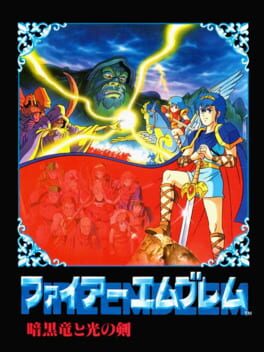
Role-playing (RPG) / Strategy / Turn-based strategy (TBS) / Fantasy / Warfare
Fire Emblem: The Dark Dragon and Sword of Light is the first game in the Fire Emblem series, developed by Intelligent Systems and published by Nintendo. It was first released on the Famicom (known internationally as the Nintendo Entertainment System) on April 20, 1990. It takes place on the continent of Archanea. It stars Marth, a character who later appeared in Super Smash Bros. Melee. The first time the game was released outside of Japan was in the form of a limited edition port for Nintendo Switch, under the same name, that runs a localization script in the background, but the original version of the game was never released outside of Japan.
Role-playing (RPG) / Strategy / Turn-based strategy (TBS) / Fantasy / Historical
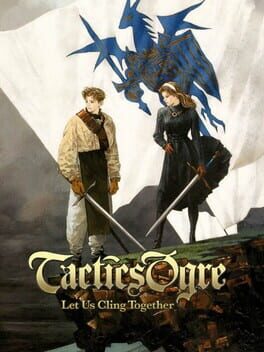
Tactics Ogre is a 3D isometric tactical role-playing game. The player starts out with a band of troops, builds a small army and fights many battles with choices to make in between, that will determine which one of the eight possible endings will be reached in a non-linear storyline. The player has the option to recruit characters, control individual equipment of each character, with over six male character classes, six female character classes, three demi-human classes, and more. It is also possible to train at safe locations to prepare the army before the next battle or storyline advancement.
Role-playing (RPG) / Strategy / Turn-based strategy (TBS) / Fantasy
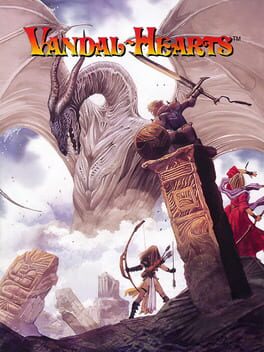
You assume the role of Ash Lambert, a hero torn between saving his country and restoring honor to the disgraced Lambert dynasty. As he struggles with his inner demons and personal problems, he will meet various companions throughout his journey. They will help your character fight to overthrow the oppressive regime and ward off an ancient being that threatens the world. Vandal-Hearts is a 3D turn-based strategy game. Unlike many games of the genre, the various battlefields have sloped surfaces that will either work to your advantage or against you. It will be up to you to accommodate your strategy and amount an appropriate offensive assault against your foes as well as set up defensive measures.
Role-playing (RPG) / Turn-based strategy (TBS) / Adventure / Action / Fantasy
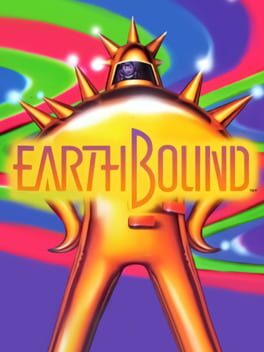
A turn-based JRPG and sequel to the then-Japan-only Earthbound Beginnings (1989) in which Ness, a young boy living in a land based on the USA, leaves home to go on an adventure through strange locations, get to know quirky characters, and defeat an unknowable alien threat called Giygas while facing up to the realities of growing up and becoming familiar with the real world.
Role-playing (RPG) / Strategy / Turn-based strategy (TBS) / Action / Fantasy
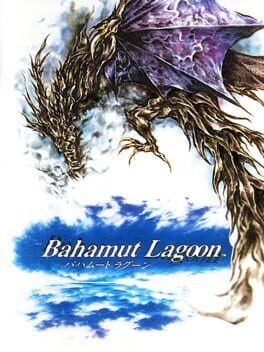
Bahamut Lagoon combines RPG mechanics with squad-based combat. Characters have HP, MP (SP for fighter characters), EXP, equipment, stats and class-specific, SP-draining special elemental abilities very much like traditional console RPGs. The player can explore his surroundings, talk to people and visit shops when not in battle, though to a limited degree as there is no world map and no way to leave the current area. The game's core is its turn-based battles fought on a 2d grid. Characters are assembled into parties of four and the player allowed a maximum of six parties, which are usually well outnumbered. The two opposing sides act in alternating turns so that each party can move once and/or attack once a turn. Attacks are divided into distant and close-up combat. In the former, a party uses a special ability (e.g. casting fireballs, throwing lightning, healing allies) of one of its members at a distance. The range and possible area of effect damage vary per ability. If the attacking party has two or more characters with the same ability, they join in the action to multiply its effectiveness. Distant combat results in less money and generally less damage, but the target cannot retaliate. Distant attacks can also affect the field; fire and ice ignite or extinguish forests and melt or freeze ice, etc. Close-up, each unit in two adjacent opposing parties can act once. Very much like Final Fantasy SNES combat, they can attack an enemy, use an item or a special ability (though these can't be combined and most only affect one target instead of all) or defend. Dragons are the player's ace in the hole. They have their own stats and gain experience like normal characters do. In battle, each party has a dragon attached to it and draws a large portion of its strength from that of its dragon: if a party's dragon is slain, the party will lose the ability to use special attacks and class-specific abilities for the remainder of the map. The beast acts as a very powerful autonomous unit that moves after its party does and it cannot be controlled beyond very simple commands, e.g. "Come!" Out of battle, dragons will eat anything and raising them by feeding them items is an important part of the game. Feeding can improve their stats as well as affect their behavior on the field, and the dragons develop into new forms as they grow. The player can change the characters in each of the parties, their formation as well as what dragon represents them at will.
Role-playing (RPG) / Strategy / Turn-based strategy (TBS) / Fantasy
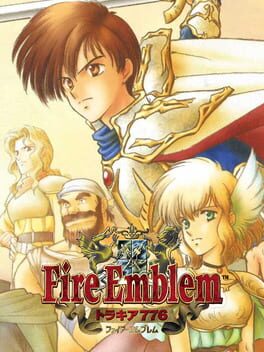
Fire Emblem: Thracia 776 is a Japanese tactical role-playing game developed by Intelligent Systems and published by Nintendo, and the fifth installment in the Fire Emblem series. It is also the third and final Fire Emblem series title to be released on the Super Famicom. Fire Emblem: Thracia 776 takes place between Chapters 5 and 6 of the previous game, Fire Emblem: Seisen no Keifu. Several characters from Fire Emblem: Seisen no Keifu appear, such as Leaf, Fin, and Nanna. It takes place in the Thracian peninsula in southeastern Jugdral.
Role-playing (RPG) / Strategy / Turn-based strategy (TBS) / Fantasy / Warfare
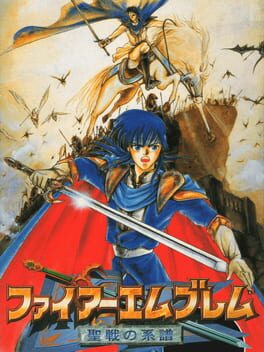
Fire Emblem: Genealogy of the Holy War is a Japanese Super Famicom tactical role-playing game developed by Intelligent Systems and published by Nintendo. It was released on May 14, 1996 in Japan. It is the fourth title in the Fire Emblem series, the second Fire Emblem title for the Super Famicom, and the last game produced by the late Gunpei Yokoi. It was released on the Japanese Virtual Console service on January 30, 2007. The game was originally to be titled as Fire Emblem: Light Inheritors.