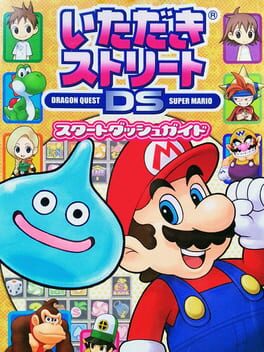
Itadaki Street DS is a Monopoly-like game that has some Mario Party-esque elements added to it due to the appearance of several Mario characters (minigames, for example). Players move around the board, buying shops and collecting money from others who land on their shop spaces. Depending on circumstances, some players can forcibly take over another player's shop spaces, or make them inactive for a turn. Players can also hold shares of a block of spaces so that they get paid when someone lands on any space in that block, even if it is not their own.

Strategy / Tactical / Action / Science fiction
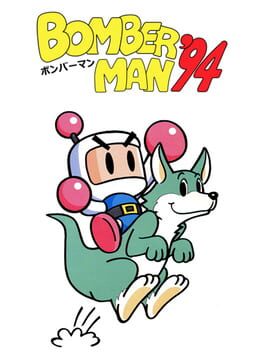
BOMBERMAN has arrived to restore peace on the planet, which has been split into five parts by an evil hand! In addition to the nine members of the Bomber Family, the character ROOI shows up to lend a hand. Jump on the EGGS that appear from destroyed SOFT BLOCKS, and you can ride one of five types of ROOI. Each ROOI has different special abilitiesuse these well and youll ride to victory! Bombs that turn according to arrows and other new gimmicks have been added to BATTLE GAME, increased to ten stages. Tag-team matches are now possible, ensuring that this game will be a blast! Bomberman '94 is a video game from the Bomberman series which was developed and published by Hudson Soft for the PC Engine and released on December 10, 1993 in Japan. It was later re-developed by Westone and re-published by Sega as Mega Bomberman on the Sega Mega Drive/Genesis in 1994 in other areas. The PC Engine Bomberman '94 was later released outside Japan through the Wii's Virtual Console and the PlayStation 3's PlayStation Network. The game supports single-player and multi-player modes. In single player, the player navigates several levels of mazes, destroying creatures with bombs. In multi-player mode, players defeat each other with bombs. Bomberman '94 is the final HuCard title to be made and released by Hudson Soft, the original designers of the PC Engine console.

Strategy / Tactical / Card & Board Game / Kids / Party
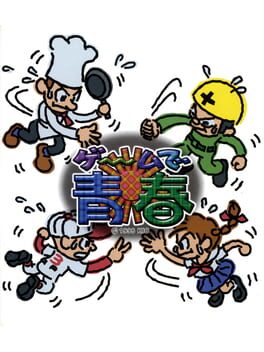
Game de Seishun is a multiplayer party board game in the mold of The Game of Life, which follows each player's avatar through five stage of youth, from kindergarten through to graduating high school and starting a career. The focus is on building friendship and relationships with various characters, and living a full and satisfying youth, with the winners being decided by so-called "seishun points" which are accrued by deepening interpersonal relationships, earning money from jobs, exercising and studying to improve oneself, and going on dates. Each player moves through the board by selecting from one of several numbers to determine the number of spaces to move. Various spaces have different effects: some cause good or bad events to occur, some cause random events to happen, and some allow the player to pick a specific activity for the day such as studying or going to work which will increase various stats that in turn affect future events. Once all players have reached the goal, points are tallied based on the game type selected and a winner is decided.

Real Time Strategy (RTS) / Role-playing (RPG) / Sport
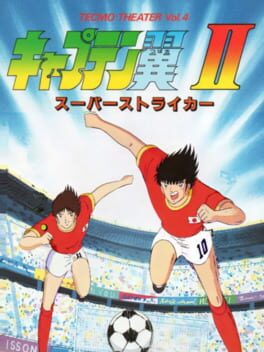
Captain Tsubasa Volume II: Super Striker is a continuation of the "Cinematic Soccer" series of soccer games. It's the direct sequel to Captain Tsubasa and is fairly similar to its predecessor but with some slight graphical improvements. The game features an original new story and original characters, starting after the three-year time skip.

Role-playing (RPG) / Strategy / Turn-based strategy (TBS) / Fantasy
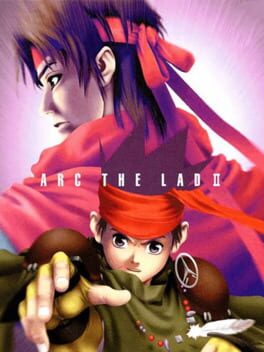
This direct sequel to "Arc the Lad" continues the unfinished story of the first game, but starts from a totally different perspective. You control a bounty-hunter named Elk, who suffers from amnesia. On his quest for his own true identity he discovers the powers hidden within him, and the destiny of his entire tribe. While pursuing his archenemy, Elk meets up with Arc, the hero of the first game, and then both realize they have been looking to destroy the very same evil. The battle system of "Arc the Lad II" is similar to the one used in its predecessor: in battles you can move your characters on the battle field, and your proximity to the enemies plays an important role. You cause and take different amounts of damage depending on your position on the battle field. Unlike the first game, this one is a full-fledged adventure/RPG, without the "strategy" feel of the predecessor. You move through the game world on your own, visiting towns and exploring dungeons.

Puzzle / Strategy / Tactical / Action
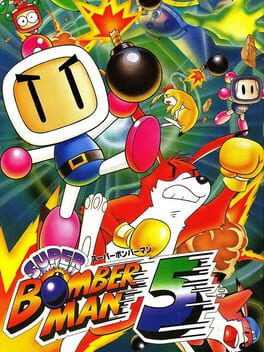
An evil Bomber named Emperor Terrorin who has the power of Time itself has freed various criminal Bombers from their prison cells in orbit around Planet Bomber. Setting them up in a warped time and space, Shirobon, Kurobon, and their Louie (Rui) companions must travel through stages and defeat them before going up against Emperor Terrorin himself. Super Bomberman 5, released by Hudson Soft in early 1997, was the final Bomberman game released on the Super Family Computer - the Japanese version of the SNES. The game was released in two variations: a standard cartridge and a gold cartridge, which was sold exclusively through CoroCoro Comic. The gold cartridge included extra maps in battle mode.

Role-playing (RPG) / Strategy / Turn-based strategy (TBS) / Fantasy
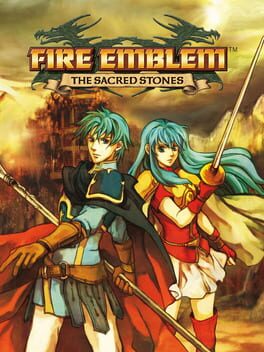
In Fire Emblem: The Sacred Stones, you must help protect the nation of Renais from the invading Grado Empire. Plan your strategy, choose your units, and then lead your soldiers in to battle. The more experience your soldiers gain, the more you can upgrade their abilities. This time, your soldiers can gain experience by fighting new monsters in the Tower of Valni.

Role-playing (RPG) / Strategy / Turn-based strategy (TBS) / Fantasy / Romance
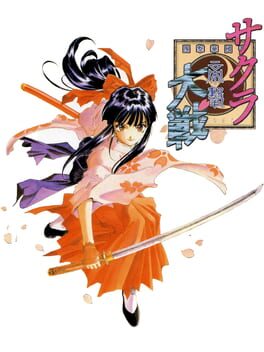
Released in 1996 for the Sega Saturn, Sakura Taisen is the first game in the iconic Japanese game franchise. It combines strategy RPG elements with dating sim-style character interactions to make "A Storm of Romance amid Taishou Cherry Blossoms!"

Role-playing (RPG) / Strategy / Turn-based strategy (TBS) / Fantasy / Warfare
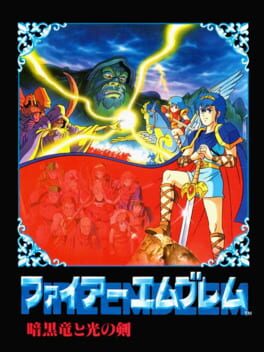
Fire Emblem: The Dark Dragon and Sword of Light is the first game in the Fire Emblem series, developed by Intelligent Systems and published by Nintendo. It was first released on the Famicom (known internationally as the Nintendo Entertainment System) on April 20, 1990. It takes place on the continent of Archanea. It stars Marth, a character who later appeared in Super Smash Bros. Melee. The first time the game was released outside of Japan was in the form of a limited edition port for Nintendo Switch, under the same name, that runs a localization script in the background, but the original version of the game was never released outside of Japan.