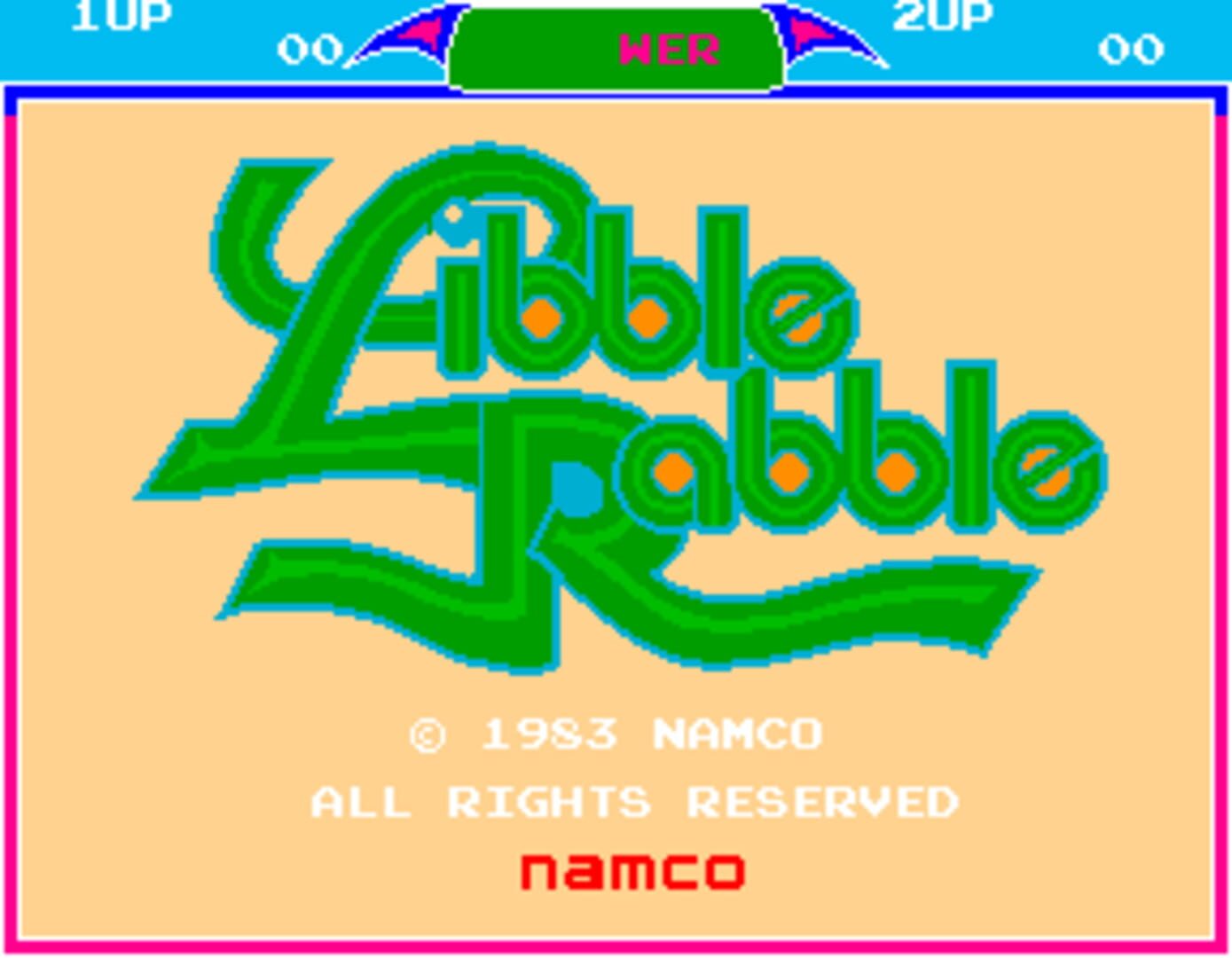
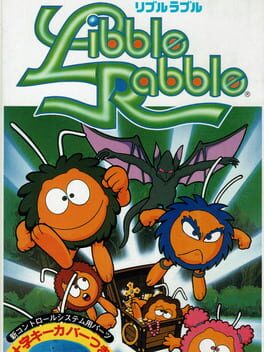

Libble Rabble is an arcade game that was released by Namco in October 1983. It was designed by Toru Iwatani, who had also designed the Gee Bee series, Pac-Man, and Pole Position. It is a curious but challenging game, where the player tries to harvest little mushrooms (Mushlins) while avoiding various enemies, and was the first game from Namco to use a Motorola 68000 processor (which ran at 6.144 MHz). At first glance, the gameplay resembles Taito's Qix. The player controls two "arrows", one red (Libble) and one blue (Rabble) with a line strung between them. The object is to wrap the line around poles and surround Mushlins and enemies with it. The player can either close the loops themselves (worth more points for the Mushlins) or move both arrows to the same edge of the screen. The player clears a "season" when he or she harvests all the Mushlins. Along the way, various enemies will appear and try to stop the player. The most common are four little hooded critters (Hobblins), which start each season in the corners. If the player catches them in a loop, they will be sent to the top of the screen for a short period of time. Other critters such as fireballs (Killers), sparks (Changers), and Demons will also appear. These can be killed by closing a loop around them. Sometimes, scissors-like enemies (Shears) appear, and if they cross the player's line, they cut it. If the player's line is ever cut by Shears or Demons, a new one is instantly made: directly between the two arrows. Every so often when the player closes a line, a detector goes off indicating that the area he or she has closed off has a treasure chest somewhere. To actually uncover the chest, the player must surround a small enough area which covers just the chest, and no other possible hiding places. The game guides the player along that step, first by challenging him or her to uncover a chest at the start of the game (and then by revealing the locations of the chests for the first two seasons). When the player actually uncovers a chest, six bonus creatures (Topcups) will pop out, then make for the edges. The player must corral them with his or her line and then close the loop to score the bonus for them: they mean bonus letters. If the player manages to complete a bonus word, the season is automatically cleared out and the player moves to a bonus stage where he or she must try to uncover and collect chests (to collect a chest, the player needs to close a loop around an opened chest) within a time limit. The player loses a life if any of the assorted critters touch one of the arrows or if he or she runs out of time (the border is the player's timer, and he or she can boost the time by looping Mushlins and plants), and the player gains an extra life at 40,000, 120,000, 200,000, 400,000, 600,000 and 1,000,000 points by default. After the 100th season, the season counter will stop at 99, similar to how Galaxian and King & Balloon's round indicators would stop after 48 rounds.
Puzzle / Adventure / Action / Fantasy
Venture back to Hyrule and an age of magic and heroes. The predecessors of Link and Zelda face monsters on the march when a menacing magician takes over the kingdom. Only you can prevent his evil plot from shattering the land of Hyrule. In your quest, you'll venture into twisting mazes, dungeons, palaces and shadowy forests. Test your mettle with mighty swords and magical weapons. Or heft a boulder and hurl it at your enemies. If the going gets tough, dive into a river - you can swim to escape! Learn powerful spells, locate magical artifacts and solve the mysteries of the evil magician and the hidden realm of Hyrule.

Puzzle / Adventure / Action / Fantasy
The Legend of Zelda: Ocarina of Time is the fifth main installment of The Legend of Zelda series and the first to be released for the Nintendo 64. It was one of the most highly anticipated games of its age, and is listed among the greatest video games ever created by numerous websites and magazines. The gameplay of Ocarina of Time was revolutionary for its time, it has arguably made more of an impact on later games in the series than any of its predecessors even though they had the same cores of exploration, dungeons, puzzles and item usage. Among the gameplay mechanics, one of the most noteworthy is the time-traveling system. The game begins with the player controlling the child Link, but later on an adult Link becomes a playable character as well and each of them has certain unique abilities. Ocarina of Time also introduces the use of music to solve puzzles: as new songs are learned, they can be used to solve puzzles, gain access to new areas and warp to different locations. Dungeon exploration is somewhat more puzzle-oriented than in earlier games but they are not too complex.

Platform / Puzzle / Action / Science fiction
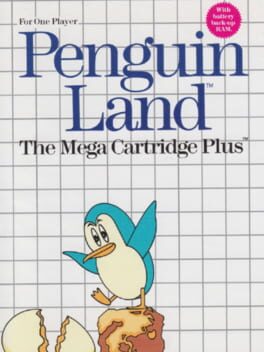
Penguin Land, known as Doki Doki Penguin Land Uchū Daibōken (どきどきペンギンランド宇宙大冒険? lit. "Thump Thump Penguin Land: Great Outer Space Adventure") in Japan, is a Sega Master System game and the second game in the Doki Doki Penguin Land series. In this game you play as a penguin going through a puzzle platformer stage and try to guide your egg around the polar bears, rocks and other hazards to the end of the stage. The game has a total of 50 stages and a level editor which can save up to 15 additional levels. The level editor data is stored on the game's battery back-up RAM.

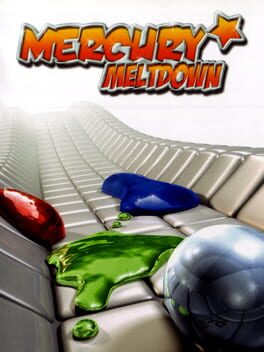
Once again taking control of the liquid Mercury 'blob', players must avoid various obstacles and hazards to reach the end goal. The Mercury blob itself has now been given an overhaul and has 4 varying 'states' - Normal, Solid, Fast and Slow. These states allow for larger more complex levels, which in turn mean a greater challenge and more enjoyment to be had for the player. The number of levels has more than doubled - now 160+, and with the newly added feature of Downloadable Content more levels will be made available at a later date. Wireless 2 Player modes have also been an important addition, with 5 sub games each providing a challenge against the computer or a friend.