
Memory2005
Memory is one of the few games released for the Game Boy Advance add-on Play-Yan. It was distributed online by Nintendo in 2005.
Featured in
Memory is one of the few games released for the Game Boy Advance add-on Play-Yan. It was distributed online by Nintendo in 2005.

Shooter / Adventure / Visual Novel / Action / Science fiction
Policenauts is an interactive movie/graphic novel/adventure game with a hard science fiction storyline, written and directed by Hideo Kojima, and published by Konami. It was initially released for the PC-9821 computer platform in 1994, followed by remade versions for the 3DO in 1995, and the PlayStation and Sega Saturn in 1996. The game has never been officially released outside Japan, despite plans for an English localization of the Saturn version. On August 24, 2009 (in honor of the 46th birthday of the game designer, Hideo Kojima), an unofficial English translation patch was released onto the internet. The game is set in a primarily first person perspective and uses a point-and-click interface: the player can move the cursor and have the protagonist (Jonathan Ingram) analyze objects around his environment or talk to other characters in the game. Like in Snatcher, the game features shooting segments where the player must defend their character from incoming enemies. The player can use the shooting trainer at the police department to test their reflex and accuracy. There are numerous puzzles in the game, including an event where the player must dismantle a bomb by following their partner's instructions. The console versions of the game all include support for their respective mouse peripherals. The Saturn version features light gun support for the shooting segments. The game was notable for being an early example of extensive voice recording in video games. It also featured a theme revolving around space exploration and occasional full-motion video cut scenes. The gameplay was largely similar to Snatcher, but with the addition of a point-and-click interface and some first-person shooter segments. Policenauts also introduced summary screens, which act to refresh the player's memory of the plot upon reloading a save, an element Kojima would later use in Metal Gear Solid. The PlayStation version of Policenauts could also read the memory card and give some easter egg dialogues if a save file of Konami's dating sim Tokimeki Memorial is present, a technique Kojima would also later use in Metal Gear Solid.
Role-playing (RPG) / Adventure / Fantasy / Science fiction
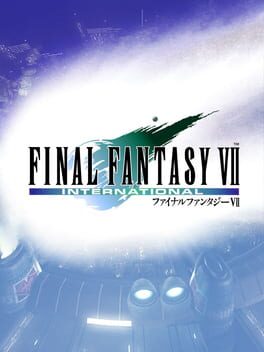
Final Fantasy VII International is a direct port of the North American version, including all of its gameplay and storyline tweaks. It came with an extra fourth disc that includes bonus background information about the game itself.

Role-playing (RPG) / Turn-based strategy (TBS) / Tactical / Science fiction / Warfare
Originally released in 1995 on the Super Famicom, Square revisits their 16-bit heyday and updates Front Mission for a new legion of fans. Played on isometric grids, various mecha from your Canyon Crow attack squad are arrayed against opposing armies. Move, encounter and fight are the generics of the game but weapon and armor upgrades also factor in the game where your crew gets upgraded to higher levels of performance. The menus, stats, and weapon upgrades in the game are entirely in English which makes Front Mission very easy to get into for importers. The storyline and conversations are in Japanese but the scrolling account after the first battle tells of the new conflict between the OCU (Southern Asia Oceana Community Union) and the USN (United States of New Continent).
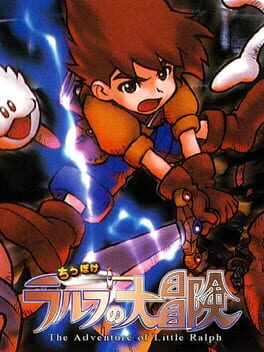
The Adventure of Little Ralph is a 2D platformer. In this game the player controls Ralph, who has been turned back into a child by the evil demons who have invaded his homeland. In order to stop them and return to his former self, he must get through each area filled with enemies, traps, and many hidden routes. Ralph is armed with swords and various magic powers and also has the assistance of a small furry companion. The game's levels are interconnected, unlike the "stages" of most other platform games.

Turn-based strategy (TBS) / Warfare
Famicom Wars is a Japanese-only video game for the Famicom (the Japanese name for the NES). It was designed by Nintendo R&D1 and programmed by Intelligent Systems and published by Nintendo. It spawned many sequels, five of which were released in America. It is the first game in the Nintendo Wars series. The gameplay can be compared to games in the Fire Emblem series, as both are in the turn based strategy genre, and both have been developed and published by the same companies (the Famicom Wars series was released first, however).

Role-playing (RPG) / Adventure / Action / Fantasy
King's Field is a first-person 3D RPG which takes place in the underground tomb of the kingdom of Verdite. The player takes the role of Jean who explores 3D dungeons all alone in this dark fantasy-world with his sword and magic spells. A lot of challenges await Jean. The player will gain a great sense of accomplishment when overcoming tough situations in the game.
Point-and-click / Strategy / Arcade / Action / Science fiction
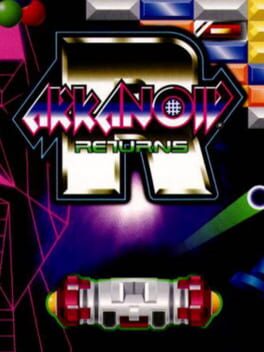
Arkanoid Returns is an arcade game released by Taito in 1997 as part of the Arkanoid series. It was the fourth overall, and third to be released in arcades. The game was since ported to the PlayStation, with an updated home release being released afterwards titled Arkanoid R 2000. All versions were released exclusively in Japan, currently making it the only game in the series to never receive an international release. The enemy known as 'DOH' still did not get the message and after many years of silence decides to attack once again. The 'Vaus' space vessel better be ready to face new, yet familiar challenges, in order to stop 'DOH' once again. The gameplay remains similar to Arkanoid: Doh it Again, the previous game in the series released for the Super Nintendo, in that it features the same powerups , some re-used level designs, and the same board size. The initial arcade game contains only 50 levels, the environment changing every 9 levels.
Simulator / Adventure / Indie / Horror
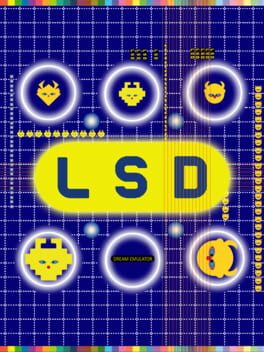
In LSD the player navigates through a psychedelic dream world. The idea is simply to walk around and explore things in a dream environment. There are many strange environments in this world, and one way to travel through them is by foot. However, if the player bumps into walls or other objects in the game, they will be transported to another environment instantaneously through a system called "linking". Bumping into people, animals, or special objects usually results in a stranger dream. Each dream can last up to 10 minutes, after which the player will 'wake up', when the screen fades away and the player is sent back to the game's initial menu. However, if the player falls off a cliff or into a hole in the dream, then the player will wake up immediately. There is a graph that appears at the end of each dream that keeps track of the player's state of mind; the states are Upper, Downer, Static and Dynamic, as referring to the environments and the general feel of the dream the player just went through. Past states may have effects on later dreams.