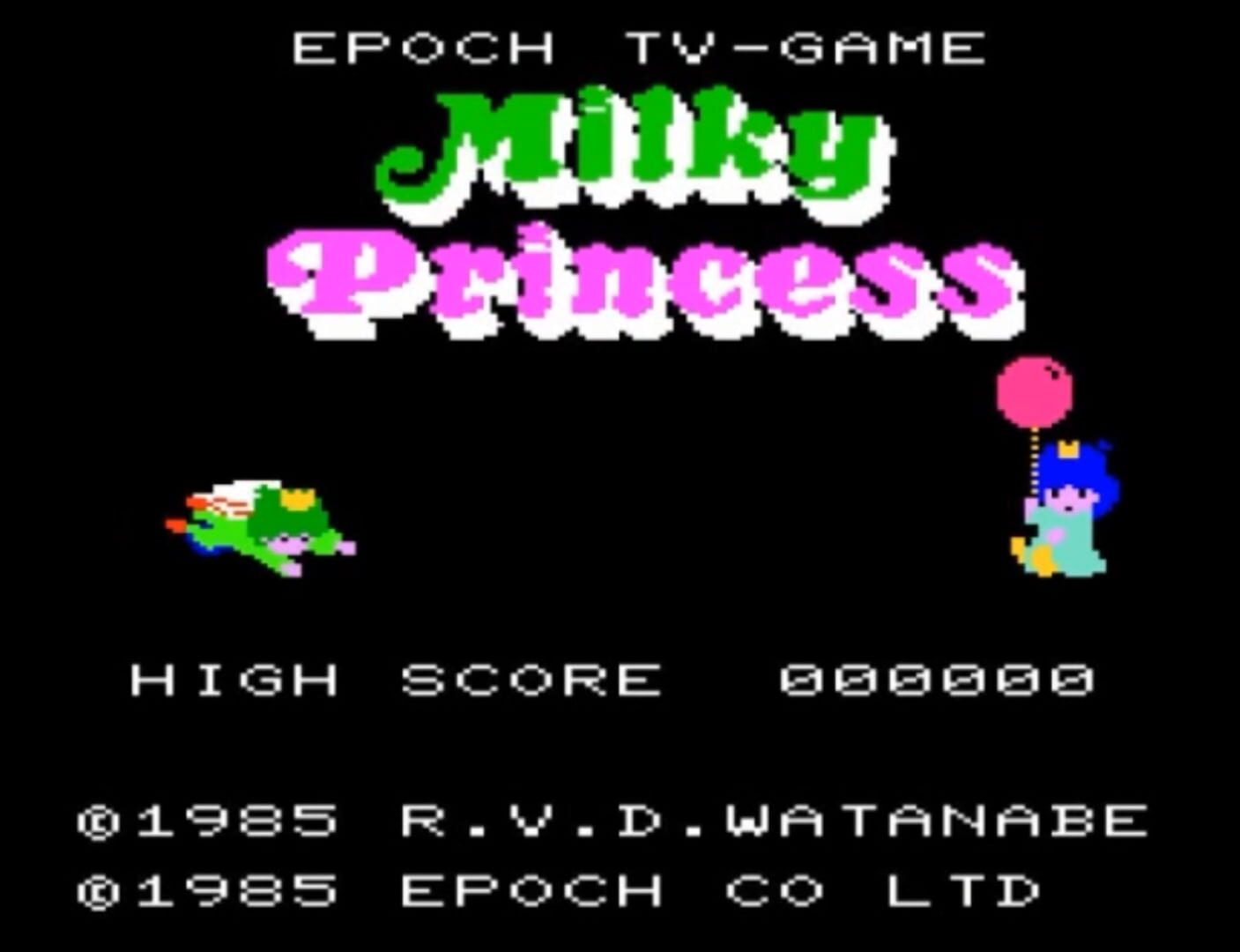
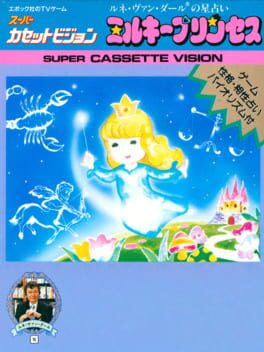
A horoscope fortune telling program with an game component for Super Cassette Vision. The game feature four main modes: 1. Accurate reading 2. Playful reading 3. Biorhythm 4. Game The game portion consists of guiding a prince around the screen chasing away monsters from the Princess who floats on the screen. If the monsters touch the princess her balloon deflates, if it pops she will fall and the game is over. The prince can move to the princess to inflate her balloon again. As the title implies the game is sponsored by Astrology and Pseudo Science personality René van Dahl Watanabe who also features on the cover of the game.

Fighting / Quiz/Trivia / Adventure / Action / Stealth
It is grandmother Haruko's birthday. She wants everyone home early for her special day: the day that serves as a reminder that she has been alive for more years than she can remember. Unfortunately, her family has completely forgotten and make up last-minute birthday promises to Haruko. The game begins like any other normal day for the family members - father Taneo, mother Etsuko, daughter Ririka, and son Tsuyoshi - until strings of events stand as obstacles in their way of returning to Haruko's with the presents.

Shooter / Strategy / Quiz/Trivia / Action / Science fiction
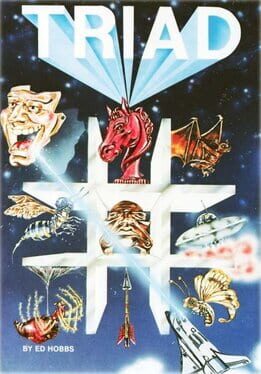
A Tic-Tac-Toe variant with shoot 'em up elements written by Ed Hobbs and published by Adventure International.

Quiz/Trivia / Arcade / Action
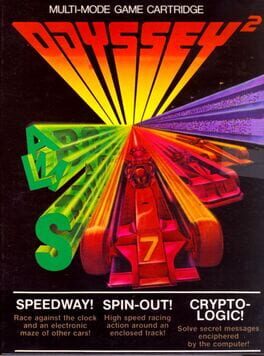
Three games are available in this compilation: - Speedway! (selected by pressing "1") is a vertical scrolling racing game against the clock. The player controls the car with the joystick, pushing up to accelerate it (the longer, the faster), left and right to control direction and down to break. - Spin-Out! (selected by pressing "2" for a three laps event or "3" for a 15 laps event) is a top-down circuit racing game. Two players race against each other for the amount of tracks selected. Four skill levels are available: clear track/slow speed, clear track/fast speed, barrier track/slow speed and barrier track/fast speed. - Crypto-Logic! (selected by pressing "4") is a puzzle game. The object is to decipher a scrambled word entered by another player.

Quiz/Trivia / Arcade / Action / Fantasy
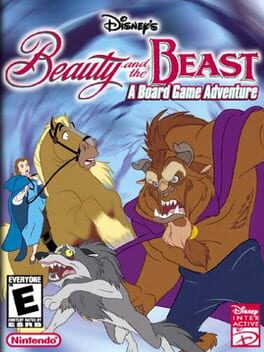
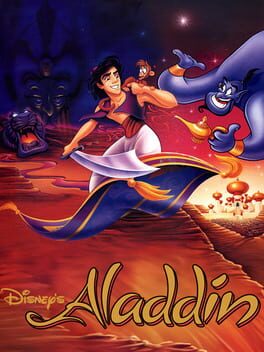
Disney's Beauty and the Beast: A Board Game Adventure is a game for the Game Boy Color. There are two modes of play. In the first you play on a big game board, where each square represents a Disney character. When you land on a square you play a mini-game against or inspired by him or her. For instance if you land on the square showing the inventor father you will have to play a game where his new log chopping device cuts firewood and he has to bounce it across the screen on a spring. These mini-games range from 2D platform game segments to memory or reflex games. There are a total of seven boards to play on. You can play with up to four players.

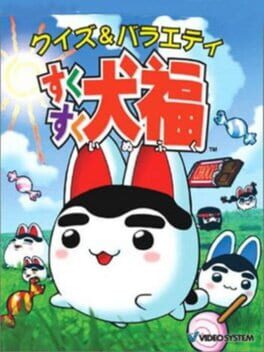
"Quiz & Variety SukuSuku Inufuku" is an arcade game released by Video System in 1998. While quizzes are the main, many mini-games are included. Clear them and raise a dog-like creature called "Inufuku".

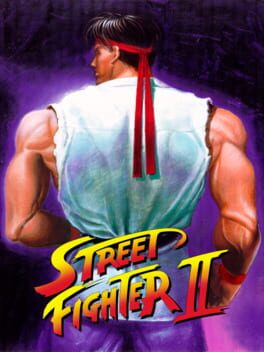
A sequel to Street Fighter, Street Fighter II improved upon the many concepts introduced in the first game, including the use of command-based special moves and a six-button configuration, while offering players a selection of multiple playable characters, each with their own unique fighting style and special moves. Street Fighter II is credited with starting the fighting game boom during the 1990s. Its success led to the production of several updated versions, each offering additional features and characters over previous versions, as well as many home versions. Some home versions of the Street Fighter II games have sold millions of copies, with the SNES port of the first Street Fighter II being Capcom's best-selling consumer game of all time as of 2008. Street Fighter II follows several of the conventions and rules already established by its original 1987 predecessor. The player engages opponents in one-on-one, close-quarters combat in a series of best-of-two-out-of-three matches. The objective of each round is to deplete the opponent's vitality before the timer runs out. If both opponents knock each other out at the same time or the timer runs out with both fighters having an equal amount of vitality left, a "double KO" or "draw game" is declared. Additional rounds will be played until sudden death. In the first Street Fighter II, a match could last up to 10 rounds if there was no clear winner; this was reduced to 4 rounds in the Champion Edition and onward. If there is no clear winner by the end of the final round, then either the computer-controlled opponent will win by default in a single-player match, or both fighters will lose in a 2-player match. After every third match in single-player mode, the player will participate in a "bonus game" for additional points. The bonus games include (in order) a car-breaking event; a barrel-breaking bonus game where the barrels are dropped off from a conveyor belt above the player; and a drum-breaking bonus game where drums are flammable and piled over each other. The bonus games were removed from the arcade version of Super Street Fighter II Turbo. As in the original, the game's controls use an eight-directional joystick and six attack buttons. The player uses the joystick to jump, crouch, move the character towards or away from the opponent, and guard against the opponent's attacks. There are three punch buttons and three kick buttons, each with varying strength and speed (Light, Medium, and Heavy). The player can perform a variety of basic moves in any position, including grabbing/throwing attacks, which were not featured in the original Street Fighter. Like in the original, the player can perform special moves by inputting a combination of directional and button-based commands. Street Fighter II differs from the original in that it features multiple playable characters, each with distinct fighting styles and special moves. Additionally, the player can "cancel" an animation by performing another move, enabling combinations of basic and special moves. Both of these features would be expanded upon in subsequent installments.
Racing / Arcade / Action / Kids
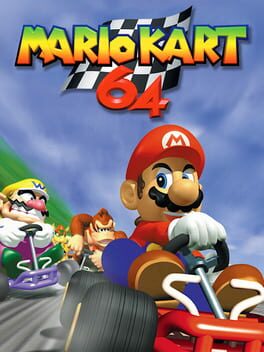
Mario Kart 64 is the second main installment of the Mario Kart series. It is the first game in the series to use three-dimensional graphics, however, the characters and items in this game are still two-dimensional, pre-rendered sprites. The game offers two camera angles and three engine sizes: 50cc, 100cc and 150cc. Each kart has distinctive handling, acceleration and top speed capabilities. Shells that you fire at rival racers, Bananas that make them skid out and Lightning Bolts that make them small and very slow are just a few of the game's unique power-ups.