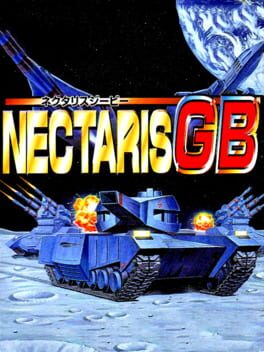

Developed by Tamtam for Hudson Soft.
Puzzle / Strategy / Science fiction / Warfare
This Gameboy port of Nectaris (AKA Military Madness in North America) was only released in Japan. It is a a turn-based strategy war game with a Science Fiction theme, set on earth's moon. The game is played on a hex-grid. This installment of the franchise includes a map editor which allows players to create game maps and even transfer those maps to another player wirelessly through an infrared modem called the KISS-Link. Another unique feature of this game is the ability to download maps off of the internet using a PC and transfer them to the cartridge through the KISS-Link.

Puzzle / Strategy / Action / Science fiction
Dr. Mario BS Ban is a Downloadable game for the Satellaview that was broadcast in at least 9 runs between March 30, 1997 and April 2, 2000. Early game broadcasts were accompanied by the Dr. Mario BS Ban: Seiseki Magazine (「Dr.マリオBS版 成績マガジン」), however these ceased after April 26, 1997.

Puzzle / Strategy / Tactical / Science fiction
A surreal and very original game by Geoff Crammond The game plays out on a 3D landscape with hills and valleys made up of several levels. At the highest vantage point stands The Sentinel, a statue-like being with an energy draining stare, you begin at the lowest. "Energy" plays an important role, there's a constant amount in the game world and each object is worth a certain number of units - including you. The object of each level is to absorb The Sentinel and Hyperspace to the next from his vantage point. The Sentinel scans further round the landscape every few seconds - if you're caught in his gaze, or rather the square you are standing on can be seen, you'll have about 5 seconds to teleport to another location (or hit a key to teleport to a random location - which will never be higher, and may be lower than your current level) before the Sentinel begins absorbing your energy, when it reaches zero you will be destroyed. To travel a "robot hull" must be created on a visible square then teleported to, making sure you absorb your old hull to avoid losing energy. Boulders and trees can also be created, trees to block The Sentinels view and boulders can be stacked to gain higher ground. There are a few other elements to the game - on later levels there will be other Sentries positioned around the landscape. If only part of you can be seen i.e. not the square you are standing on, a nearby tree can be changed into a "Meanie" which will ultimately force you to teleport. There are 9999 levels in the game but the next level number is based on the current level + how much energy you have remaining.

Platform / Puzzle / Strategy / Action / Fantasy
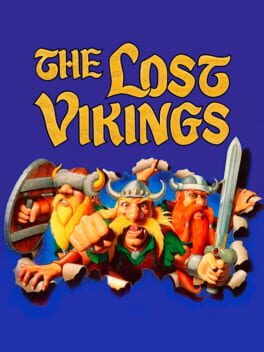
The Lost Vikings is a puzzle-platform video game developed by Silicon & Synapse (now Blizzard Entertainment) and published by Interplay. The game features infinite opportunities of retries in case the player loses one of the Vikings. In 2015, The Lost Vikings were added as a playable hero in Heroes of the Storm, allowing players to control the three Vikings as individual units, making a unique departure from the typical heroes available. Character abilities: All three Vikings (Erik, Baleog and Olaf) have three health points which they can lose by getting hurt by enemies or by falling from great heights, and the ability to carry and use items, mainly keys, bombs, and food (which restore health points). Each of the Vikings has a unique set of abilities: Erik can run faster than the other two, can jump, and can bash through some walls (and enemies) with his helmet. Baleog can kill enemies with his sword, or from a distance with his bow (and a "life-time supply of arrows"). The bow can also be used to hit switches from a distance. Olaf can block enemies and their projectiles with his shield, and use his shield as a hang glider. Olaf's shield can also be used as a stepping stone for Erik to enable him to reach higher ground, which would not be possible without the shield.

Puzzle / Strategy / Action / Science fiction
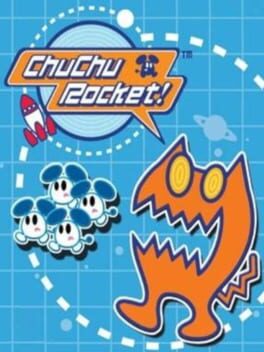
The object of the game is to guide one or more mice ("ChuChus") around a board into one or more goals while avoiding cats ("KapuKapus") roaming the board. The mice and cats all move in predictable paths by always turning right when hitting a wall head on, by following corners or by turning around when in a dead end. ChuChu Rocket!'s multiplayer mode revolves around up to four players placing arrows on the level at once, trying to direct mice into their own rockets and cats into other players' rockets (any cat that reaches a rocket removes a percentage of the mice within). Each player can only have three arrows on-screen at a time and cannot place them on other players' arrows or their own arrows. Arrows would disappear over time, or could be removed by a player placing his fourth arrow (which would eliminate the first arrow placed, thus leaving three). Although a simple concept, this quickly becomes frenetic with the relentless speed of the mice and four players fighting over them.

Music / Puzzle / Strategy / Science fiction / Kids
The gameplay in Lumines II is very similar to its predecessor, Lumines. The object is still to move blocks of four different colored squares across the board; while trying to create a single square of the same color. This all must be done before a "timeline" crosses the screen deleting the squares that you make. Deleting four or more squares will add a bonus multiplier to your score. (Refer to the Gameplay section of Lumines for more details). There is no Infrastructure gameplay in Lumines II. The game is visually similar to Lumines Live! and the PC port of Lumines during both gameplay and in the menus.

Point-and-click / Puzzle / Strategy / Action / Science fiction
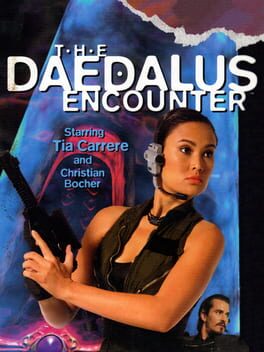
The Daedalus Encounter is an interactive movie puzzle adventure game developed by Mechadeus and published by Virgin Interactive for MS-DOS and 3DO. The premise of the game is that there are three space marines who have fought as part of an interstellar war. One of them, Casey, has been brought back to life by his partners after a space accident and he is now a brain grafted in a life-support system. In order to save themselves, the three characters and the player solve all sorts of puzzles. The use of actress & Model Tia Carrere (Wayne's World, True Lies) as one of the main protagonist was heavily used as part of the game marketing.

Puzzle / Strategy / Fantasy / Science fiction
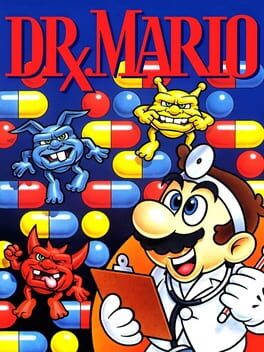
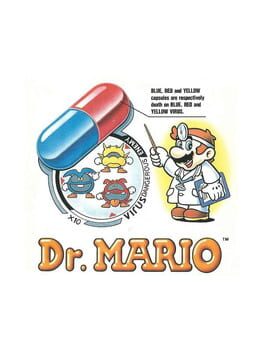
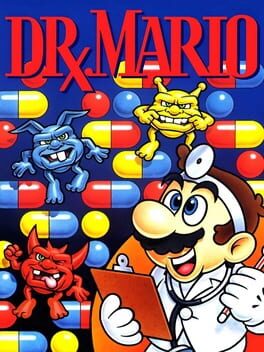
Dr. Mario is a falling block tile-matching video game, in which Mario assumes the role of a doctor, dropping two-colored medical capsules into a medicine bottle representing the playing field. This area is populated by viruses of three colors: red, yellow, and blue. In a manner and style considered similar to Tetris, the player manipulates each capsule as it falls, moving it left or right and rotating it such that it is positioned alongside the viruses and any existing capsules. When four or more capsule halves or viruses of matching color are aligned in vertical or horizontal configurations, they are removed from play. The main objective is to complete levels, which is accomplished by eliminating all viruses from the playing field. A game over occurs if capsules fill up the playing field in a way that obstructs the bottle's narrow neck.