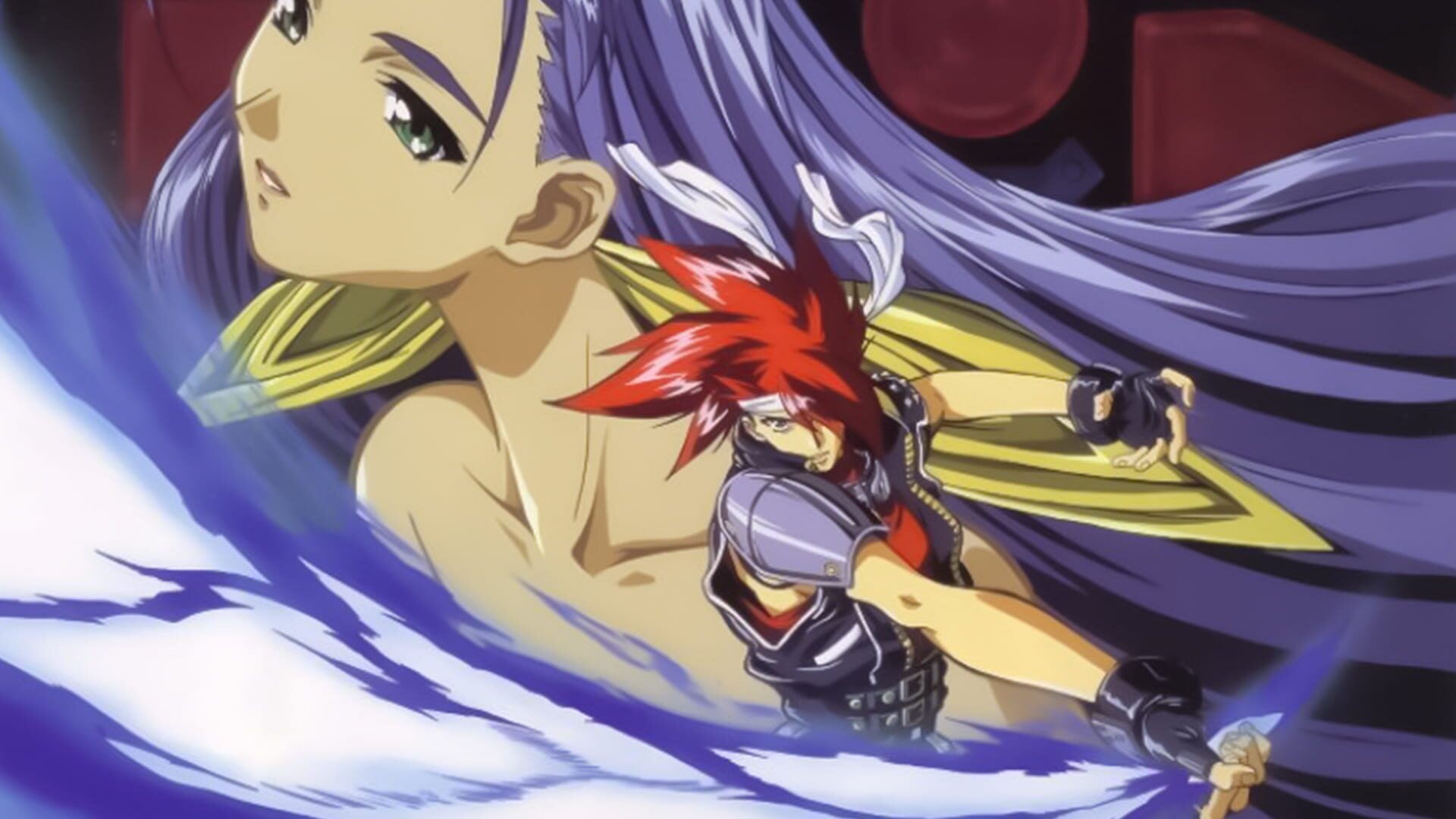

Psychic Force 2012, the sequel to Psychic Force, is a one-on-one fighting game with a twist. The matches take place inside a giant floating cube. You are able to fly, using your psychic abilities, around a 3D arena with six walls. Each of the ten available characters, Might, Regina, Wendy, Emilio, Setsuna, Patty, Gudeath, Genshin, Carlo, and Gates, are controlled with three buttons: guard, weak attack and strong attack. The effect varies with the distance. Next to the regular life meter, there is also a power meter. By using special moves, the meter is drained and your moves are limited. It is possible to recharge, and the capacity of the power meter expands when you lose a lot of health. Additionally, each fighter has its own unique moves, energy attacks and a weapon, which they use, mid-flight, to pummel their opponent. There are three main game modes: training, versus and a story mode using static anime-inspired images and in-engine cut scenes to tell the story. The story centers around two groups of psychics with differing ideals about co-existence with humans. In the middle of this are several neutral psychics with ties to members in either group.
Taking place two years after the events of Psychic Force, the sequel finds the world caught in the crossfire between two factions who vie for control over the Earth. Upon returning after his fateful past battle against his old friend Burn Griffiths, Keith Evans resurrects NOA as Neo NOA and once again resumes his conquest of establishing a utopia for united Psychiccers. Richard Wong, who had broken away from NOA, establishes his own group of Psychiccers known as "The Army" and seeks to eliminate Neo NOA in an attempt to conquer the world. As the two groups fight for control over the fate of the Earth, independent Psychiccers who find themselves being drawn into the conflict seek to hunt down members of Neo NOA and The Army in an attempt to find the truth and help locate their missing family and friends.
Fighting / Arcade / Action / Science fiction
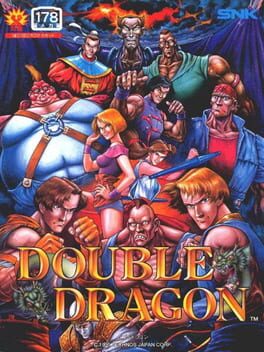
A head-to-head fighting game based on the 1994 Double Dragon movie, the game features a roster selectable which consists of "Double Dragon" alumni Billy, Jimmy, Marian, Abobo and Burnov, as well as 5 original characters as they enter a martial arts tournament to take out evil crime lord of Bloody Town, Koga Shuko. Unique features in the game includes destructible environments and a super move meter which fills out based on how much energy the player has left, giving weaker fighters a handicap. After defeating the default 10 fighters, the player faces Shuko's bodyguard, Duke, before fighting Shuko himself.

Fighting / Sport / Arcade / Action / Horror
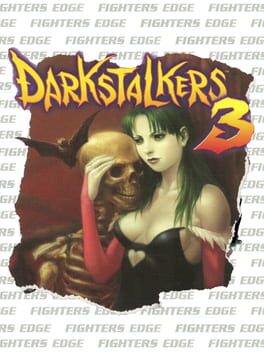
Darkstalkers 3 is the second sequel in the Darkstalkers series of fighting games by Capcom, originally released for the arcades in 1997. The game was originally planned to be released as Darkstalkers: Jedah's Damnation in the United States, but this title was only used in the arcade version. New characters added in this version are Donovan, Huitzil (Phobos in Japan), and Pyron, with hidden characters of Dark Talbain and Oboro Bishamon .

Fighting / Action / Science fiction
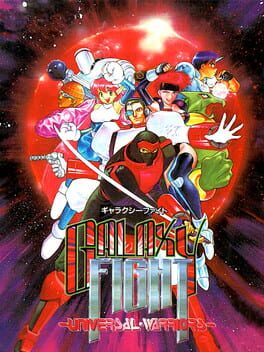
Man and demon wage war with one-on-one fights in the 1-on-1 fighting game Galaxy Fight. Eight of the universe's greatest fighters enter into combat for the fate of the galaxy. Success brings great acclaim to the victor. Failure brings death. Once every 1000 years, a being of divine power takes physical form somewhere in the galaxy. This time, he has taken form on the planet Danius. This being, who refers to itself as "Felden Crayce" is being sought out by fighters across the galaxy to challenge and defeat. Each of these eight warriors have their each with their own reasons for seeking out and fighting this being -- some wish to challenge Felden for pride or fame, some wish to protect their home lands from Felden, and some refuse to explain their reasons until they meet this great force themselves. These eight fighters all have unique abilities and strengths, but only one can be the final victor!

Fighting / Arcade / Action / Science fiction
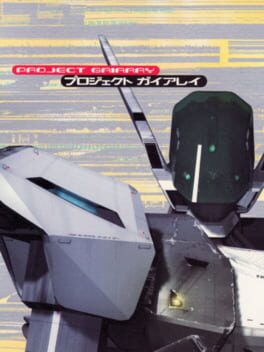
Project Gaiaray is a game similar to Sega's Virtual On, the player can choose between 6 different robots, and them have to fight against other robots in different combat arenas using normal or special attacks.

Shooter / Platform / Action / Science fiction
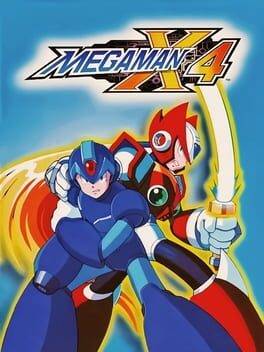
Mega Man X4, known as Rockman X4 in Japan, is the fourth game from the Mega Man X series. It was the second game in the series to be released on the Sega Saturn and Sony PlayStation (although it is the first original game; Mega Man X3 was ported to the systems), released in 1997 (and also re-released onto PlayStation as part of its greatest hits in 2002). It was later ported to the PC in 1998 and then re-released as part of the Mega Man X Collection

Role-playing (RPG) / Turn-based strategy (TBS) / Adventure / Action / Fantasy
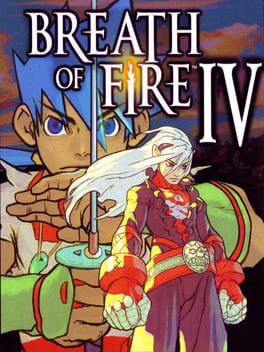
Breath of Fire IV is a single-player game that continues the story with these "dragon people," who gave their lives to eradicate the evil goddess and restore peace in their world. This time around, battle has broken out between two powerful continents, and the fair Princess Elena has disappeared during a tour of the war-torn region. The princess's sister, Nina, who reigns o'er the Windia Kingdom, vows to retrieve her missing sibling. She meets Ryu along the way, who joins the epic quest

Platform / Adventure / Action / Fantasy
Crash Bandicoot 2: Cortex Strikes Back is the second game in the Crash Bandicoot series, and the sequel to the original game. The gameplay is largely similar to that of the original, as players make their way through a limited environment whilst breaking crates that contains bonuses. The goal of the game is to gather 25 crystals for Crash's nemesis, Doctor Neo Cortex. The crystals are scattered between 25 different levels accessible via Warp Rooms, which are hub areas of the game. A level is cleared by collecting its respective crystal and reaching the end of its path, which returns Crash to the Warp Room.

The main fighting game is best described as a polygonal Marvel vs. Capcom game, with some notable differences. Control wise, the game varies from other Capcom fighting games by only having four buttons (two punches and two kicks, which is closer to the SNK game format) rather than the standard six. A player chooses a team of two characters, and fights against another two character team. The actual fights, however, are one-on-one fights, with the partner only participating by being called in when a player has enough 'vigor' for a Team Up attack, done by pressing a punch and kick button of the same pressure. The Team Ups would be some kind of double team attack by the character and partner, or (for most female characters' Team Ups) would heal the main character or give them more vigor. After the end of a round, a player (win or lose) has a choice to fight the next round with the partner from the previous round, or to keep their main character in play. The 'vigor' meter (essentially a super meter) could go up to 9 levels, with Team Ups costing two levels and super moves from a single person all costing one level of vigor. Much like the Marvel vs. Capcom games, launchers can be done that allow air combos to be performed, with all characters having universal low and high launchers. The game also had a few defensive techniques. Tardy Counters acted much like Alpha Counters from Street Fighter Alpha, allowing a player to immediately counter-attack from a blocking position. However, the restrictions on Tardy Counters are very lax; any hard normal, special or super attack can be used to Tardy counter (Alpha counters are only limited to certain special moves for each character), and Tardy Counters do not cost any extra vigor to perform (Alpha Counters required at least a level of Super Combo gauge to do). Attack Cancels allowed a player to cancel an incoming hit simply by timing their own hit with the attack, which would cancel out both attacks (though it does not nullify the remaining hits of a multi-hit move). Also, one additional level of vigor is awarded.