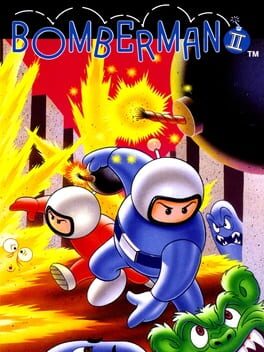
Bomberman II follows the popular Famicom/NES game Bomberman, incorporating a number of new features to the series. The game maintained the classic Bomberman game-type, requiring the player to navigate a maze of blocks using bombs to make a path. It added a two-player and three-player mode, and had a more developed storyline. The game was developed by Hudson Soft and released on the Family Computer and the NES. It was marketed as Dynablaster in Europe.
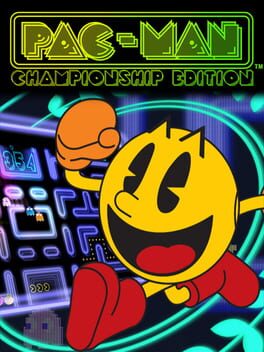
Pac-Man Championship Edition is similar in basic gameplay to the original 1980 Pac-Man: players have to eat dots, while avoiding the four ghosts that roam around the maze. Championship Edition, however, also brings many gameplay differences. The game was designed by Tōru Iwatani, the creator of the classic original 1980 arcade game Pac-Man, and it was Iwatani's final game before his retirement.
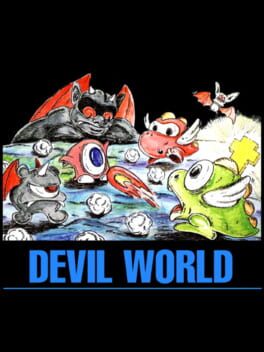
Puzzle / Arcade / Action / Horror
Devil World is a maze video game developed and published by Nintendo for the Nintendo Entertainment System. It was released in Japan on October 5, 1984 and in Europe on July 15, 1987. The game was also released on the Wii's Virtual Console in Japan on January 22, 2008 and in Europe and Australia on October 31, 2008. The game has similar gameplay to that of Pac-Man. It is the only game designed by Shigeru Miyamoto that has not been released in North America, despite the fact that the game is simple and in English. This was due to Nintendo of America's strict policies on the use of religious icons in games, which were at their strictest level at the time of the game's original release, but there would eventually be a North American release for the first time in October 2023 as part of the Nintendo Switch Online lineup.
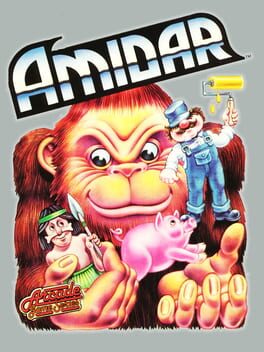
Amidar is an arcade game programmed by Konami and published in 1981 by Stern. Its basic format is similar to that of Pac-Man: the player moves around a fixed rectilinear lattice, attempting to visit each location on the board while avoiding the enemies. When each spot has been visited, the player moves to the next level. The game and its name have their roots in the Japanese lot drawing game Amidakuji. The bonus level in Amidar is a nearly exact replication of an Amidakuji game and the way the enemies move conform to the Amidakuji rules - this is referred to in the attract sequence as 'Amidar movement'. A version for the BBC Micro was created but never released.
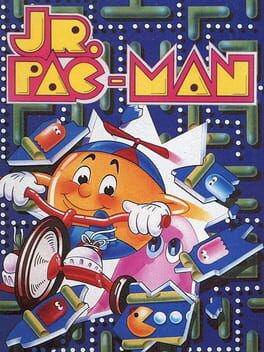
The gameplay of Jr. Pac-Man is similar to that of its predecessors: The player controls the titular Jr. Pac-Man and scores points by eating all of the dots in the maze. Four ghosts roam the maze and attempt to capture him. The player can eat an energizer to turn the ghosts blue, making them vulnerable for a short time and allowing the player to eat them, sending their eyes back to their home base. When all the dots are cleared, a new maze is presented and gameplay resumes.