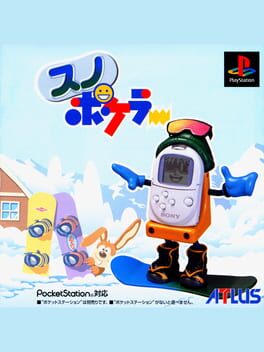

Sno Pokeler allows the player to accessorize his PocketStation (not included with the game) and create your own Pokeler with accompanying Playstation 1 software. The player can customize his Pocketstation with different themes, characters faces, tones, etc. The PocketStation is a peripheral by Sony Computer Entertainment for the PlayStation home video game console. Categorized by Sony as a miniature personal digital assistant, the device features a monochrome liquid crystal display (LCD), infrared communication capability, a real-time clock, built-in flash memory, and a sound capability. Connecting to a PlayStation through a memory card slot, the PocketStation also functions as a PlayStation memory card. It was released exclusively in Japan on January 23, 1999. Software for the PocketStation was typically distributed as extras for PlayStation games, included in the CD-ROM, enhancing the games with added features. Stand-alone software could also be downloaded through the PlayStation console. The software is then transferred to the PocketStation for use. A built-in infrared data interface allows direct transfer of data such as game saves between PocketStation units, as well as multiplayer gaming.
A rhythm-action game like no other from the same team that created WarioWare. Rhythm Tengoku contains 48 minigames that put your rhythm to the test in a variety of crazy scenarios. Rhythm Tengoku was developed by Nintendo R&D1 and released exclusively in Japan for the GBA in 2006 and in arcades with Sega's help in 2007. Being developed by the same studio responsible for the WarioWare games, Rhythm Tengoku mixes the mini-game based gameplay with rhythm game elements, featuring unusually high-quality music for a GBA game. The game started development in 2004. A 2002 prototype for a GBA drum sequencer was incorporated into Rhythm Tengoku as well: the player can freely drum within the Sound Test or take on 19 drum lessons. (Source) The game contains eight stages with five rhythm games and one remix of the previous five each, adding up to 48 different mini-games total. Each game can be completed without hitting every note perfectly, although doing so will unlock various rhythm-related bonus games and modes, such as a drum set where you have to mimic what the drummer does. Much like the Wario Ware series of games, Rhythm Tengoku is all about following your senses and trying to be aware of various cues in the visuals and audio. This emphasis on sense instead of language makes it quite easy for anyone to pick up and play, even though the game is entirely in Japanese (and consequently only available in the Asian region or through an import website). For example, one of the game's levels has you rapping with a computer-controlled character. He'll speak a colour-coded Japanese phrase, and the player must press 'A' in different rhythms. Although the game explains what rhythms to do for which phrase, non-Japanese speaking players can watch hand movements on-screen to figure it out without the need for language. Occasionally, challenges will crop up, asking you to complete a level without any mistakes. Doing so earns you a certificate for that level, and a pink heart with a 'P' on it appears in that level's description.

Puzzle / Arcade / Fantasy / Comedy
Satan has enlarged the sun in a devious attempt to get a perfect tan. Arle Nadja embarks on a quest to defeat him in this competitive puzzle game. This is the 3rd installment of the Puyo Puyo games series, and the sequel to Puyo Puyo Tsu. After the highly acclaimed success of its predecessor, Compile took a slightly more retro approach, so players had a more original feel to the game over that of Tsu. The name of Puyo Puyo SUN comes from a Japanese pun on san, and also indicates a new Puyo brought into the game. As Sun Puyo were used in this game, and the game itself is not only set on a tropical beach, but is the third in the series (san (三)) is the Japanese word for the number three), the name served multiple purposes. This game was released only in Japan. Following the arcade release, Puyo Puyo Sun was ported to the then-current home consoles. The Saturn version was released merely three months after the arcade release, while the other ports were released in late 1997 and throughout 1998. The Saturn, PlayStation, and Windows 95 versions feature fully voiced cutscenes unlike the original ST-V version.

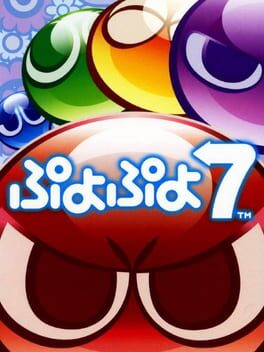
This is the 7th game in the main Puyo Puyo series, which is denoted by the 7. A break from the previous Fever series games, the game is set in a world similar to the real world instead of Primp Town. In this game, a new game mode known as Transformation was added as the default mode. Five new characters were introduced, and a few characters from past games in the series were reintroduced, either as playable characters or cameos.

Platform / Role-playing (RPG) / Simulator / Action / Kids
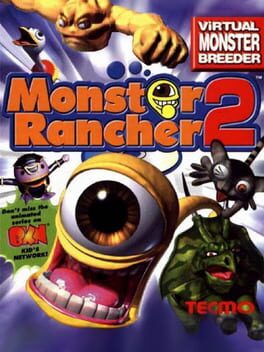
Monster Rancher 2 (released 1999) is a video game and the second North American and Japanese installment in the Monster Rancher series. In Europe (and other PAL locations) Monster Rancher 2 is the first release in the series and is thus named Monster Rancher.

Puzzle / Arcade / Action / Fantasy
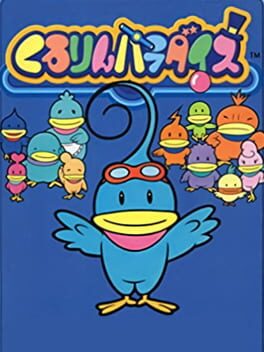
Kururin Paradise revolves around avoiding collisions as the player maneuver a robot through levels. The robot is shaped like a stick, and constantly spins. The second in the Kururin franchise, Paradise involves navigating complex levels with a constantly-rotating robot. Spring objects within levels change the direction of rotation when collided with, and an unlockable ability allows for increasing the speed of rotation. The player has three hit points. After three collisions with objects in the level (discounting the aforementioned springs), the level is re-started. Some levels have intermediate points that replenish health fully. However, they do not save progress. If the player loses all of his or her hit points, they still restart the level from the beginning. Almost all of the game is in Japanese.

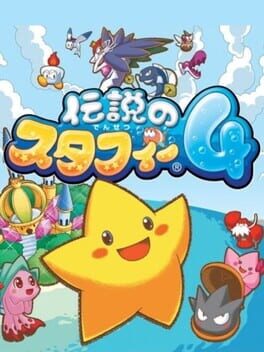
Densetsu no Starfy 4 is a platforming video game developed by TOSE and published by Nintendo for the Nintendo DS. It is the fourth game in the Legendary Starfy series, which first started on the Game Boy Advance. As with the other games in the series, Densetsu no Starfy 4 features Starfy as the main character. He is joined by his sister Starpy and his friend Kyorosuke the clam. The three of them help out other undersea creatures and fight numerous villains.

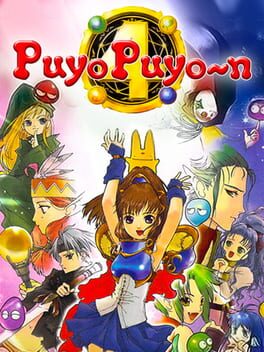
This game was released only in Japan. It is the fourth game in the Puyo Puyo series and the last set during the Madou-era in the main series. Continuing the trend of naming the games after puns, the name comes from a pun on "yon", the Japanese word for the number 4, but this time this is the only reference to the pun. The gameplay in is similar to that of Puyo Puyo 2, but adds super attacks. Clearing chains now builds up a "charge meter" which allows players to use them. The only other addition was a new game mode which could be played with a number of different field sizes, smaller or bigger than the standard 6x12, however, it removes several game modes that were present in Puyo Puyo Sun, i.e. the tournament, task and chain training modes. The art is also vastly different to the previous game in the series and, of course, the Fever series; this style was only otherwise used for Minna de Puyo Puyo.

Maboroshi Tsukiyo is an adventure game released for the Dreamcast and Playstation consoles, in which the player takes the role of Takashi Tanaka (the player can choose another name) that one summer evenight he meet the ghost of a girl in the park, and the ghost girl start living with him in his appartment. The first night the girl appears to one of Takashi friends and the girl vanished after seeing the ghost, the ghost can enter other people's bodies too...