The goal of the game is to maneuver a monkey trapped in a ball by tilting the labyrinth and reaching the goal at the end of the maze. Like many other games of Super Monkey Ball series, the player has the option to choose Aiai, Meemee and Gongon. In multiplayer, two to four people can pick the same character. Super Monkey Ball (N-Gage) is a port of the original Super Monkey Ball for the Nokia N-Gage system. It features Challenge Mode, Practice Mode, and Party Games.

Platform / Puzzle / Strategy / Action / Kids
Super Monkey Ball Touch & Roll brings the Super Monkey Ball series to the DS. Featuring a similar selection of party games and 50 different characters, this newest entry builds on the previous versions of the game. Ten different worlds will challenge your monkey-controlling skills. Also, touch-screen controls and wireless play have been implemented to take advantage of the DS platform.

Puzzle / Arcade / Fantasy / Comedy
Satan has enlarged the sun in a devious attempt to get a perfect tan. Arle Nadja embarks on a quest to defeat him in this competitive puzzle game. This is the 3rd installment of the Puyo Puyo games series, and the sequel to Puyo Puyo Tsu. After the highly acclaimed success of its predecessor, Compile took a slightly more retro approach, so players had a more original feel to the game over that of Tsu. The name of Puyo Puyo SUN comes from a Japanese pun on san, and also indicates a new Puyo brought into the game. As Sun Puyo were used in this game, and the game itself is not only set on a tropical beach, but is the third in the series (san (三)) is the Japanese word for the number three), the name served multiple purposes. This game was released only in Japan. Following the arcade release, Puyo Puyo Sun was ported to the then-current home consoles. The Saturn version was released merely three months after the arcade release, while the other ports were released in late 1997 and throughout 1998. The Saturn, PlayStation, and Windows 95 versions feature fully voiced cutscenes unlike the original ST-V version.
Puzzle / Arcade / Action / Comedy
This game, which puts the concept of user-generated content on center stage, allows players to design their own micro-games from scratch. Every element, such as the characters, the environment, the actions and even the purpose of the micro-game itself, is controlled entirely by the player. Players will then be able to share their completed micro-games with other WarioWare D.I.Y. owners.

Puzzle / Arcade / Fantasy / Comedy
Bust-A-Move (also known as Puzzle Bobble) is a real-time puzzle game in which the player controls a device called "pointer" at the bottom of the screen, aiming and releasing randomly colored bubbles upwards. Depending on the aiming, the bubbles may float up directly or bounce off the walls, changing their trajectory. The goal is to aim the bubbles in such a way that they will touch identically colored ones. When such bubbles form a group of three or more, they pop and disappear from the screen. If the ceiling of the area is covered by too many bubbles, it will gradually descend; the game is over when it nearly reaches the player-controlled pointer. Should the player fail to release the bubbles within a specific time limit, they will be released automatically, unaffected by the pointer's aiming.

Puzzle / Strategy / Arcade / Action / Comedy
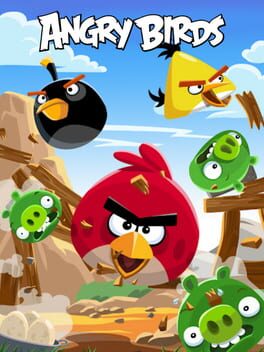
Angry Birds is a 2009 physics-based casual puzzle video game developed by Finnish video game developer Rovio Entertainment. Players control a flock of multi-colored birds on a mission to rescue their eggs from green-colored pigs. Using a slingshot, they launch the birds at these pigs stationed in or around different structures. The goal is to eliminate all the pigs on each level with a limited number of birds.

Platform / Puzzle / Arcade / Action / Comedy
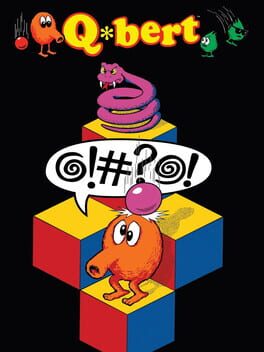
Q*bert was a popular arcade game that was released on a large number of consoles in the early 1980s. It was developed and published by Gottlieb, and became their most successful game. The concept serves as a precursor to the isometric platformer genre, where the title character must work to turn all cubes to a certain colour in a psuedo-3D world, made 3D through isometric graphics in the same way that the Penrose Stairs was made. The game was widely successful and has become a highly recognizable brand of the 1980s gaming era.

Puzzle / Arcade / Fantasy / Comedy
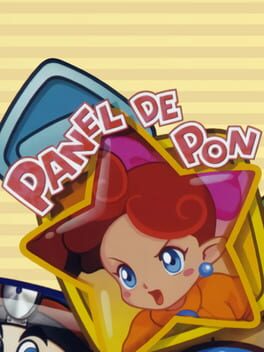
Panel de Pon is a game included in Nintendo Puzzle Collection for the Nintendo GameCube, which is the finished version of the cancelled Nintendo 64 video game Panel de Pon 64. The cancelled version ended up being released as Pokémon Puzzle League, albeit it was rebranded and featured characters from the Pokémon anime instead of the traditional fairies from the Panel de Pon franchise. A Nintendo 64 prototype is known to exist, but it is currently publicly unavailable.

Puzzle / Arcade / Comedy / Kids
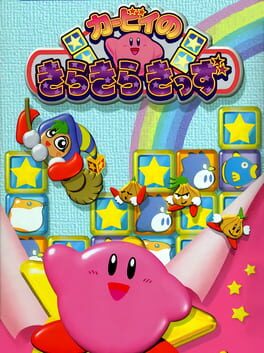
Kirby's Star Stacker is the official English title given to a puzzle Kirby game that was originally released on Japan's Super Famicom system on February 1, 1998. It is a remake of Kirby's Star Stacker, which is known in Japan under exactly the same name as the remake. The game was originally released as a new title for the Nintendo Power flash RAM service, but was released in standard cartridge form a year later. It was intended for international release, but the SNES's lifespan ended in North America and Europe before the game could be localized in either region. The standard cartridge release of the game also came out in the exact year of the SNES's discontinuation in North America, further compounding its isolation. The game was the final title in the Kirby series officially published for Super Famicom. A North American and European release would eventually be seen through the Nintendo Switch Online service in September 2023.