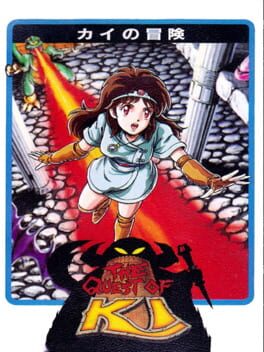

The Quest of Ki is a 1988 video game developed by Game Studio and published by Namco for the Family Computer. It is the third game in Babylonian Castle Saga series which started with the 1984 arcade game, The Tower of Druaga. The story of The Quest of Ki is actually a prequel to the original Tower of Druaga. It occurs shortly after the demon Druaga has stolen the Blue Crystal Rod and taken it to his tower. The goddess Ishtar sends the priestess Ki to the tower in order to retrieve it. The game then follows her doomed quest to the top of the tower, and leads directly into the story of the original game. The game is a side-scrolling platformer with one hundred levels. In each level, the player's goal is to pick up a key and open the door leading to the next area. Various enemies, including slimes, ghosts, and wizards, appear on each floor, and any contact with them results in death. Ki has no weapons, and thus can not damage or defeat any of the enemies. Her only abilities are to dash and jump. As long as the player holds the jump button down, Ki can rise indefinitely into the air. However, contact with the ceiling will cause her to drop to the ground and become stunned for several seconds. Many of the levels consist of puzzles in which the player must carefully regulate the height and direction of Ki's jumps. Each stage in the game contains one or more treasure chest, which hold various items. Although many of the items bestow helpful abilities, the effects only last for the floor on which they were found. After completing the game, players can gain access to forty bonus stages. These stages contain cameos from the Pac-Man ghosts and the enemies from Dig Dug.
Platform / Puzzle / Role-playing (RPG) / Action / Fantasy
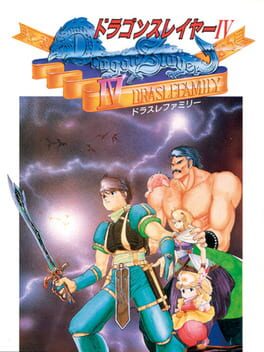
Play as five members of a family that set out to kill a dragon hidden within a giant maze.

Platform / Role-playing (RPG) / Adventure / Action / Fantasy
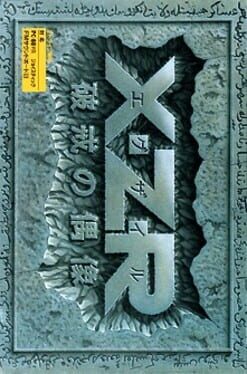
An action RPG developed by Telenet Japan and released in 1988, it is the first part of the XZR/Exile trilogy. The game was controversial for its references to religion, politics, and drugs. Unlike its sequels, XZR was never released outside of Japan.

Platform / Puzzle / Role-playing (RPG) / Action / Fantasy
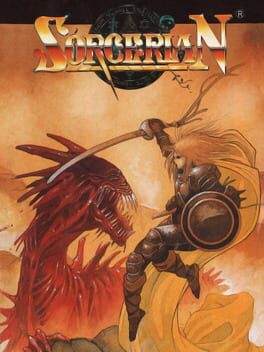
Sorcerian is a side-scrolling action-RPG. The player can create up to ten characters, from whom up to four members can be present in a party at the same time. Each character is highly customizable, with four different classes/races (fighter, wizard, elf, and dwarf) and over 60 possible jobs/occupations (ranging from clown to exorcist) available for them to perform; each has its own strengths and weaknesses, affecting the seven primary attributes (strength, intelligence, protection, magic resistance, vitality, dexterity, and karma) in different ways, as well as different equipment limitations. The player can choose from fifteen different scenarios, or quests, to play through in the order of their choice. The party must battle enemies and perform tasks within the given levels to clear each scenario, before moving onto another scenario of their choice. The player controls the entire party at the same time, with all four members running in a line, jumping in sequence, and attacking in unison. The party members follow behind in a manner similar to the Options in the arcade shooter Gradius (1985). Sorcerian also employs class-based puzzles, such as using a high-strength character to force open doors. All the characters have a default starting age of 16. Each time a player begins a new scenario, a year passes by, while additional time passes by in towns as a character goes through training or enchants items. The characters age at different rates depending on their race, with humans reaching old age at 60, dwarves at 100, and elves at 200. Upon reaching old age, for every year that passes, a character can die permanently at a random time. There is also an “Advance Time” to speed up the flow of time. Another new feature of Sorcerian was its episodic format that extended across various expansion packs. Besides the default fifteen scenarios that come with the game, there were a number of additional scenario packs released. The aging system was created with the additional scenario packs in mind.

Platform / Puzzle / Role-playing (RPG) / Action / Fantasy
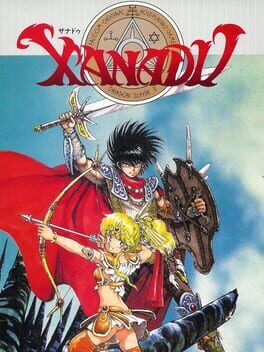
In Legend of Xanadu, the player controls a young adventurer named Areios. Monsters attack his homeland, and he is forced to flee. After traveling by ship and arriving at the town Bolda, Areios finds out that strange things have been happening in the North Cave near the town. His first mission will be to venture to the North Cave and investigate the matter. Of course, soon Areios finds himself involved in a battle against sinister forces, and commences the longest and most dangerous adventure of his life! The game is an action RPG set in the Dragon Slayer universe, with a gameplay style similar to Falcom's other popular series, Ys. Controlling Areios, the player explores the top-down world, visiting towns and fighting monsters in vast outdoor areas and dungeons. Like in Ys series, it is sufficient to "bump" into a monster in order to inflict damage. Areios gains hit points and becomes stronger by sustaining damage from enemies and resting. His weapons and armor can gain experience and level up. In many areas, companions will join Areios and help him in combat, controlled by the computer AI. The game is divided into chapters; the final stage of each chapter is a side-scrolling/platform level, which Areios has to navigate in order to reach the boss enemy, defeat him, and end the chapter. In such stages, the combat turns into a more familiar action-oriented style, with the player being required to press buttons in time in order to execute attacks and jump. There is a day/night cycle in the game, manifested not only in graphical changes, but also in the schedules of townspeople: when it's dark, people will return to their homes and go to sleep, etc.

Platform / Puzzle / Role-playing (RPG) / Action / Fantasy
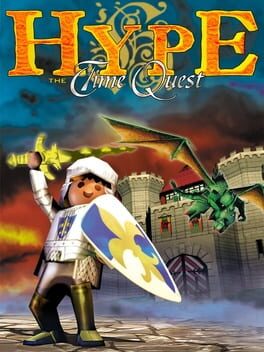
Hype: The Time Quest is an adventure video game developed by Ubi Soft Montreal and published by Ubi Soft Entertainment. The game, released in the year 1999 along with Alex Builds His Farm (1999), is based on the medieval castle toy series from Playmobil. The U.S. version of the Game Boy Color version was supposed to be released in June 2000, but was delayed for over a year for some reason. The game revolves around Hype, a 22-year-old knight in the service of King Taskan IV, following a quest through time to return to his own era in order to save the kingdom from the evil black knight Barnak. The game was directed by Alain Tascan and featured thirty-two different voice actors, as well as original music by Robbi Finkel.

Platform / Puzzle / Role-playing (RPG) / Action / Fantasy
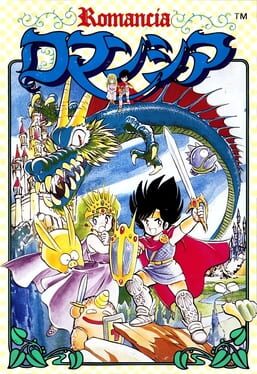
This game exists in two editions, one for the MSX1 and one for the MSX2 with better graphics. In Romancia: Dragon Slayer Jr., you are a young warrior whom the king sends on a mission to rescue a lost princess. You must leave the town and enter the dreadful monster-infested catacombs in order to complete your quest. The game is a departure from Dragon Slayer RPG-oriented gameplay style. It tends more towards medieval-themed platformer action. The hero has hit points, can buy items and weapons, use magic, and stay in inns to recover health. However, instead of receiving experience points and becoming stronger, you simply must attack quicker (by bumping into your opponent on platform levels) and jump higher.

Platform / Puzzle / Role-playing (RPG) / Action / Open world
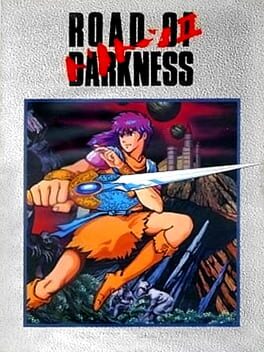
Tritorn II: Road of Darkness is an Action RPG developed by XAIN Soft and released in 1988. It is the second game in the Tritorn trilogy.

Platform / Role-playing (RPG) / Adventure / Action / Horror
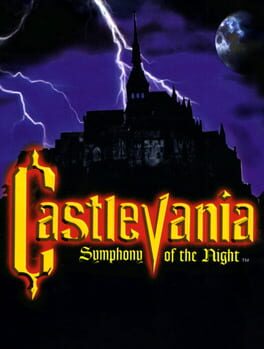
Having been awoken from his eternal slumber by the reappearance of Castlevania, Alucard must once again face the evil minions of darkness. Use your vampiric powers, along with weapons, potions, and other magical relics to change the tide of battle. A mixture of platform and role-playing action with many hidden areas and secrets. Can you discover them all?