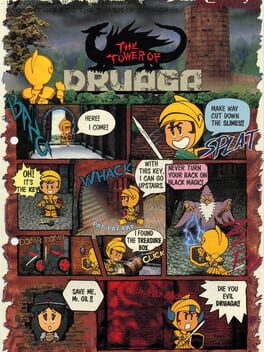
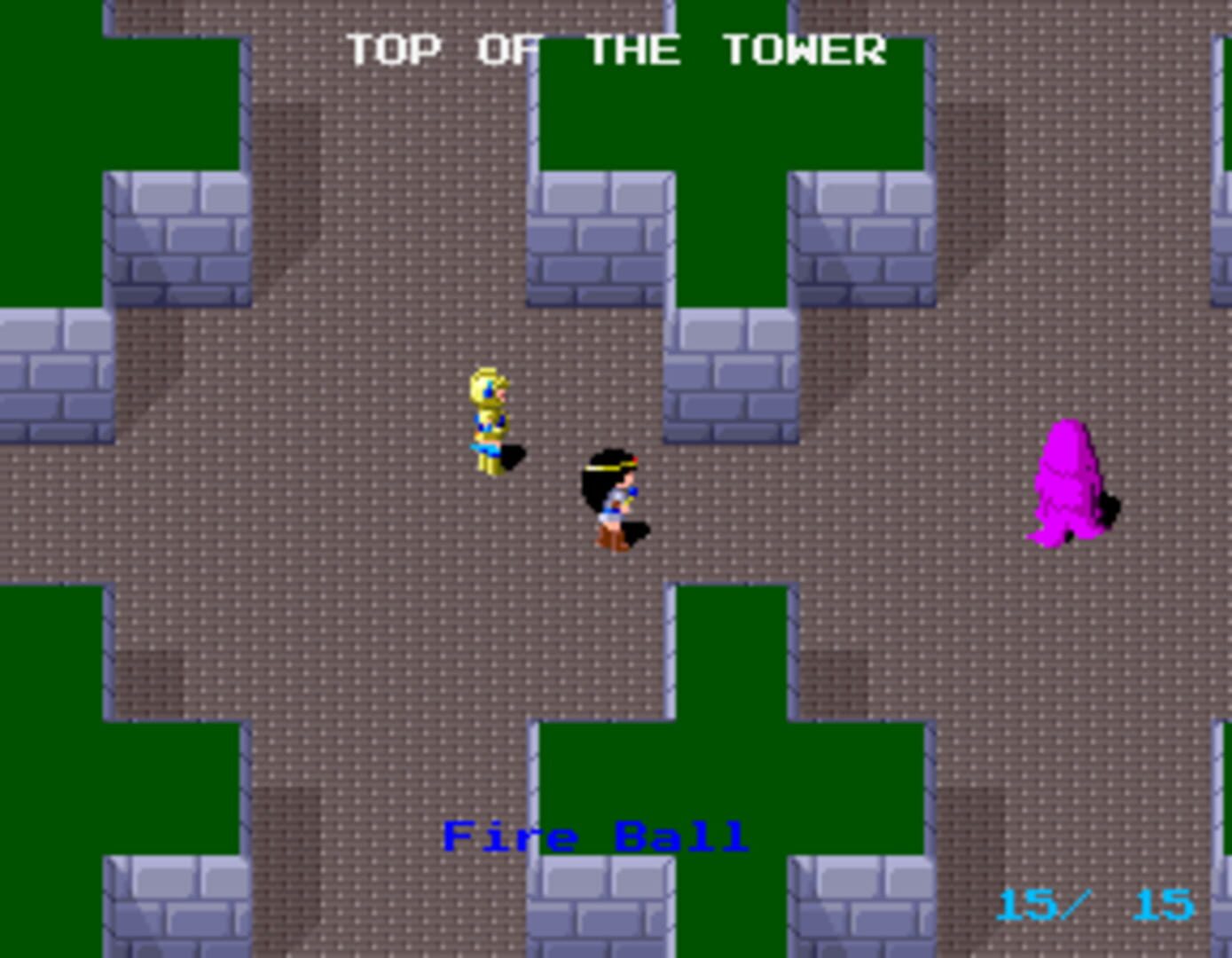
The Return of Ishtar, also known as Ishtar no Fukkatsu, is a two-player action-RPG that follows directly after Namco's Tower of Druaga. Ki and Gilgamesh must escape the Tower of Druaga, fighting through the legions of Druaga that are trying to avenge their fallen master. One player controls Ki and the other controls Gilgamesh. Ki will instantly die if an enemy touches her but she has a ranged attack to keep opponents at bay, while Gilgamesh defeats any enemy he touches. However, Gilgamesh will die if he is forced to take on too many enemies on his own. The aim is to combine efforts to fight through enemies and explore each of the tower's rooms for valuable items.

The story still's the same: Ishtar sends Gilgamesh up the 60 maze levels of the Druaga's tower to rescue Ki and retrieve the Blue Crystal Rod. He must find each level's key to proceed to the next one.

Role-playing (RPG) / Adventure / Action / Fantasy
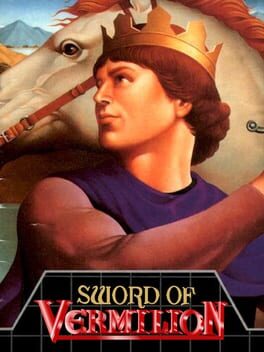
To take revenge against Tsarkon over his father’s death, the prince must collect the eight Rings of Good hidden throughout the land. Out-hack and out-smart Tsarkon’s minions while collecting the hidden Rings until you reach the final bastion where Tsarkon waits. Defeat Tsarkon and banish evil from the world.

Role-playing (RPG) / Hack and slash/Beat 'em up / Arcade / Action / Historical
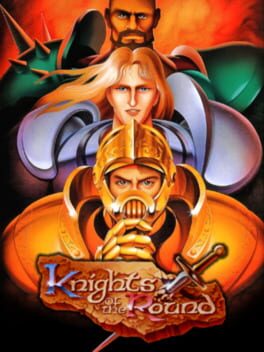
The gameplay is very similar to other Capcom beat 'em ups, such as Final Fight and Capcom's previous hack-and-slash fantasy title The King of Dragons. There are seven stages, each with its own boss and a variety of generic enemies that try to stop the players' progress. The fights rely strongly on blocking ability, which is triggered by pressing the attack button, then pressing the joystick away as the opponent strikes. If successful, the player gains a few seconds of invincibility with which to counter-attack. However, if no one strikes the player's character while holding the block, they will tire and drop their guard, making them vulnerable to attack. Blocking is vital in certain cases, since some bosses will be vulnerable only after their attack has been blocked by the player. As in most beat 'em ups, a desperation attack is performed by pressing both the attack and jump buttons simultaneously. This knocks out most enemies on the screen, but the player loses a little bit of health every time he uses it.

Role-playing (RPG) / Strategy / Action / Fantasy
Diablo is an isometric strategy RPG and one of the most well-known examples of the action-RPG subgenre. Although some of the game mechanics resemble a typical RPG, all actions are done in real-time just like in an action game. The player have to kill hordes of monsters through randomized dungeon levels in order to gain experience points, gold and a variety of equipment to bolster the hero's monster-killing potency.

Role-playing (RPG) / Action / Historical
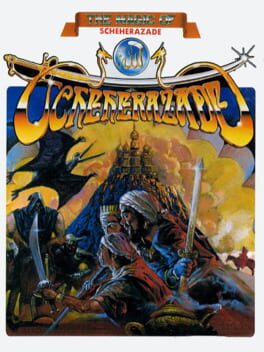
Magic of Scheherazade is a mixture of action- and turn-based combat RPG styles. Wandering through Arabia, you'll encounter enemies whom you'll fight in real time, using various weapons. You'll also be attacked by enemies with whom you'll engage in strategic, party-vs.-party combat. You can choose from three character classes: Fighter, Saint, and Magician. Each class has its own special abilities that you'll use in battles as well as during your exploration of the game world.

Platform / Puzzle / Role-playing (RPG) / Action / Fantasy
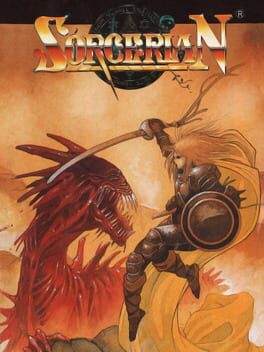
Sorcerian is a side-scrolling action-RPG. The player can create up to ten characters, from whom up to four members can be present in a party at the same time. Each character is highly customizable, with four different classes/races (fighter, wizard, elf, and dwarf) and over 60 possible jobs/occupations (ranging from clown to exorcist) available for them to perform; each has its own strengths and weaknesses, affecting the seven primary attributes (strength, intelligence, protection, magic resistance, vitality, dexterity, and karma) in different ways, as well as different equipment limitations. The player can choose from fifteen different scenarios, or quests, to play through in the order of their choice. The party must battle enemies and perform tasks within the given levels to clear each scenario, before moving onto another scenario of their choice. The player controls the entire party at the same time, with all four members running in a line, jumping in sequence, and attacking in unison. The party members follow behind in a manner similar to the Options in the arcade shooter Gradius (1985). Sorcerian also employs class-based puzzles, such as using a high-strength character to force open doors. All the characters have a default starting age of 16. Each time a player begins a new scenario, a year passes by, while additional time passes by in towns as a character goes through training or enchants items. The characters age at different rates depending on their race, with humans reaching old age at 60, dwarves at 100, and elves at 200. Upon reaching old age, for every year that passes, a character can die permanently at a random time. There is also an “Advance Time” to speed up the flow of time. Another new feature of Sorcerian was its episodic format that extended across various expansion packs. Besides the default fifteen scenarios that come with the game, there were a number of additional scenario packs released. The aging system was created with the additional scenario packs in mind.
Platform / Puzzle / Role-playing (RPG) / Action
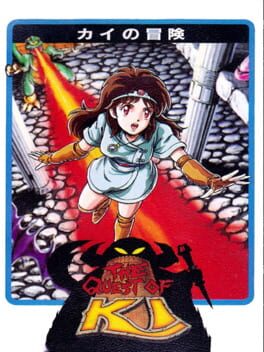
The Quest of Ki is a 1988 video game developed by Game Studio and published by Namco for the Family Computer. It is the third game in Babylonian Castle Saga series which started with the 1984 arcade game, The Tower of Druaga. The story of The Quest of Ki is actually a prequel to the original Tower of Druaga. It occurs shortly after the demon Druaga has stolen the Blue Crystal Rod and taken it to his tower. The goddess Ishtar sends the priestess Ki to the tower in order to retrieve it. The game then follows her doomed quest to the top of the tower, and leads directly into the story of the original game. The game is a side-scrolling platformer with one hundred levels. In each level, the player's goal is to pick up a key and open the door leading to the next area. Various enemies, including slimes, ghosts, and wizards, appear on each floor, and any contact with them results in death. Ki has no weapons, and thus can not damage or defeat any of the enemies. Her only abilities are to dash and jump. As long as the player holds the jump button down, Ki can rise indefinitely into the air. However, contact with the ceiling will cause her to drop to the ground and become stunned for several seconds. Many of the levels consist of puzzles in which the player must carefully regulate the height and direction of Ki's jumps. Each stage in the game contains one or more treasure chest, which hold various items. Although many of the items bestow helpful abilities, the effects only last for the floor on which they were found. After completing the game, players can gain access to forty bonus stages. These stages contain cameos from the Pac-Man ghosts and the enemies from Dig Dug.

Platform / Adventure / Arcade / Action / Science fiction
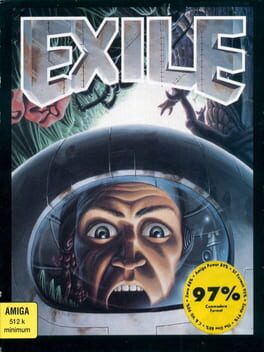
Exile is a single-player action-adventure video game originally published for the Acorn Electron and BBC Micro in 1988 by Superior Software and later ported to the Commodore 64, Amiga, CD32 and Atari ST, all published by Audiogenic. Exile's game physics engine qualifies it to be the first game to have a complete Newtonian motion model. At the time of its release it was considered to push the boundaries of what was possible on home computers, particularly on the 8-bit platforms. It remains probably the most complex game available for the BBC Micro. The game was designed and programmed by Peter Irvin (author of Starship Command, a space shoot-em-up with an innovative control system) and Jeremy Smith (author of Thrust, a game based on cave exploration with a simpler physics model).