Mystery box
?
Sealed
Mystery Box
Every game in your current results, in one box. Add it to a quest and each run draws a fresh game from it, revealed on release day.
Intellivision
1979
This side out
Shooter / Action / Science fiction
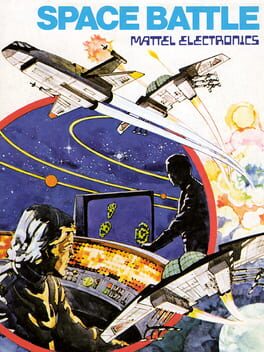
Space Battle is a one-player game that pits you against the computer. Six alien fleets of different sizes are attacking your mothership, and it's up to you to defend it using your three squadrons. Alien ships will dodge your attacks and will attack you with photon blasts.
Arcade
1979
This side out
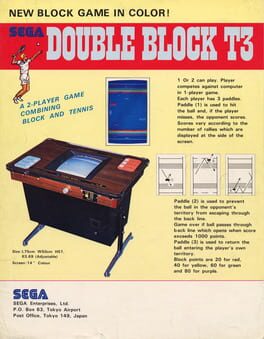
Released in 1979 on Arcade, by Sega Enterprises, Ltd..
Arcade
1979
This side out
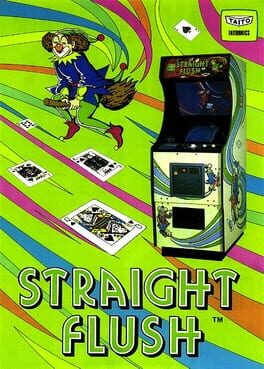
A colorful card game from Taito.
Channel F
1979
This side out
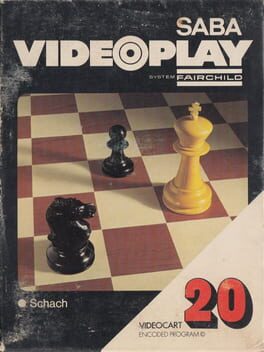
Schach (German for "chess") was released for the Saba Videoplay, a Channel F-compatible system that Fairchild licensed for the European market. In this early chess simulation you can only play against the machine, as there is no multiplayer support. The player can chose either the white (actually green on screen) or black (actually red) pieces, and can select from 4 different AI difficulties. The easiest AI plays its turns in a matter of seconds but, as the difficulty increases, each turn can take several minutes. In the highest difficulty, the AI can take up to 50(!) minutes to decide its move. To allow the player to watch something else on the TV while the system is busy, the game cart has a very special feature: an integrated red led lights up while the machine is "thinking". During the game, the player can ask the computer to help him with his next move. In those situations, the system analyses the board and plays impartially.
Apple II
1979
This side out
Role-playing (RPG) / Fantasy / Historical
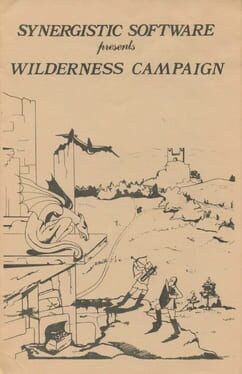
An early dungeon-crawler based on pen & paper D&D
Apple II
1979
This side out
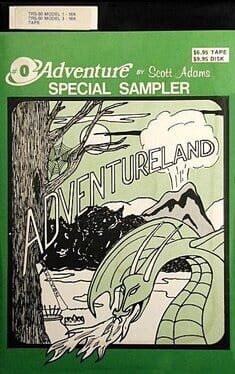
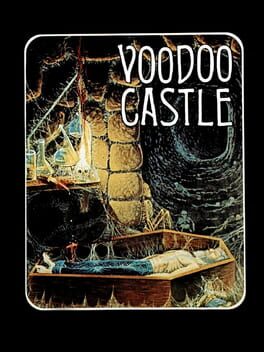
A cut-down version with 3 treasures of the Scott Adam's text adventure "Adventureland".
Arcade
1979
This side out
Shooter / Arcade / Science fiction
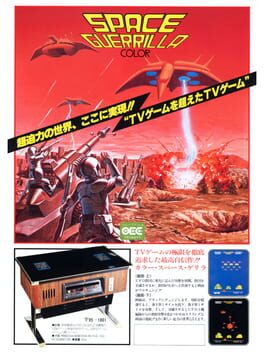
Space Guerrilla is a fixed-screen shooter in the vein of Space Invaders but with some interesting twists. The player controls their tank at the bottom of the screen and must prevent an alien invasion. Instead of the typical four bunkers, there are three pieces of scenery with buildings. The attract screen starts with a little animation of aliens landing on one of them and peeing. Another difference with the typical Space Invaders clone is that while the ships fly in a block formation, they don't go back and forth between the screen boundaries. Instead they fly past and go out of view again, before flying back. Some ships also dive down towards the bottom of the screen like in Galaxian. When the player loses all their lives the game is lost.
Odyssey 2
1979
This side out
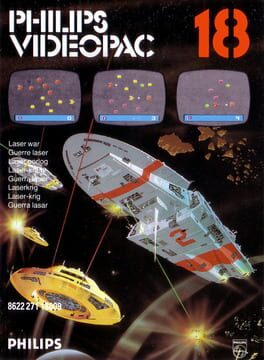
The players are in the Battle Control Central at the heart of the United Planets Interstellar Galactic Empire. From there, they monitor the activity of the twin solar systems of Terien and Lorien, forty-three billion light years away. Their mission is to control to protect the planets of those solar systems from the invasion fleet with the remote controlled battle cruisers. They'll control their ships with the joystick and fire lasers with the action button. The invasion fleet will shoot the players and the planets as well. Shot planets will have their colors changed and will be conquered when their colors match the invaders ship's colors. If the players' ship is destroyed, a new one will be launched from one of the planets with their color. If there's no planet with their color, they'll have to wait until a planet's color change to theirs. If the players crash into planets with a color different than theirs, both the ship and the planet will be destroyed. Destroyed planets won't come back, but the central planet at each orbit is indestructible. Players can also hide their ships in their own planets, by landing on them. Planets with ships landed will blink. The winner is the player who first destroys ten enemy ships.
Odyssey 2
1979
This side out
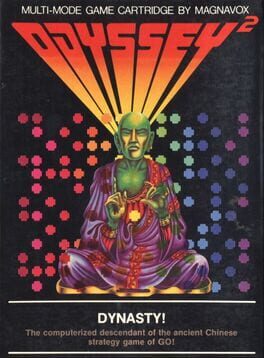
Press 0 on the alpha-numeric keyboard if you are playing on color TV. Press 2 if you are playing on Black and White TV. The game is played on an 8 x 8 matrix. Four "armies" in two different colors are at the center. A flashing question mark at the right hand side of the screen is asking if the "armies" of that color are to be played by a person or the computer. Press "yes" on the alpha-numeric keyboard for person. Press "no" for computer. If you have entered "yes," a second symbol will appear followed by a flashing question mark. If you wish that color played by a person, press "yes." If you want to play against the computer, press "no." If you have elected to play against the computer, the symbol for microprocessor will appear on the screen. If you are playing against another person, individual timers will appear separately at the top of the screen. Player one's timer will appear first. You can enter up to 99 minutes of time for each player in the game. Different times may be entered for each player to give a novice more of a chance against an experienced player. If you want to play with no time limit, enter 00 on the numeric section of the keyboard. If you are playing against the computer, the microprocessor will make its move instantly. It can make more than 100,000 electronic decisions per second. The object of the game is to occupy as much of the matrix as possible. The game begins with two "armies" of each color at the center of the matrix. The game ends when the board is filled or when neither player can enter a move and capture and opposing "army." The player with the most "armies" on the matrix is the winner. A running score appears at the top of the screen throughout the game. Every entry must satisfy two conditions: - An "army" must always be placed next to an opponents "army." - One or more of the opposing "armies" must be trapped by the newly entered "army" and another "army" of the same color. The trapped "armies" will automatically change to the conqueror's color. If these condition cannot be met, there will be an audio signal and the player loses a turn. Use the joy stick of the hand control to position the box on the screen where you want to locate an "army." Press the action button to enter the "army" onto the screen. Player one uses the left hand control. Player two uses the right hand control. Players may capture more than one army in different directions on the same move. The directions may be in any horizontal, vertical or diagonal straight line. Secret strategy hints. - The corners are the most important strategic positions. Once an "army" occupies a corner, it controls three directions. An "army" commanding a corner position cannot be captured because it cannot be surrounded on two sides in a straight line. - The outside positions of the matrix are very important because they effect five directions but are only vulnerable from two sides. - Caution! Be careful before occupying the first rows inside the perimeter of the matrix. They are jumping off points to the outside and corner positions. VERSION II: DIRECTIONAL DYNASTY Press 1 on the alpha-numeric keyboard if you are playing on color TV. Press 3 on the alpha-numeric keyboard if you are playing on Black and White TV. Enter player information and timer settings as per Dynasty rules 4 through 9. Directional Dynasty differs from Dynasty in only one way, but it changes the game completely. Players cannot capture "armies" in more than one direction on the same move. You must make a choice. When you enter an "army" into a position offering an option to capture "armies" in more than one direction, the surrounded "armies" will not change color automatically. Push the joy stick on the hand control towards the "army" or "armies" you wish to capture. A second positioning box will appear in that row. Press the action button and the surrounded "armies" in that row will change color automatically. It is very important to consider strategic position as well as the number of "armies" open to capture when exercising a directional option.
Arcade
1979
This side out
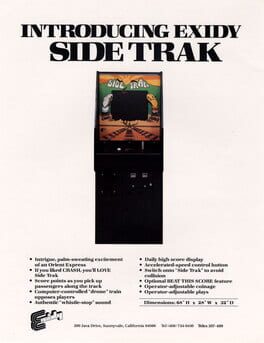
Side Trak is a black & white man-versus-machine game where the goal is to pick up all of the waiting passengers with your train while avoiding the computer-driver "killer engine" which aims to take you out in a head-on collision. You can control your train via the "fast" button which allows you to temporarily increase your speed on the tracks. You can also use the joystick to switch between several tracks at various junction points. Each time you make a complete circuit around the track and pass the start marker on the outside track, another car is added to your train. Passengers picked up from the outermost track are worth 10 points. Passengers picked up from each successive inner track are worth an additional 10 points. On top of that, passengers picked up when you have additional cars in tow add another 10 points to car. Side Trak is the first of several games that were developed on a common Exidy platform which would eventually become host to their most popular games. Early revisions of the platform — Side Trak included — had custom sound generators tailored for each game, along with a primitive tone generator that could play one of two very short preprogrammed sequences of notes. (Later games eventually included a common sound system.)
Arcade
1979
This side out
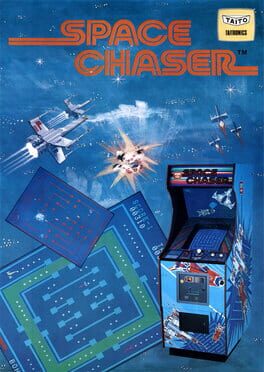
Collect all the dots in the maze without colliding with (or being collided by) the missile. You can use your speed boost as long as you have fuel left. If the missile gets behind you on a long stretch it will speed up and the only way to avoid collision then is to turn a corner.
Arcade
1979
This side out
Fighting / Action / Science fiction
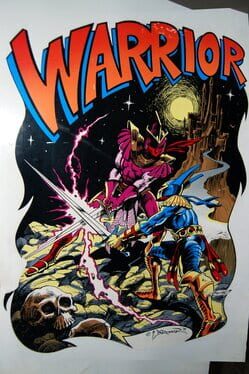
Warrior is a 1979 arcade fighting game and is considered one of the first games of its genre. Developed by Tim Skelly while working at Cinematronics, it was released under the Vectorbeam company name shortly before Cinematronics closed Vectorbeam down. The game featured two dueling knights rendered in monochrome vector graphics and based on crude motion capture techniques. Due to the limitations of the hardware used, the processor could not render the characters and gaming environment at the same time and backgrounds were printed, with the characters projected on the top.
Intellivision
1979
This side out
Strategy / Turn-based strategy (TBS) / Card & Board Game
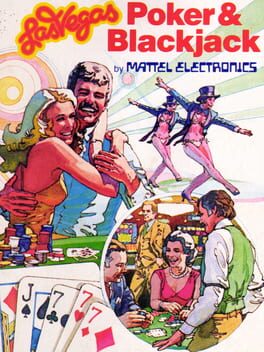
Las Vegas Poker & Blackjack is a computerized version of different types of Poker and Blackjack, including 7-Card Stud and 5-Card Draw. The player inputs how much "money" that is available to bet with. There is one and two-player games, and Las Vegas Poker & Blackjack includes a dealer to play against. Developed by John Brooks for APh Technological Consulting and published by Mattel Electronics
Still plenty of games...