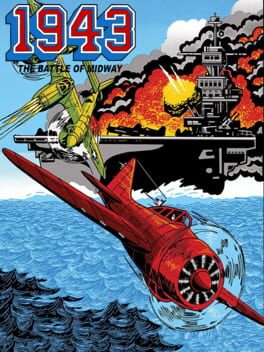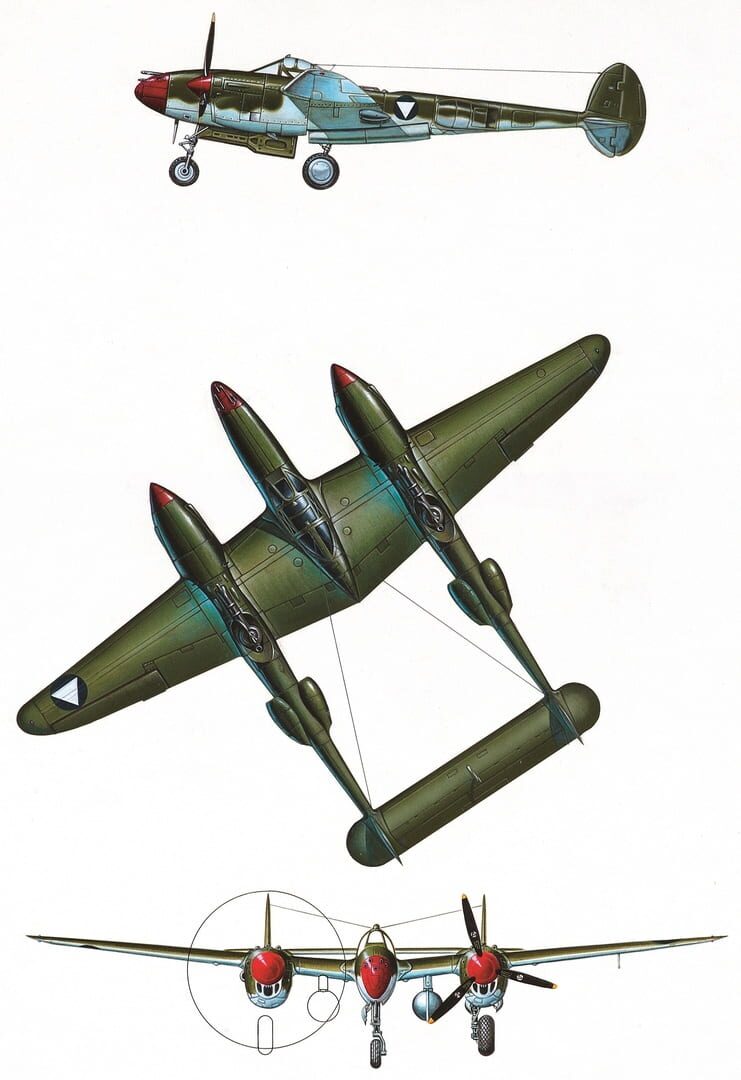
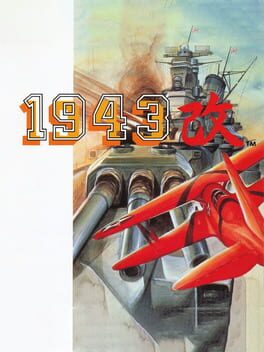

This updated version was released exactly one year after the original game's debut. 1943 Kai is an enhanced, "wild" version of 1943 that was made only available in Japan under the name 1943 Kai: Midway Kaisen (or 1943改: ミッドウェイ海戦). Most of the graphics and sounds have been reworked, the weapons have been made more extreme and some fairly strange things (laser-firing WWII planes and ships that run on ground) have been added. The trademark P-38 has been replaced with a biplane, the Boeing-Stearman Model 75.

Shooter / Arcade / Action / Historical
The game is set in the Pacific theater of World War II, off the coast of the Midway Atoll. The goal is to attack the Japanese Air Fleet that bombed the players' American Aircraft Carrier, pursue all Japanese Air and Sea forces, fly through the 16 levels of play, make their way to the Japanese battleship Yamato and destroy her. 11 Levels consist of an Air-to-Sea battle (with a huge battleship or an aircraft carrier as an End-Level Boss), while 5 levels consist of an all-aerial battle against a squadron of Japanese Bombers and a Mother Bomber that needs to be destroyed. As in 1942, players pilot a P-38. Two buttons are used: one for regular attacks (with several weapons) and one for special actions that executes either a loop like in 1942 or one of three special attacks that damage the plane. Unlike 1942, the player only has one life, with one refillable energy meter. Destroying a complete formation of red enemy planes will result in a power-up, such as a health boost or a temporary special weapons which replaces the default twin gun.

Shooter / Arcade / Action / Warfare
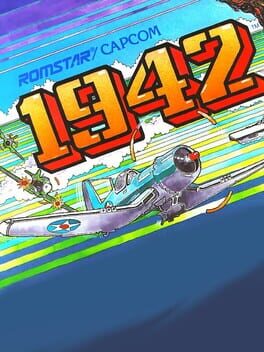
1942 is a vertically scrolling shoot 'em up made by Capcom that was released for the arcade in 1984. The goal is to reach Tokyo and destroy the entire Japanese air fleet. The player pilots a plane dubbed the "Super Ace" . The player has to shoot down enemy planes; to avoid enemy fire, the player can perform a roll or "loop-the-loop". During the game the player may collect a series of power-ups, one of them allowing the plane to be escorted by two other smaller fighters in a Tip Tow formation.

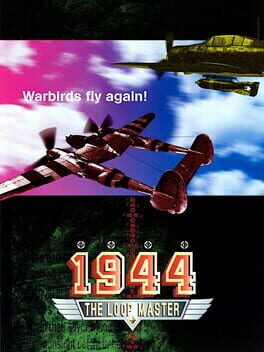
The game takes place in the heated battles of 1944 during the Second World War as a super ace pilot attempts to defeat an entire army. The game operates and plays like most standard shooters. The objective of every level is to shoot enemy planes, tanks, trains, turrets, battleships, and defeat the boss after each level. Unlike its predecessor, 19XX: The War Against Destiny, the game plays more like the early games in the series.

Shooter / Arcade / Action / Fantasy
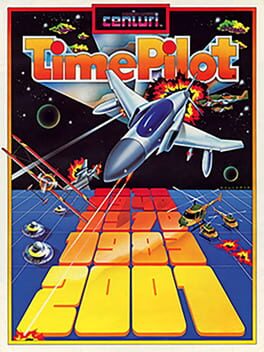
Time Pilot is a multi-directional scrolling shooter and free-roaming aerial combat arcade game designed by Yoshiki Okamoto, released by Konami in 1982, and distributed in the United States by Centuri. Debuting in the golden age of video arcade games, it is a time travel themed game that allowed the player's plane to freely move across open air space that can scroll indefinitely in all directions. The Killer List of Videogames included Time Pilot in its list of top 100 arcade games of all time. The player assumes the role of a pilot of a futuristic fighter jet, trying to rescue fellow pilots trapped in different time eras. The player must fight off hordes of enemy craft and defeat the mother ship (or "boss") present in every level. The background moves in the opposite direction to the player's plane, rather than the other way around; the player's plane always remains in the center.

Shooter / Arcade / Action / Fantasy
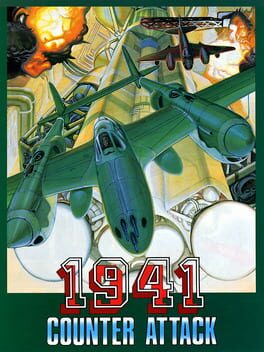
The year: 1941. The place: 20,000 feet in the air over the North Atlantic. Lightning flashes across the skies of war-torn Europe. Your mission: beat back the imperial forces before they can use their new weapon! In 1941: Counter Attack, the goal is to shoot down enemy airplanes and collect weapon power-ups. It is the prequel to 1942, and the third game in the 19XX series.

Shooter / Puzzle / Indie / Action / Science fiction
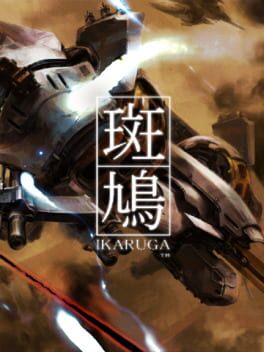
In this vertical scrolling spaceship shooter, you control a ship that can change its polarity at will. As blue/white, the ship can easily destroy red/black enemies, and vice versa. Bullets of your polarity can be collected to fuel your energy gauge, but those opposite will kill you. Destroying an enemy ship causes them to fire revenge bullets which can be absorbed and fired back by the player. Different difficulties exist to change exactly how you interact with polarized points, or how they appear. It is the spiritual successor to Radiant Silvergun, featuring similar level and boss design, as well as it's buddhism inspired themes and aesthetics. Both are directed by Hiroshi Iuchi, who also composed Ikaruga's soundtrack.

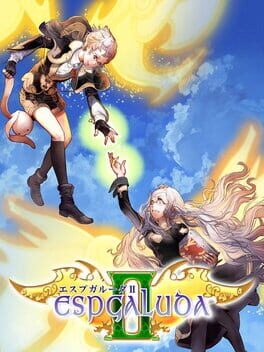
Espgaluda II is a manic shooter originally released by Cave in the arcades in 2005 as a sequel to Espgaluda.