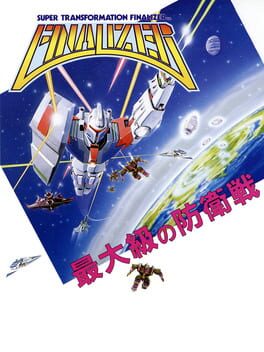

The player starts out as a ship fighting over North America. Capsules are shot from the ground, that when shot open contains either a ship upgrade or powerup. Transformation - The very first item that comes out of the capsule is an upgrade that transforms the ship into a flying robot that has a shield. This shield can take a few hits before transforming back into a ship. - With each upgrade the robot transforms and gains a different type of weapon. - Pressing button 2 (B) will let the Robot use his shield to block shots head on. Power ups - After shooting the capsule open, if they player shoots again the ship upgrade will change to a power up. - Power ups include bonus points, stopping enemies for a certain amount of time, and becoming indestructible for a limited amount of time. During this indestructible phase, the ship/robot cannot shoot but can fly into enemies for tremendous amounts of points.
Shooter / Simulator / Action / Science fiction
Welcome to Descent - 30 levels of the most mind-bending, stomach-churning action game ever. Featuring true 3-Dimensional worlds with light source shading, texture mapping, 3-D morphing, directional sound effects and sizzling music, this is technology taken to the limit.You begin deep below the surface of Lunar Base I where an unknown alien race has taken over the chasm of the Post-Terran Mining Corporation. Lunge straight down mine shafts, twist around never-ending tunnels and fight your way past robotic menaces in an environment that's truly 360° 3-D... move up, move down, shoot everything everywhere. Hang onto your senses (and your lunch) as you drop straight down mine shafts on a ride that'll leave you spinning.And what's the good of losing your mind if you can't share the experience with your friends? Descent invites you and your buddies to dive into the action together with head-to-head combat and cooperative two-player modem and eight-player network support.

Shooter / Role-playing (RPG) / Simulator / Action / Science fiction
Kidou Senshi Gundam Part 2: Tobe! Gundam (機動戦士ガンダム PART 2 翔べ!ガンダム "Mobile Suit Gundam Part 2: Fly! Gundam") is an adventure/shooter/RPG from 1984, based on the Mobile Suit Gundam anime series. It anticipated several gameplay elements later found in FPS, TPS and action RPG games.

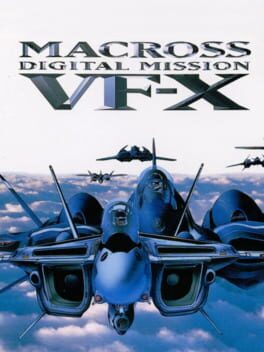
The year is 2047 AD, approximately two years after the Protodeviln War in which the United Nations discovered the Spiritia-enhancing potential of music. In this light, the popular five-member idol group Milky Dolls (yes, Milky Dolls) comes to a colony planet to perform a concert -- only to be captured by a fleet of Zentradi. Your mission is to fight through this massive armada of ships, pods, and fighters to save the idol singers. The opening sequence is storyboarded by Kawamori Shouji and accompanied by Fire Bomber's "Fly Away." The game itself is divided into nine missions, beginning with one in which you pilot a VF-1 Valkyrie against a VF-4 Lightning III as training and culminating with a final protracted duel with the de rigueur "boss" -- a transforming Zentradi fighter. Survive the battle with this never before seen mecha, and you will be at the front seat of a concert by the Milky Dolls with a song written and composed by Iijima Mari, the original Lynn Minmay voice.

Shooter / Role-playing (RPG) / Simulator / Action / Science fiction
An early first-person role-playing shooter released by Arysis Software for the PC-88 and PC-98 in 1988, and later ported to the Sharp X68000 and Mega Drive/Genesis. Ahead of its time, it had 3D polygon graphics, FPS gameplay, strafing controls, open-world space exploration, and an epic sci-fi space opera plot.

Shooter / Simulator / Action / Science fiction
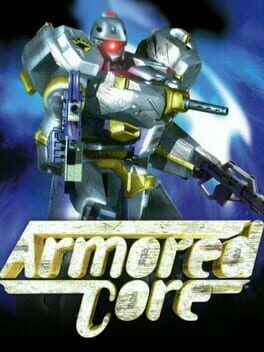
Armored Core is a mecha video game released in 1997, the first in the Armored Core series. It is an action game played from third-person perspective.

Shooter / Simulator / Adventure / Action / Science fiction
The main game takes place in a first-person view inside the complex. Trams connect the maze-like living areas to a handful of manned turrets outside. You must shuttle between shooting down waves of fighters in the turrets, and scouring the base levels for card keys during the down time. A third consideration is the "Virtual Operating System" controlling all major base functions. You use this interface to repair damage from attacks, monitor intruders, and place robot sentries to guard key passages. As you find more access keys, you can increase the software's efficiency to the point that you can command turrets remotely, or set them to auto-attack with a high degree of success. As defending the base becomes more automated and efficient, you have more time to search the levels for keys. Your ultimate goal is to find the clearance to self-destruct the base, defend your escape shuttle, and get out alive.

Shooter / Simulator / Action / Science fiction
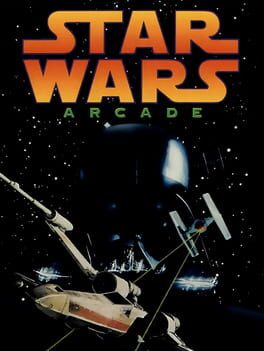
Launch your X-wing fighter for the final Death Star assault! The Force is with you as you pursue Darth Vader through an exploding galaxy! You are the last hope for the Rebel Alliance!

Shooter / Simulator / Action / Science fiction
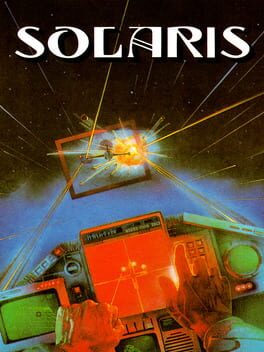
Solaris is a space combat game for the Atari 2600 published in 1986 by Atari Corporation. It was developed by Doug Neubauer, who owns the copyright and the Solaris trademark. The game is a sequel to Neubauer's Atari 8-bit family game Star Raiders from 1979. Both games feature an enemy race known as Zylons, but Star Raiders uses a first-person perspective while Solaris is in third-person. Solaris was at one point going to be based on The Last Starfighter, while the Atari 8-bit version of The Last Starfighter was renamed Star Raiders 2.