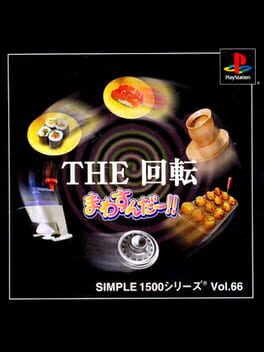
Simple 1500 Series vol. 66: The Kaiten - Mawasun Da!! is a collection of a lot of wacky mini games with a difficult control method since in most of the games the player has to turn quickly the left analog stick to gain speed and is really hard to do it.

Arcade / Action / Science fiction
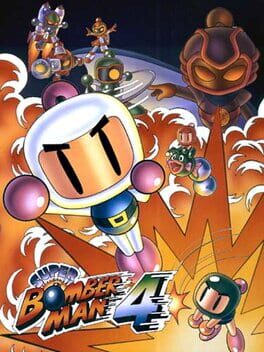
The fourth SNES game in Hudson's explosive multiplayer series sends White Bomber and Black Bomber hurtling through time.

Puzzle / Arcade / Fantasy / Comedy
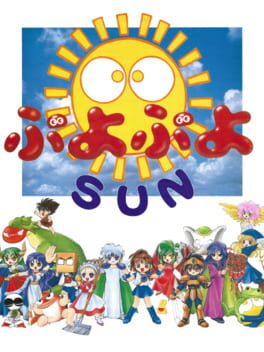
Satan has enlarged the sun in a devious attempt to get a perfect tan. Arle Nadja embarks on a quest to defeat him in this competitive puzzle game. This is the 3rd installment of the Puyo Puyo games series, and the sequel to Puyo Puyo Tsu. After the highly acclaimed success of its predecessor, Compile took a slightly more retro approach, so players had a more original feel to the game over that of Tsu. The name of Puyo Puyo SUN comes from a Japanese pun on san, and also indicates a new Puyo brought into the game. As Sun Puyo were used in this game, and the game itself is not only set on a tropical beach, but is the third in the series (san (δΈ‰)) is the Japanese word for the number three), the name served multiple purposes. This game was released only in Japan. Following the arcade release, Puyo Puyo Sun was ported to the then-current home consoles. The Saturn version was released merely three months after the arcade release, while the other ports were released in late 1997 and throughout 1998. The Saturn, PlayStation, and Windows 95 versions feature fully voiced cutscenes unlike the original ST-V version.
Point-and-click / Strategy / Arcade / Action / Science fiction
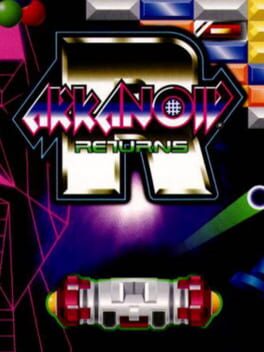
Arkanoid Returns is an arcade game released by Taito in 1997 as part of the Arkanoid series. It was the fourth overall, and third to be released in arcades. The game was since ported to the PlayStation, with an updated home release being released afterwards titled Arkanoid R 2000. All versions were released exclusively in Japan, currently making it the only game in the series to never receive an international release. The enemy known as 'DOH' still did not get the message and after many years of silence decides to attack once again. The 'Vaus' space vessel better be ready to face new, yet familiar challenges, in order to stop 'DOH' once again. The gameplay remains similar to Arkanoid: Doh it Again, the previous game in the series released for the Super Nintendo, in that it features the same powerups , some re-used level designs, and the same board size. The initial arcade game contains only 50 levels, the environment changing every 9 levels.

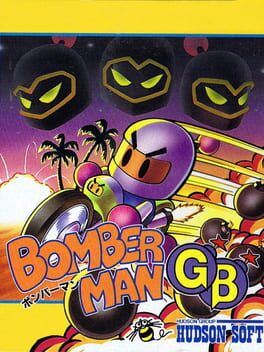
Bomberman is searching the depths of the earth in hopes of finding the Legendary Treasure. In the Story Mode, guide him through 48 levels of puzzle-solving action, collecting power-up items and defeating monsters along the way. The Battle Mode is the old favorite, where one to four players battle it out on six different maps.

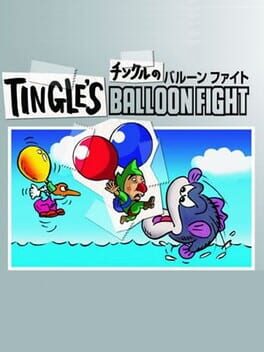
Keep Tingle afloat as you collide with the enemies and pop their balloons. Once they've fallen to the ground, ram into them again to knock them out before they've inflated their balloon and taken back to the skies. This game is a bonus item for platinum members in the Japanese Club Nintendo rewards program.

Puzzle / Arcade / Action / Fantasy
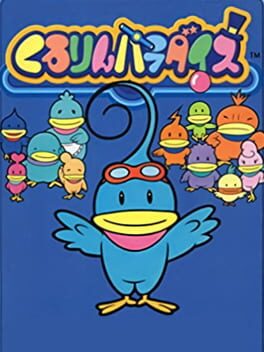
Kururin Paradise revolves around avoiding collisions as the player maneuver a robot through levels. The robot is shaped like a stick, and constantly spins. The second in the Kururin franchise, Paradise involves navigating complex levels with a constantly-rotating robot. Spring objects within levels change the direction of rotation when collided with, and an unlockable ability allows for increasing the speed of rotation. The player has three hit points. After three collisions with objects in the level (discounting the aforementioned springs), the level is re-started. Some levels have intermediate points that replenish health fully. However, they do not save progress. If the player loses all of his or her hit points, they still restart the level from the beginning. Almost all of the game is in Japanese.

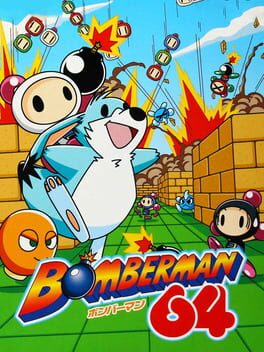
Not to be confused with the 1997 game known in North America and Europe as "Bomberman 64," this 2D Bomberman title was the last N64 game to be released in Japan.

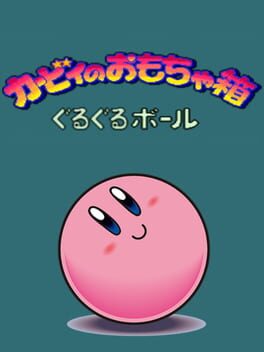
In this game, the player fires spherical Kirbys through a spiral tube, which is designed to look like Efreeti. This tube has holes in it, which a speedy Kirby will pass right over. The point is to fire the Kirbys with just the right amount of power to pass over certain holes but slow down and fall into another hole. Different holes give different numbers of points, so the goal of the player is to shoot his/her Kirbys into the highest-scoring hole as much as possible. When the player runs out of Kirbys, the game ends. Like every other sub-game in Kirby's Toy Box, this game could only be downloaded by the Satellaview during the brief period it was broadcast.