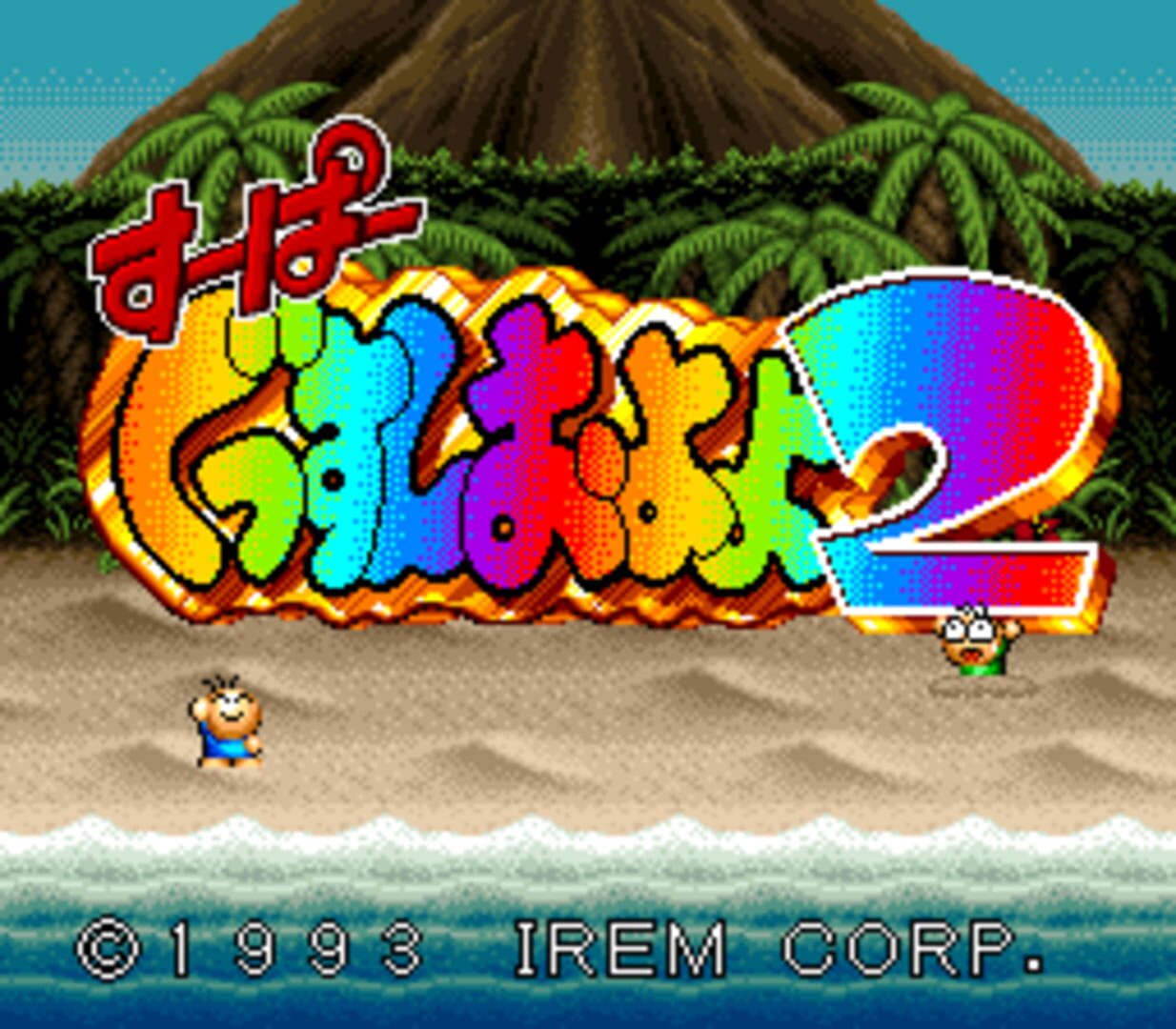
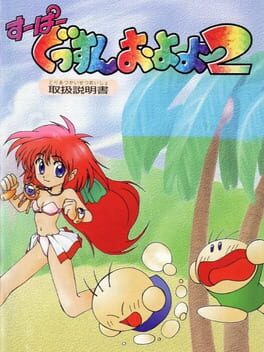
Super Gussun Oyoyo 2 is a block-stacking puzzle game and the sequel to Super Gussun Oyoyo.
Screenshots
Featured in
Super Gussun Oyoyo 2 is a block-stacking puzzle game and the sequel to Super Gussun Oyoyo.
Puzzle / Adventure / Action / Fantasy
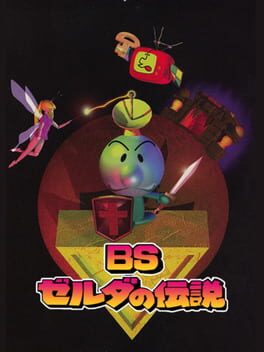
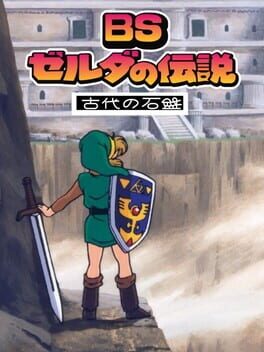
Ancient Stone Tablets was a Japan-Only release for the Legend of Zelda: A Link to the Past. It was an add on made for Satellaview, a system that takes radio broadcasts and processes them into games live. The game came in four weekly broadcasts and made new additions to the original, such as weather, many new dungeons, and a new story. The game was much like a Second Quest or Master Quest of A Link to the Past, sharing a very similar overworld with slight changes and entirely new dungeons. Unlike a Second Quest however, it has an entirely new story. Various actions earned the player points, and these points could later be traded in to Nintendo for different prizes. Ancient Stone Tablets is different from most other Zelda games as the game's central heroes are actually the avatars of the player's ID for the BS-X Broadcasting System (Super Famicon), drawn into Hyrule, which is also true for BS The Legend of Zelda. The difference being that this time the player does not take the place of Link, but takes part in a new tale set after the events of A Link to the Past. The male character wears a green tunic (though others are later available) and a backwards baseball cap. The female character has long red hair and is otherwise almost exactly the same as the male.
Puzzle / Adventure / Action / Fantasy
Venture back to Hyrule and an age of magic and heroes. The predecessors of Link and Zelda face monsters on the march when a menacing magician takes over the kingdom. Only you can prevent his evil plot from shattering the land of Hyrule. In your quest, you'll venture into twisting mazes, dungeons, palaces and shadowy forests. Test your mettle with mighty swords and magical weapons. Or heft a boulder and hurl it at your enemies. If the going gets tough, dive into a river - you can swim to escape! Learn powerful spells, locate magical artifacts and solve the mysteries of the evil magician and the hidden realm of Hyrule.
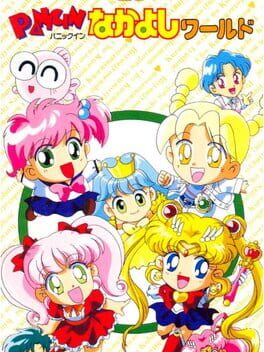
This title is about monsters that are attacking the World of Nakayoshi. The monsters are eating up the citizens. The more they eat, the hungrier they get. Four girls must stop the monsters and defeat Daima to save the World of Nakayoshi. The game is an overhead Adventures of Lolo-style puzzle game featuring characters from various Nakayoshi-printed manga. Sailor Moon and Chibi Moon are playable characters. There are also characters from Goldfish Warning!.
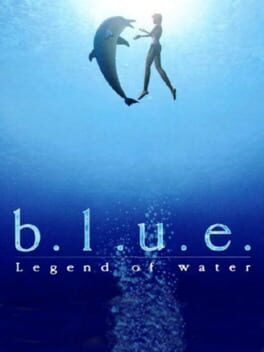
The intro starts with Maya on a helicopter being taken to see her dad who is on some kind of ship. During the journey she falls asleep and has a strange dream. Upon arriving she expresses her excitement at wanting to go swimming with the dolphins (or just one particular dolphin). Gameplay: It's divided in two parts: NPC Interaction and Exploration. In the interaction parts, Maya must talk to her father and other researchers from the underwater facility to get clues about the ruins. In the exploration parts, she explores the sea and the ruins. Maya and the dolphin must solve some puzzles together. Strangely enough, Maya doesn't use proper diving equipment, so in order to breathe, she must find some air spots in the ruins. The controls resemble those of Tomb Raider, but underwater.
Platform / Puzzle / Action / Comedy
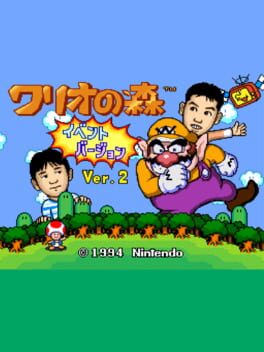
The SNES puzzle game Wario's Woods was used to create several broadcast games for the Japan exclusive Satellaview. There were several very similar editions that featured sprites based on Bakushō Mondai, a Japanese comedy duo consisting of Yūji Tanaka and Hikari Ōta who also lent their voice talents and likenesses to other Satellaview games. As with most Satellaview games, the original broadcast was accompanied by voiceovers in a talkshow-like format, though the recordings have been lost. Wario no Mori: Event Ban had two versions released with the only major difference being in the event mode. Version 2 features several challenges encouraging players to beat a certain amount of rounds as fast as possible.
Platform / Puzzle / Action / Fantasy
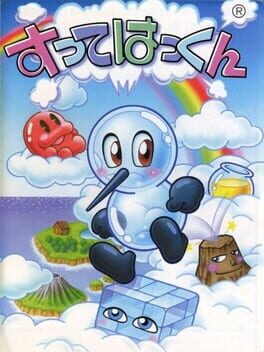
Sutte Hakkun is a puzzle action game in the shape of a platformer. The playing character is an abundant-beaked bird resembling a penguin, named Hakkun, that is able to walk and jump but not to fly. The Rainbow of Happiness shined in the sky above Peaceful Islands: one day it broke apart and now Hakkun has to track down, collect, and put together all rainbow crystals to relive it. The gameplay hinges upon two elements: blocks and potions, the latter of several colours. Hakku makes its way through levels by changing the position of blocks — that will be done by swallowing them to release them on an other place then — and sucking potions — that are to be injected to blocks by the beak, endowing them with new properties consequential to the colour of the fluid — from jars. A level is cleared when the rainbow shards in it are collected. Neither a time limit nor enemy characters are there impeding Hakkun's way. Equally distinctive is the score system: a set number of points is given at the beginning of each level, and a decrease happens with any move made, thus rewarding the player for completing levels with as little moves as possible. This version would later get re-released as the expanded "Event Version", which added a ranking system, followed by other two "Event Versions" released for the Satellaview. Another expanded version of the game, called Sutte Hakkun as well, was released as a Nintendo Power downloadable game, containing many levels left out of the Satellaview broadcast due to the Satellaview 8MB Memory Pak size. That version was also released later as a Super Famicom standard cartridge and for the Wii and Wii U Virtual Consoles.
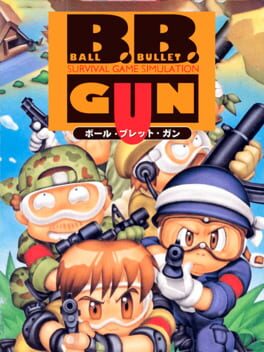
A turn-based strategy game based on paintball simulation battles. Ball Bullet Gun: Survival Game Simulation is a Japan-exclusive turn-based strategy game for the Super Famicom. The game allows the player to create a party of "soldiers", though the implication is that these are regular civilians taking part in a military simulation, and determine their names, faces and loadouts. The player then takes this team through a series of missions, using whichever members best fit the criteria. The game makes heavy use of fog of war, making it impossible to see the enemy's team unless they get within visual range. The player characters can use cover and change the direction they're facing, which allows them to get the drop on enemies. Everything - movement and reloading or shooting a weapon - requires a finite number of "AP" that replenishes after each turn. Both sides take turns to be the remaining team on the field.