Mystery box
?
Sealed
Mystery Box
Every game in your current results, in one box. Add it to a quest and each run draws a fresh game from it, revealed on release day.
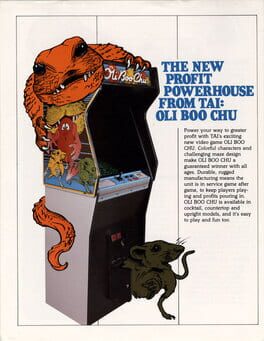
Apple II
1982
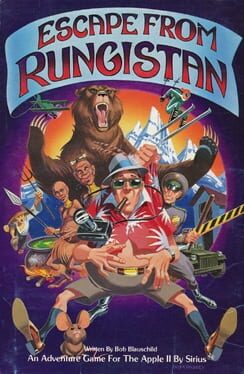
This side out
A graphical text-adventure in which the player has to escape from the mid-African nation of Rungistan.
Arcade
1982
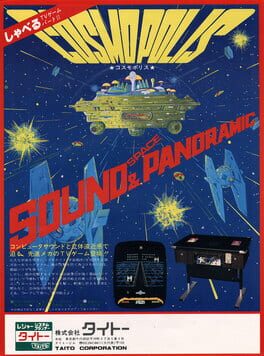
This side out
Shooter / Arcade / Action / Science fiction
Released in 1982 on Arcade, by Taito Corporation.
Arcadia 2001
1982
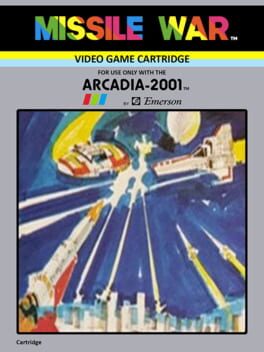
This side out
Missile War is a shoot 'em up game, based on the arcade classic Missile Command.
Game & Watch
1982
This side out
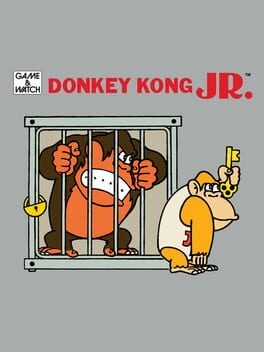
The first Game & Watch version of Donkey Kong Jr. is the first game in the New Wide Screen series. It is a single-screen single-player game.
PC-6000
1982
This side out
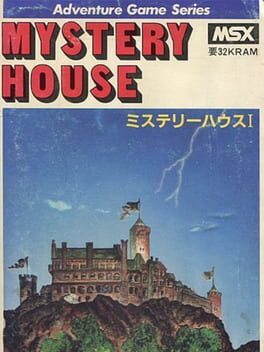
The first Japanese developed graphical adventure game created by Micro Cabin in 1982. Although it features the same name, it is otherwise unrelated to On-Line Systems' game. Mystery House, or Mystery House I (ミステリーハウスI) as it is written in Japanese on the box, is an adventure game developed by Micro Cabin in June 1982 for the Sharp MZ-80B followed by various ports for other computers. While Micro Cabin's Mystery House is clearly inspired by the seminal Mystery House created by On-Line Systems in 1980, sharing the same name and similar gameplay, it bares no connection to that title nor its official Japanese port created by StarCraft in 1983. A direct sequel to Micro Cabin's Mystery House was released later in the same year called Mystery House II.
Atari 2600
1982
This side out
Shooter / Arcade / Action / Science fiction
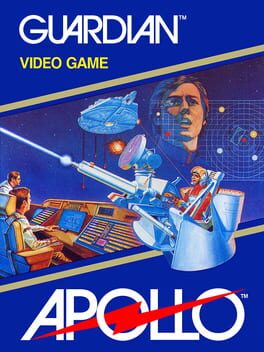
Guardian is an arcade action game for one or two players. In an intergalactic war, an enemy ship called Dromeda is attacking your home planets and you need to defend them! The planets are located at either the top or the bottom of the screen, and are defended by a shield. Dromeda is in the middle of the screen, and will be launching explosive devices at the planets. You control a spaceship which is the last hope to save the planets. Unfortunately, your ships lasers are unable to reach Dromeda, so you you must shoot the explosives as they come in. If you miss any explosives, they will destroy part of the shield. If a large enough hole forms, an explosive could get through and destroy an entire planet. The game ends when all of your planets have been destroyed.
Atari 2600
1982
This side out
Puzzle / Racing / Educational
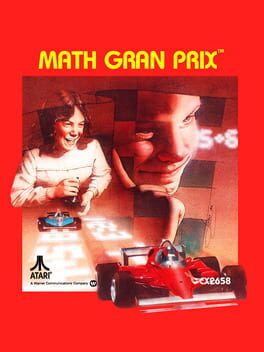
The principle of the game is to fuel your car with correctly answered math questions. It can move 2 to 3 spaces depending on how hard the math problem is. The track contains many triggers that can give extra spaces, extra turns, and even keep your car on the track. There are areas in the track where a car coming from behind can knock you off, to get back answer a math problem correctly. In the end, the one with the most math skills and greatest planning effort will win the checkered flag.
Atari8bit
1982
This side out
Released in 1982 on Atari 8-bit, by Sun Electronics.
Atari 2600
1982
This side out
Shooter / Arcade / Action / Science fiction
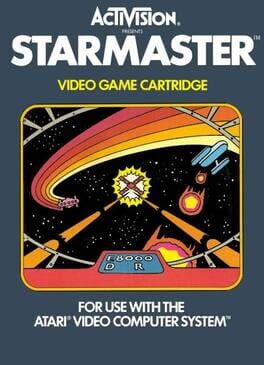
In the game the player pilots a starfighter, with the purpose of destroying a number of enemy ships before they destroy four friendly starbases. Gameplay is presented mostly in first person cockpit view, which is achieved with surprisingly good effect given the 2600's primitive graphics capabilities. The starfighter carries laser weapons, shields, and a faster-than-light drive. The fighter also carries a limited energy supply, which is drained by firing the lasers, being hit by enemy fire, warping, or simply flying around. If the ship's energy drops to zero it is destroyed, and the game ends. Enemy fire can knock out the fighter's subsystems (such as weapons) on top of draining energy. The game "universe" is a square-shaped galaxy mapped into a grid of 36 sectors. Each sector can be home to some enemy ships, a starbase, both, or nothing. The player "warps" the fighter to a sector to engage enemy ships; once they are all destroyed, the player moves on to another. The player can also warp to a sector with a starbase, and dock with it (a rather tricky process) to replenish energy and repair damaged subsystems. Enemy ships in turn maneuver through the galaxy as they home in to destroy the starbases. The game is won when all enemy ships are destroyed, or lost if either the player's fighter or all four starbases are destroyed.
Apple II
1982
This side out
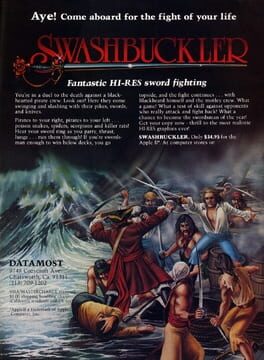
Swashbuckler is an early fighting game for the Apple II family of computers, created by Paul Stephenson and published by Datamost in 1982. The player controls a sword-wielding swashbuckler who must fight and dispatch various attackers. Combat occurs in a wooden-beamed ship's hold littered with skeletons and cobwebs, which the player views from the side.
Apple II
1982
This side out
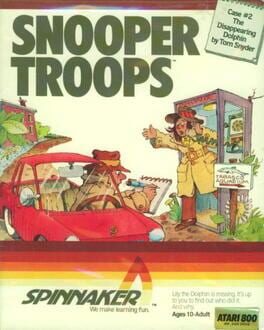
The 2nd and final in the series of detective/problem solving games for kids. Armed with your Snoop-mobile, the snoopNET computer, a wrist-radio, flashlight and pen and paper, you're the detective who must solve the case of Lilly, the missing dolphin. The game requires logical thinking, planning, and note taking as you slowly comb the neighborhood gathering clues and evidence. Once the suspect is properly identified, use the snoopNET computer to accuse and ensure that justice has been served.
Arcade
1982
This side out
Fighting / Platform / Arcade / Action
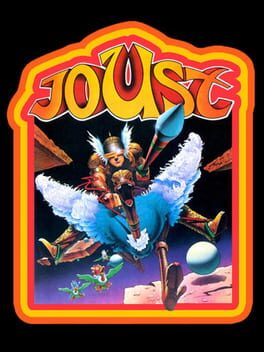
Joust is an arcade game developed by Williams Electronics and released in 1982. It is a platform game that features two-dimensional (2D) graphics. The player uses a button and joystick to control a knight riding a flying ostrich. The object is to progress through levels by defeating groups of enemy knights riding buzzards.
Apple II
1982
This side out
Shooter / Arcade / Action / Science fiction
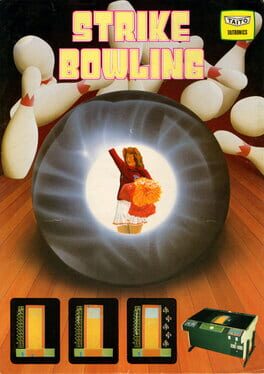
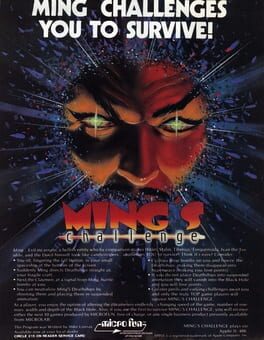
Sci-fi shooter for the Apple II.
Still plenty of games...