Developed by Alicesoft.
Point-and-click / Role-playing (RPG) / Adventure / Fantasy / Comedy
Rance II: The Rebellious Maidens is the second game of the Rance Series, remade in 2009 and released in Alice 2010. The game is a turn-based dungeon crawler RPG with a top-down interface. Throughout the game, Rance may gain new party members, though further customization, such as organizing equipment, are unavailable for some.
Ten years prior to the story, four young girls in the town of Kathtom were appointed as disciples to an old mage named Ragishss. They were to be raised as mages and work as the town's guardians after their training completed. However, after the ten years, the girls suddenly rebelled against Ragishss and killed him. During the harsh magic battle, the entire town was entombed underground and a barrier spell was placed on it, preventing anyone from leaving, including the maidens who terrorized the town. The four maidens were soon to be known as Four Witches of Kathtom. Rance sets out with Sill to defeat the four witches and save the city from their grasp, however, as the story progresses, they find out that the witches had their personalities altered and twisted by the power of the rings they wear. The rings greatly enhance a user's magical potential, but can only be used by maidens. Having said that, the only way to release them from the rings is to have their virginity taken, and who else but Rance is up for such a job?
Point-and-click / Role-playing (RPG) / Adventure / Fantasy / Comedy
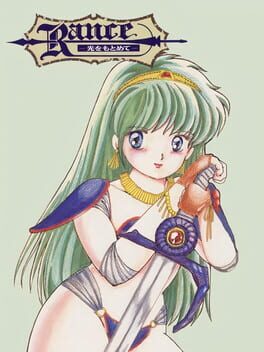
Rance: Hikari Quest is an exploration game in which you play as Rance as he takes on the mission to go and save Hikari, a girl who has been kidnapped.

Role-playing (RPG) / Visual Novel / Action / Fantasy
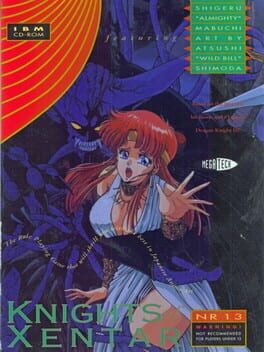
Dragon Knight III is an eroge role-playing video game released on many Japanese PCs in 1991. It is part of the Dragon Knight series of games created by Japanese game developer ELF, who originally released the game for the NEC PC-9801 computer in 1991, followed by ports for the Sharp X68000 and PC Engine CD platforms. The game is a sequel of Dragon Knight and Dragon Knight II. Its gameplay system is different from that of previous installments of the Dragon Knight series, resembling this of the early Final Fantasy (even more in the PC version) series instead of first-person-view dungeon crawler, and enabling the player to explore the entire world of the game. Some of the characters were renamed in the English and German localized Knights of Xentar release, including the protagonist Takeru's name changed to Desmond.

Role-playing (RPG) / Adventure / Action / Fantasy
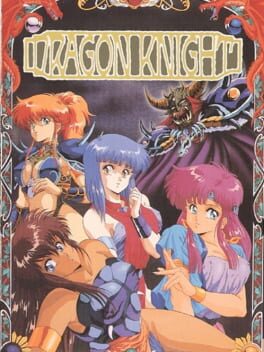
The Dragon Master, Darklarza, has been terrorizing the kingdom for many years. The king was forced into exile by this threat. He retreated, with the bravest knight in the kingdom, named Garaden. Darklarza stages an attack on the king's fortress, breaks in and manages to abduct the royal princess. Garaden sets off to vanquish Darklarza and rescue the princess. Dragon Knight marked the beginning of Elf's erotic RPG series. The game is played entirely from a first-person perspective. In the town, you move around by selecting destinations from a menu. Once you enter the tower, you navigate your character through 3D mazes, fighting random enemies in turn-based combat. Enemies in the game are scantily clad, attractive young women; there are also several scenes with explicit nudity.

Role-playing (RPG) / Adventure / Visual Novel / Action / Fantasy
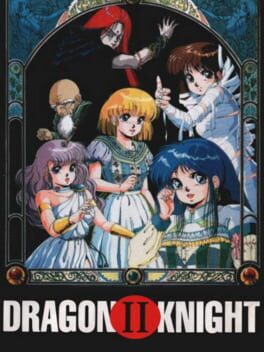
Dragon Knight II is the predecessor to Knights of Xentar, the only Dragon Knight game that was ever translated into English. This is a first-person game that is mainly dedicated to dungeon exploring. Takeru has to explore the three dungeons, fighting enemies and sometimes talking to dungeon inhabitants. The enemies are the girls who were turned into monsters by Mesaana. In town, Takeru can also buy weapons, armor, and items, and talk to various people.

Point-and-click / Adventure / Comedy / Drama
He's a plumber, she's a daddy's girl. Only you can get them together, or tear them apart! Plumbers have everything: Greed, sex, spirituality, white-knuckle chases, shameful propositions, a nun, humor, true love, jaded love, jealousy, taut action, comedy, a bad guy, a good guy, a hero, spine-tingling suspense, a hot babe, brazen bravado, a damsel in distress, and a Hollywood ending! Plays like a game... feels like a movie!

Point-and-click / Adventure / Visual Novel / Fantasy / Science fiction
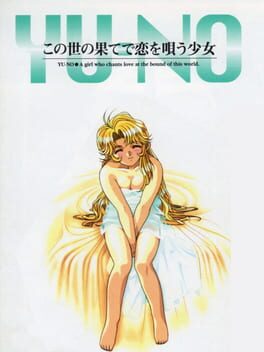
Yu-No: A Girl Who Chants Love at the Bound of this World is a Japanese visual novel/ point-and-click adventure game developed originally as an adult game. The game's protagonist travels between various parallel worlds in order to solve the mystery of his parents' disappearance. Although parallel worlds are not an unfamiliar concept in science fiction, the game uses concepts from physics, mathematics, philosophy, history and religion to construct a unique fictional universe. In particular, the A.D.M.S. or Auto Diverge Mapping System; which visually displays the branching parallel worlds/storylines as a tree, aids the player in navigation.

Point-and-click / Role-playing (RPG) / Turn-based strategy (TBS) / Action / Fantasy
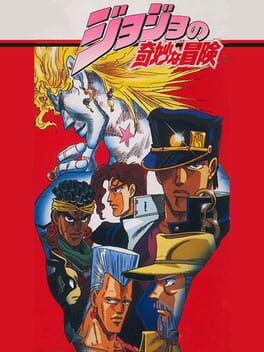
The first JoJo-centric game released, it was never localized outside Japan. Production was done under Shinji Hashimoto. The game features some notable alterations to the story of Stardust Crusaders. The player controls the protagonists of Stardust Crusaders in a combination of Point and click adventure and classic third-person RPG. It is sometimes also referred to as a side-scrolling RPG.

Point-and-click / Role-playing (RPG) / Adventure / Fantasy / Horror
This 8bit game is a port from a mystery source...This casual, linier, interactive story game centers around a campfire with old friends telling... tales.