Set 500 years after the first game, Dragon Force II follows a slate of monarchs who must band together to defeat a new threat looming over Legendra. Along the way, they learn the value of friendship and unravel the mystery of what happened to the original Dragon Force after Madruk's defeat.
Five hundred years after Wein and friends defeated the evil that plagued the divided continent of Legendra, evil predictably prepares to reveal its blackened head once more. The land is becoming overrun with mysterious dark knights once again, alerting the game's eight new protagonists to the coming storm. Just as before, you select one of Legendra's eight rulers and gather support from the other seven to quash the evil upswelling.

Real Time Strategy (RTS) / Role-playing (RPG) / Strategy / Fantasy / Horror
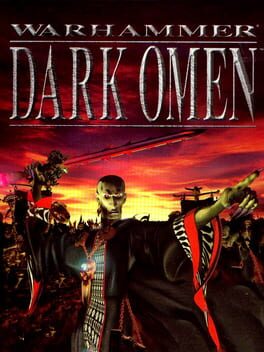
This sequel to Warhammer: Shadow Of The Horned Rat is an overhead role playing game in which you play Morgan Bernhardt. The game consists of a series of battles where you view the battle from overhead via a rotatable view. You go through the game managing your army, deciding whether to fight in optional battles, and advancing through a deep and engrossing storyline via a series of conversations played out by talking portraits.

Role-playing (RPG) / Strategy / Fantasy
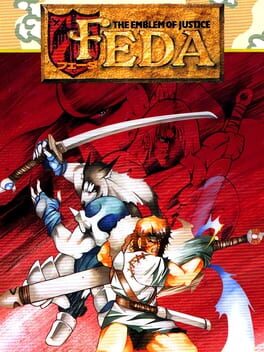
In a fantasy world, a soldier from the imperial forces deserts after witnessing the massacre of innocent villagers by his unit. He is sent to jail to be executed, but manages to escape with the help of two former unit colleagues. The group flees through the country-side, while being pursued by imperial soldiers. On their way, they join forces with other rebels to fight against the enemy, while uncovering hidden secrets and evil plots by the Empire. Feda: Emblem of Justice is a strategy RPG similar to Shining Force and other titles with preset characters and linear gameplay. The player commands a party of varying size and characters with diverse skills. In the main battle sections, the player and the CPU-controlled enemy take turns moving the troops and giving orders. A menu at the bottom of the screen shows all the possible actions, where soldiers can defend, move, attack, or use an inventory item on each turn. The range of their movements and weapons vary according to their nature. A crossbow character can shoot from the back, while most sword and knife users have to be adjacent to their targets. Magic offensive powers have different ranges as well, reaching enemies that are far away from the attacking character. Health points can be recovered by eating rations or by magic, where a healer can restore points to several characters at once. Each party member has separate health and magic points, as well as other statistics like defense and attack power. They receive experience points after slaying an enemy or casting a spell, and extra points at the end of the battle. Their skills increase after surpassing 100 points. The map screen shows the party and groups of enemies traveling through the landscape in turns. The menu has options for moving the group or camping. In the encampment, one of the characters around the fire pit saves the game, while another inside the tent provides system options to change the interface color, adjust sound volume and rename the party members. In some locations like temples, villages and towns, the party has to explore the place and talk to the citizens to move on to the next section. In later battles, the player has to make a moral choice about attacking mutated humans. At the end of each battle, the party is assigned a dark or light emblem, and certain party members choose to leave or stay in the group based on its alignment.
Role-playing (RPG) / Adventure / Fantasy
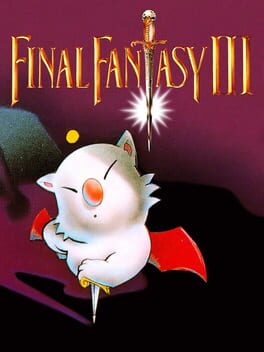
Final Fantasy VI is the sixth main installment in the Final Fantasy series, developed and published by Square. It was the final title in the series to feature two-dimensional graphics, and the first story that did not revolve around crystals. The game gives players up to fourteen playable characters, the largest cast in the series, and features the Active Time Battle pseudo-turn based menu command system. A party can consist of up to four characters, though some events require the player to assemble three different parties of up to four and switch between them. Each character has a unique command ability, such as Terra's Trance, Locke's Steal, Edgar's Tools or Sabin's Blitz, and can also learn Magic spells from earning AP from battles with magicite equipped. Each character's rare Desperation Attack will randomly activate after using the Attack command when at critical health.

Role-playing (RPG) / Strategy / Turn-based strategy (TBS) / Fantasy
As a student of Astral the wizard, you and your friends study all the usual subjects: reading, writing, and sword fighting. As your time at school draws to an end, dark events are taking place on the island of Grans. The two Jewels which seal the Door to Darkness have been stolen, allowing a creature of awesome power to be unleashed. Finding where the Jewels were taken, and why, is a task only the bravest of adventurers can undertake.

Real Time Strategy (RTS) / Role-playing (RPG) / Simulator / Fantasy / Historical
As the offspring of almighty Zeus, you demand a seat among the gods. But before ascending to the top of Mt. Olympus, you must first defeat some of the most powerful deities in the Greek pantheon. Such a task would be impossible for a puny mortal, but you wield the raw power of the universe in your hands, for you are destined to become a god! Learn to shatter the sky with lightning and shower the earth with fire. Summon heroes to aid your people, and plagues to destroy the enemy. Call forth tornadoes, hurricanes, tidal waves, and columns of flame. The second installment of Bullfrog's Populous series follows the path set by its predecessor and remains one of the greatest god-games ever created. Populous 2: Trials of the Olympian Gods vastly improves the formula by adding new spells, better quality sound and graphics, and a character development system that allows you to customize your divine powers in any way you want. You really can’t go wrong with a game where you can kill gods, obliterate entire continents, and strike down upon the infidels with great vengeance and furious anger. Just as Peter Molyneux, those things simply never get old.

Grandia is a role-playing video game developed by Game Arts and published by Entertainment Software Publishing for the Sega Saturn console as the first game in their Grandia series. Initially released in Japan in 1997, the game was later ported to the PlayStation in 1999, with an English version of the game appearing on the platform in North America in the following September by Sony Computer Entertainment America, and later in Europe in March 2000 by Ubisoft. The game was produced by much of the same staff who worked on the company's previous role-playing endeavor, the Lunar series, including producer Yoichi Miyagi and music composer Noriyuki Iwadare. Since its release, Grandia has become notable for its combat mechanics, which have been carried over to future games within the franchise, and has spawned two spin-off titles – Grandia: Digital Museum and Grandia: Parallel Trippers – both released exclusively in Japan. In celebration of the announcement of renewing development on Grandia Online, which acts as a prequel to Grandia, the game was re-released on Sony's PlayStation Network platform in Japan as a downloadable title in April 2009 and in North America on February 25, 2010. It was re-released in Europe on November 10, 2010.

Real Time Strategy (RTS) / Role-playing (RPG) / Strategy / Fantasy / Warfare
It’s up to you to defeat the Empire. It’s been nearly a quarter of a century since the Zetegenian Empire first conquered the Kingdoms of Zenobia with a wrath of fear and bloodshed. You are the leader of a band of rebels who’ve fought to preserve the last shred of honor in this desperate time of treachery. Manage the ranks of a full-blown rebel army, complete with hundreds of characters, magic items, weapons and mystical Tarot cards. You must succeed in ousting the evil usurpers - your fate, and that of the entire population, depends on it.

Real Time Strategy (RTS) / Role-playing (RPG) / Strategy / Fantasy / Warfare
"Ogre Battle 64: Person of Lordly Caliber is a tactical RPG for the Nintendo 64. Featuring a gripping storyline with multiple possible endings, and a genre-defining character class system, this strategic epic has rightly retained its place in the hearts of tactical RPG fans for over a decade. The game tells the story of Magnus Gallant, a recently graduated officer of the Palatinean Army who is assigned to the troubled southern region of his native land. There he witnesses the plight of the lower classes – the victims of a tyrannical ruling elite whose only thought is for the preservation of their own lofty status. With civil war brewing, Magnus is faced with a terrible choice: to betray his own noble origins in the name of liberty, or turn a blind eye to the evils of his rotten society."