Mystery box
?
Sealed
Mystery Box
Every game in your current results, in one box. Add it to a quest and each run draws a fresh game from it, revealed on release day.
MSX2
1987
This side out
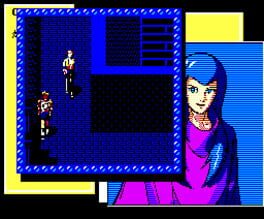
Reviver: The Real-Time Adventure is an adventure game designed by Katsunori Yoshimura and released by Arsys Software in July 1987. It featured the concept of a real-time persistent world.
PC-6000
1982
This side out
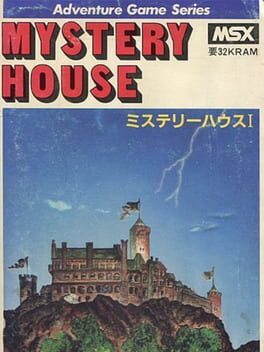
The first Japanese developed graphical adventure game created by Micro Cabin in 1982. Although it features the same name, it is otherwise unrelated to On-Line Systems' game. Mystery House, or Mystery House I (ミステリーハウスI) as it is written in Japanese on the box, is an adventure game developed by Micro Cabin in June 1982 for the Sharp MZ-80B followed by various ports for other computers. While Micro Cabin's Mystery House is clearly inspired by the seminal Mystery House created by On-Line Systems in 1980, sharing the same name and similar gameplay, it bares no connection to that title nor its official Japanese port created by StarCraft in 1983. A direct sequel to Micro Cabin's Mystery House was released later in the same year called Mystery House II.
PC-88
1986
This side out
Role-playing (RPG) / Simulator / Strategy / Fantasy / Historical
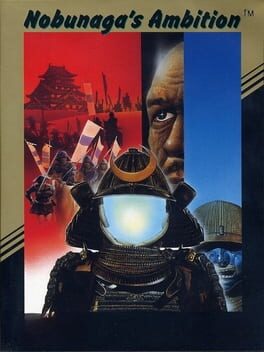
The second game in the series, previously released as Nobunaga's Ambition in the West. Players take on the role of one of the main characters of the period, Nobunaga Oda, Shingen Takeda, Kenshin Uesugi, or others and try to unite the 50 kingdoms of Japan, from Ezo in the north to Kyushu in the south, under their own rule.
NES
2023
This side out
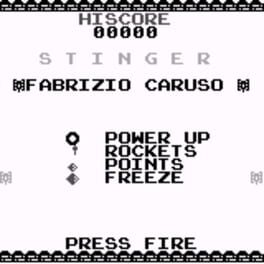
Stinger is a tank-shooter with several enemies, levels, power-ups and items to pick.
Famicom
1984
This side out
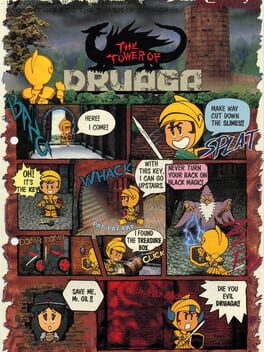
The story still's the same: Ishtar sends Gilgamesh up the 60 maze levels of the Druaga's tower to rescue Ki and retrieve the Blue Crystal Rod. He must find each level's key to proceed to the next one.
PC-88
1985
This side out
Shooter / Arcade / Action / Science fiction
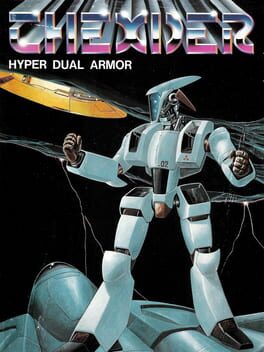
Thexder is a robot capable of transforming into a jet whose job is to destroy the central computer to save the planet.15 stages are waiting you for in this shooting game.
NES
2021
This side out
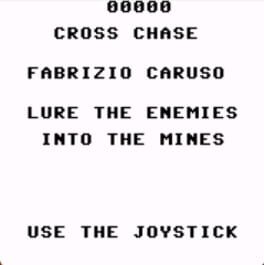
Chase is somehow similar to Gnome Robots but in real-time game and with several items and power-ups.
PC-88
1985

This side out
Role-playing (RPG) / Adventure / Fantasy
People inhabiting a world called Felix communicate with gods to divine their future. The king of the Forest Country is looking for a husband for his daughter and organizes a tournament for noble young men from different countries. The prince from the Lake Country is victorious, but an evil magician turns him into a strange-looking creature and banishes him to faraway lands. The prince has to travel back and find a way to remove the curse. Märchen Veil I is an overhead action game with light role-playing elements. The game consists of maze-like stages heavily populated by enemies. The prince has to fight his way through by using ranged magic, which effectively turns the game into a shooter. The magic attack can have different properties depending on the special items picked up by the prince. Throughout the game the player will also find items that restore or permanently increase the protagonist's health. Still-screen scenes (called "visual stages") advance the story between levels.
FM-7
1982
This side out
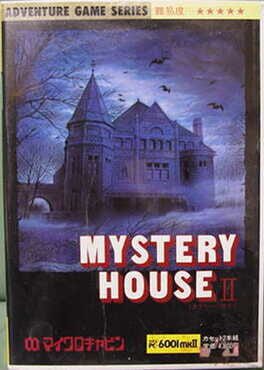
Mystery House II is an adventure game in Japanese and the sequel to the 1982 title Mystery House, which is in turn inspired by the 1980 title Hi-Res Adventure #1: Mystery House. Just like in the first game the goal is to explore a mysterious house and discover the treasure hidden inside by gathering four notes that provide clues. Exploration is similar to the first game, using N/S/E/W to move through the environments shown using a first-person perspective and drawn with outlines. At the bottom commands are entered, such as TAKE, READ or SEARCH. Items can be picked up and used elsewhere to solve puzzles. Compared to the first game the environment is now much larger as the house consists of three floors and the environment can be explored as well.
PC-6000
2020

This side out
Shooter / Action / Science fiction
A vertically scrolling shooter developed by Inofuto for a variety of systems.
PC-88
1984

This side out
Role-playing (RPG) / Action / Fantasy
An evil demon named Varalys casts a curse upon the princess Ann, turning her into three fairies. You control Sir Jim and set out to find the fairies, and then slay Varalys. Only by vanquishing Varalys can the curse be lifted. Once the princess is restored the kingdom will be saved. The fighting is a little more in-depth than hack and slash. You can either fight with a defensive or offensive stance, or you can use magic spells.
Sharp X1
1983
This side out
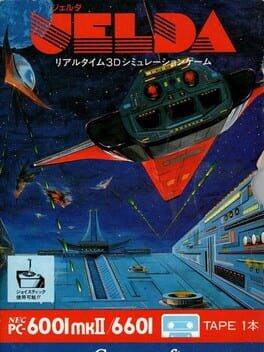
Jelda is an aerial combat game with wireframe graphics, released in Japan in 1983.
Arcade
1981
This side out
Shooter / Arcade / Action / Science fiction
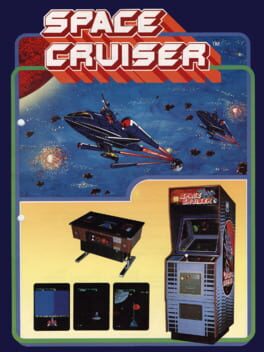
A vertical scrolling space shooter.
Sharp X1
1983

This side out
Shooter / Arcade / Science fiction
A sink of shear hatred, violence and deadly weapons is the blazing hell you find yourself in under the Polar Star. A frosty scenery, for action that couldn't be hotter!
PC-88
1983

This side out
Nobunaga's Ambition, the first of the series, was released in 1983. Players assume the mantle of either Nobunaga Oda or Shingen Takeda and strive to conquer the entire land (17 areas in the Kansai and central Japan region). They manage their country to make it rich, then prepare their military forces. These then attack and defeat surrounding Clans in battle.
Master System
2023
This side out
Released in 2023 on Sega Master System/Mark III, by Inufuto.
Arcade
1981
This side out
Shooter / Arcade / Science fiction
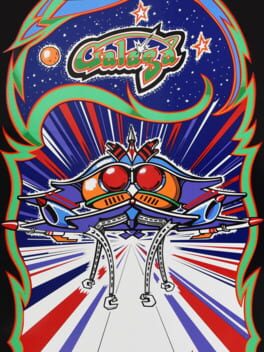
The objective of Galaga is to score as many points as possible by destroying insect-like enemies. The player controls a starfighter that can move left and right along the bottom of the playfield. Enemies swarm in groups in a formation near the top of the screen, and then begin flying down toward the player, firing bombs at the fighter. The game ends when the player's last fighter is lost, either by colliding with an enemy or one of its bullets, or by being captured. Galaga introduces a number of new features over its predecessor, Galaxian. Among these is the ability to fire more than one bullet at a time, a count of the player's "hit/miss ratio" at the end of the game, and a bonus "Challenging Stage" that occurs every few levels, in which a series of enemies fly onto and out of the screen in set patterns without firing at the player's ship or trying to crash into it. These stages award a large point bonus if the player manages to destroy every enemy. Another gameplay feature new to Galaga is the ability for enemies to capture the player's fighter. While the player is in control of just one fighter, a "boss Galaga" (which takes two shots to kill) periodically attempts to capture the fighter using a tractor beam. If successful, the fighter joins the enemy formation. If the player has more lives remaining, play resumes with a new fighter. The captured fighter flies down with the enemy that captured it, firing upon the player just like normal enemies, and can be shot and destroyed. The player can free the fighter by destroying the boss Galaga while in flight, causing the captured fighter to link up with the player's current fighter, doubling his or her firepower but also making a target twice as large. Galaga has an exploitable bug that can cause the attackers to stop firing bullets at the player, due to a coding error. In addition, similar to the famous "Split-Screen bug" in Pac-Man, a bug exists in Galaga in which the game "rolls over" from Level 255 to Level 0. Depending on the difficulty setting of the machine, this can cause the game to stall, requiring that the machine be reset or power-cycled in order to start a new game.
Arcade
1984
This side out
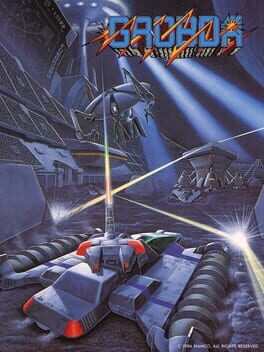
The player must take control of Grobda, a tank trapped in an arena filled with numerous indestructible obstacles and several enemy tanks. When an enemy tank is killed, it will cause an explosion, and any other enemies that happen to be in the blast radius at the time will also suffer the same fate. But if Grobda is too close to the explosion, it will also be killed. Grobda has a shield that offers very temporary protection from enemy fire, but this will soon disappear if it is constantly under attack or shot. Each round is called a "battling", and there are a total of ninety-nine in the game.
Still plenty of games...